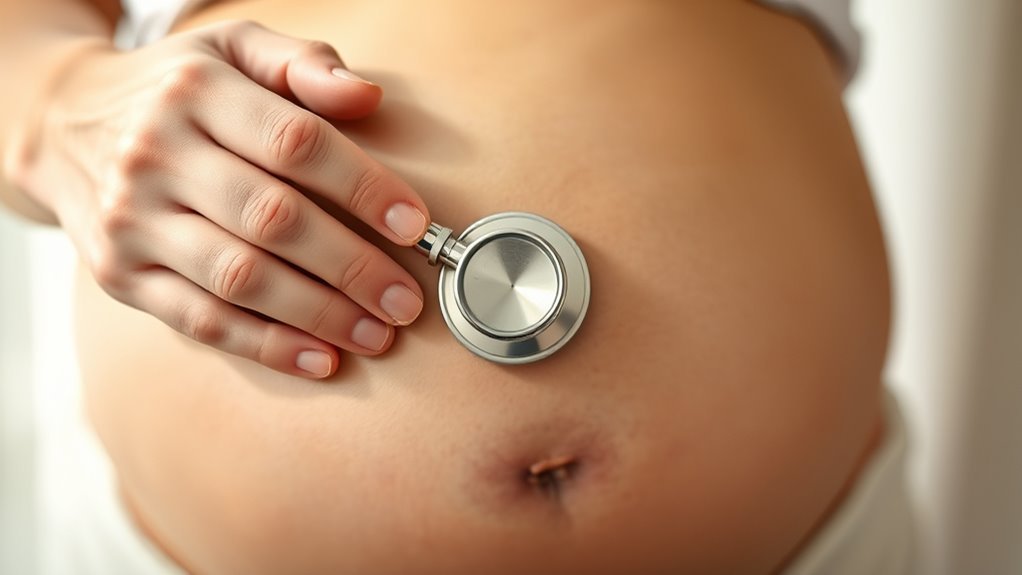
Can You Hear Baby’s Heartbeat With a Stethoscope?
You can hear your baby’s heartbeat with a stethoscope starting around 18 to 20 weeks of pregnancy.
Using a stethoscope to listen to your baby’s heartbeat is a special way to connect during this exciting time. It takes patience, a quiet room, and proper stethoscope placement below your belly button.
The sound might be faint or inconsistent at first, depending on your baby’s position and other factors. Don’t worry if you can’t hear it right away.
If you keep exploring, you’ll discover helpful tips and what to expect during this special time. Just remember, listening for your baby’s heartbeat with a stethoscope is a wonderful experience that gets easier as your pregnancy progresses.
Key Takeaways
- A fetal heartbeat can typically be heard with a stethoscope between the 18th and 20th weeks of pregnancy.
- Early heartbeats (before 18 weeks) are usually not audible with standard stethoscopes but can be detected by Dopplers.
- Proper stethoscope placement below the belly button and a quiet environment improve chances of hearing the heartbeat.
- Factors like baby’s position, maternal weight, and anterior placenta may affect heartbeat audibility with a stethoscope.
- Listening at home can be a bonding experience but should not replace regular prenatal care and professional monitoring.
When Can You Hear a Baby’s Heartbeat With a Stethoscope?

When can you actually hear your baby’s heartbeat with a stethoscope? Typically, you can detect a fetal heartbeat between the 18th and 20th weeks of pregnancy. Although the fetal heartbeat starts early in the pregnancy around five to six weeks, standard stethoscopes usually can’t pick it up until later.
Specialized devices like a fetal Doppler can detect a heartbeat as early as nine weeks. To hear a baby’s heartbeat with a stethoscope, you’ll need to place the diaphragm below your belly button and adjust the position to find the clearest sound.
Keep in mind, factors like your baby’s position, maternal weight, and an anterior placenta can make it harder to hear during prenatal appointments using a stethoscope. So, don’t be discouraged if you can’t catch it right away!
How Can You Find and Listen to Your Baby’s Heartbeat With a Stethoscope at Home?

Hearing your baby’s heartbeat with a stethoscope at home can be an exciting way to connect during pregnancy. To hear a baby’s heartbeat, start between the 18th and 20th week when the fetal heartbeat becomes detectable.
Listening to your baby’s heartbeat at home is a special way to connect starting around 18 to 20 weeks.
Find a quiet room, lie down, and expose your abdomen. Use the stethoscope’s diaphragm below your belly button and slowly move it to locate the baby’s position. The heartbeat may sound like rhythmic thumping or whooshing.
Keep in mind: your baby’s position affects your ability to capture the sound. If you don’t hear the heartbeat, try again later without panic.
Always continue prenatal visits to monitor your baby’s health professionally. Using a stethoscope at home helps you bond but doesn’t replace prenatal care.
Frequently Asked Questions
How Many Weeks Until You Can Hear a Baby’s Heartbeat With a Stethoscope?
You can usually hear your baby’s heartbeat with a stethoscope between 18 and 20 weeks.
Factors like your weight and the baby’s position can affect this, so sometimes it might take a bit longer.
It’s pretty common for things to vary a little, so don’t worry if you don’t hear it right away. Just give it some time!
What Does a Fetal Heartbeat Sound Like With a Stethoscope?
You’ll hear a rapid, rhythmic thumping or whooshing sound through the stethoscope, often like a drum or galloping horse. It’s faint, so you’ll need quiet and careful positioning on the abdomen to catch it clearly.
It might take a little patience to find the right spot. But once you do, that steady beat is pretty amazing to hear!
Is There a Way I Can Hear My Baby’s Heartbeat at Home?
Yes, you can hear your baby’s heartbeat at home using a stethoscope or fetoscope after about 18 weeks.
Find a quiet spot, lie down, and gently move the device below your belly button until you hear it.
It might take a little patience, but once you find the right spot, you’ll hear that amazing little heartbeat!
How Much Does a Fetal Stethoscope Cost?
A fetal stethoscope usually costs between $15 and $50, but high-quality models can reach $100.
You’ll find options online or in medical stores, so check reviews to choose one with good sound and durability.
It’s worth spending a bit more if you want something reliable and easy to use. After all, hearing that little heartbeat clearly is what matters most!
Conclusion
Now that you know when and how to listen to your baby’s heartbeat with a stethoscope, why wait to experience this magical moment? While you might not hear the heartbeat early on, with patience and the right timing, you’ll soon catch that rhythmic sound.
Just remember, practice makes perfect, and your baby’s heartbeat is worth the effort. So, are you ready to tune in and connect with your little one in a whole new way? Listening to your baby’s heartbeat with a stethoscope is an incredible bonding experience that brings comfort and joy.
With a bit of patience and the right technique, you can hear those precious beats and feel closer than ever to your baby. Don’t hesitate to try—it’s a simple, unforgettable way to celebrate your pregnancy journey.




One Comment