
When Can Baby Sleep With a Blanket
You shouldn’t let your baby sleep with a blanket until they’re at least 12 months old.
Blankets before this age can increase risks like suffocation, strangulation, and SIDS. This happens because babies can’t easily move or control their airways yet.
After 12 months, babies gain better mobility and airway control, which makes using a blanket safer when you’re watching them carefully.
Choosing the right blanket and following safety tips can also make a big difference.
Keep going to discover how to introduce blankets safely and protect your little one.
It’s all about timing and making sure your baby stays comfy and secure while they sleep.
Key Takeaways
- Babies should not use blankets until they are at least 12 months old to reduce suffocation and SIDS risks.
- After 12 months, babies have better mobility and airway control, which makes using a blanket much safer.
- It’s best to introduce blankets gradually, and always keep a close eye on your little one during naps and nighttime sleep.
- When you do choose a blanket, go for something lightweight and breathable that fits the crib properly. Avoid anything that could cover your baby’s face.
- And remember, always watch for any signs of discomfort or if the blanket gets tangled around your baby. Safety first!
Why Blankets Are Unsafe for Babies Under 12 Months
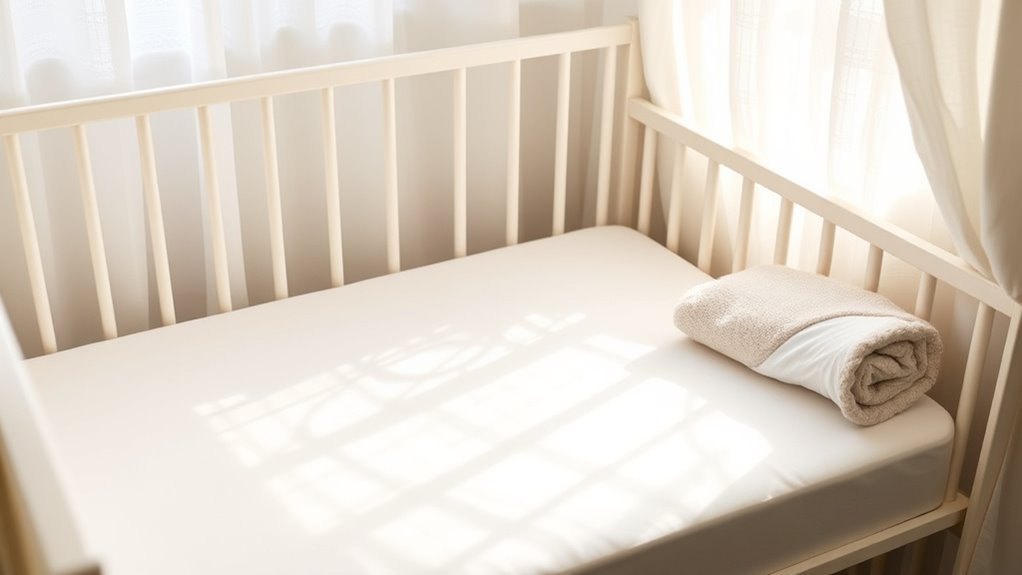
Because babies under 12 months can’t easily move or push away blankets, using them during sleep puts your infant at serious risk of suffocation, strangulation, or entrapment.
Infants under 12 months can’t move blankets, increasing risks of suffocation, strangulation, and entrapment during sleep.
The American Academy of Pediatrics strongly warns against blankets unsafe for infants under 12 months, as soft bedding greatly increases the risk of SIDS.
During baby sleep, your little one lacks the airway control needed to manage shifting fabric, making suffocation risk very real.
Overheating is another concern since infants have immature thermoregulation, and blankets only raise this risk.
To create a safe sleeping environment, always use a firm mattress without loose blankets or soft bedding.
These precautions help protect your infant and reduce dangers tied to unsafe sleep practices.
When and How to Safely Introduce Blankets After 12 Months

While blankets pose significant risks for babies under 12 months, you can start introducing them safely once your child reaches this age. The American Academy of Pediatrics suggests waiting until 12 months because risks of suffocation and SIDS decrease as your baby gains better mobility and airway control.
To guarantee blanket use is safe after 12 months, here’s what you can do:
- Choose a lightweight, breathable blanket made of materials like organic cotton or muslin to reduce suffocation risks.
- Always supervise your baby during naps when the blanket is first introduced. Keep an eye out for any signs of entanglement.
- Use a blanket sized appropriately for the crib, positioning it no higher than your baby’s chest so it doesn’t cover the face.
Following these steps helps your baby enjoy cozy comfort without compromising safety.
Frequently Asked Questions
What Is the Old Wives Tale About Baby Blankets?
The old wives’ tale says you should cover your baby with a blanket for warmth and better sleep, but you shouldn’t.
It can cause suffocation and SIDS, so always follow safe sleep guidelines instead.
Better to be safe than sorry, right? Just stick to what experts recommend!
How Do I Know My Baby Is Warm Enough at Night?
You know your baby’s warm enough at night when their neck or tummy feels comfortably warm, not hot or cold. Avoid relying on hands or feet.
Those can be misleading! Instead, adjust layers or the room temperature to keep them cozy and safe. It’s all about finding that just-right balance.
Is It Safe for a 9-Month-Old Baby to Sleep With a Blanket?
No, it’s not safe for your 9-month-old to sleep with a blanket. They can’t move it away, which puts them at risk of suffocation.
Instead, try using a sleep sack or a wearable blanket. These options keep your baby warm without any danger.
Can a 1 Year Old Have a Blanket in Their Crib?
Yes, your 1-year-old can have a blanket in their crib, but you’ll want to choose a lightweight, breathable one.
Make sure it’s tucked securely and never covers their face to keep sleep safe and cozy. It’s all about keeping things comfortable and safe for your little one.
Conclusion
You’ll want to hold off on blankets until your little one is a bit older—around 12 months—when their sleep space is a bit safer and cozier.
Before then, it’s best to keep things light and breezy, using sleep sacks or wearable blankets instead. These options help keep your baby warm without the risks that loose blankets can bring.
Once your baby is ready, introduce soft blankets gently, making sure they’re just right for comfort, not a tangle. This way, you’re wrapping your child in warmth and care without any worries.
When it comes to when a baby can sleep with a blanket, timing is key. Waiting until about 12 months helps ensure your baby’s sleep environment is safe. Using wearable blankets beforehand is a smart way to keep them cozy without compromising safety. Then, when you do bring in blankets, choose soft, lightweight ones that add comfort without posing any hazards. This approach keeps your baby snug and secure through every nap and night, giving you peace of mind as they grow.





4 Comments