
When Can Baby Sleep With a Lovey?
You can safely introduce a lovey into your baby’s sleep routine once they reach 12 months old. This is a great age to start because it reduces the risk of suffocation, which is why experts recommend avoiding any items in the crib before then.
A lovey can be a comforting companion that helps your little one feel secure as they drift off to sleep.
When choosing a lovey, pick something soft and safe—nothing with small parts that could come loose. It’s a good idea to slowly build your baby’s attachment by including the lovey in everyday activities, so it becomes a familiar friend.
Also, make sure to regularly check the lovey for wear and tear to keep it safe.
Keeping your baby’s sleep environment safe is the top priority.
Keep reading to find out how to introduce loveys in a way that supports both comfort and safety for your little one.
Key Takeaways
- Babies should not sleep with loveys before 12 months to reduce suffocation risk, as recommended by the American Academy of Pediatrics.
- You can start introducing loveys into sleep routines once your little one hits the 12-month mark. Just make sure the lovey is soft and doesn’t have any small parts that could be a choking hazard.
- It’s a good idea to slowly build your baby’s attachment by using the lovey during daily activities like feeding and playtime before bedtime.
- Using loveys during calming moments, like storytime, helps create positive sleep associations in a safe way.
- Always check loveys regularly for wear and cleanliness. Replace any that look damaged to keep your baby’s sleep environment safe.
Is It Safe for Your Baby to Sleep With a Lovey?

Although you might want to introduce a lovey earlier, the American Academy of Pediatrics recommends waiting until your baby is at least 12 months old before letting them sleep with one. This guideline helps reduce any suffocation risk in your child’s sleep environment.
Loveys provide emotional support and comfort, especially as separation anxiety sets in, but safety is key. Before 12 months, it’s best to avoid placing a lovey in the crib to keep sleep safe and secure.
Once your baby is older, a lovey can become a trusted companion, helping soothe and calm them through the night. You should also regularly check the child’s lovey for wear and tear to maintain its safety.
Following these recommendations guarantees your baby benefits from a lovey without compromising safe sleep.
How to Introduce a Lovey Safely Into Your Baby’s Sleep Routine
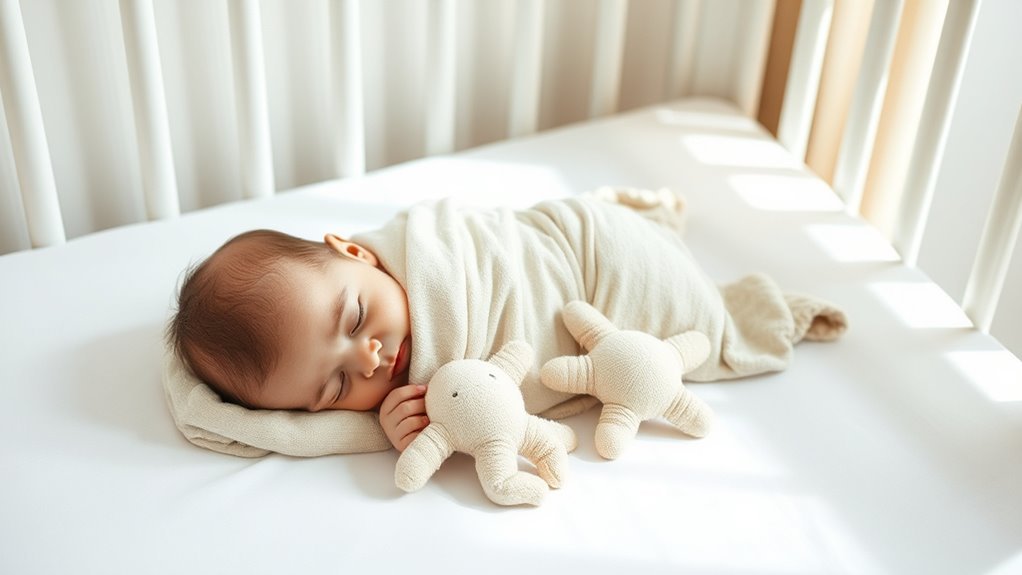
When your baby turns 12 months old, you can start introducing a lovey into their sleep routine to provide comfort and security. The AAP recommends no items in the crib before this age to reduce suffocation risks.
To introduce a lovey safely, choose one that’s soft, free of small parts, and easy to clean. Begin by incorporating it into daily activities like feeding and playtime to build your child’s attachment.
Gradually bring the lovey into bedtime routines, letting your baby cuddle it during storytime to create a calming sleep association. Always monitor your child’s interactions with the comfort object to guarantee it remains safe and doesn’t pose choking hazards.
Following these steps helps your baby develop a healthy attachment to their lovey while sleeping safely.
Frequently Asked Questions
When Can Babies Sleep With a Cuddly?
You can let your baby sleep with a cuddly after they turn 12 months old. Make sure it’s soft, safe, and free from small parts.
Always keep it clean to protect their health and comfort. That way, your little one stays cozy and safe through the night.
Can a Lovey Help a Baby Sleep?
Absolutely, a lovey can help your baby sleep by providing comfort and security. It releases calming oxytocin, easing anxiety and encouraging self-soothing.
You’ll see bedtime routines become smoother and your baby more relaxed. It really makes a difference!
How Do I Introduce a Lovey to My Baby?
You introduce a lovey during play or cuddle times, letting your baby explore it safely.
Try adding your scent to create comfort.
Then, slowly include it in bedtime routines like storytime to build a positive sleep association.
It helps your baby feel secure and cozy when it’s time to sleep.
Can I Let My 4 Month Old Sleep With a Blanket?
You shouldn’t let your 4-month-old sleep with a blanket yet. It’s safer to use a sleep sack to keep them warm, reducing risks like suffocation and SIDS.
It’s best to wait until they’re older before introducing blankets. This way, you can help keep your little one safe and cozy.
Conclusion
When it comes to your baby and a lovey, safety should always be your North Star. You can introduce a lovey once your little one is around 12 months old and can move it away from their face.
Remember, a lovey can become a comforting friend, but never leave it unattended during naps or nighttime.
Trust your instincts—you know your baby best. With the right precautions, you’ll help them sleep like a baby.
Incorporating a lovey into your baby’s sleep routine can provide comfort and security, especially after the first year. Just make sure your baby is developmentally ready to handle the lovey safely by being able to move it away from their face. Always prioritize safe sleep practices and never leave the lovey unattended during naps or nighttime. By staying alert and following these guidelines, you’ll give your little one the best chance to enjoy peaceful, restful sleep with their new cuddly friend.