How to Understand What Size 90 Means in Baby Clothes
When you see size 90 in baby clothes, it means the outfit is made for toddlers who are about 90 cm tall. This usually fits children aged 2 to 3 years old.
Size 90 focuses more on your child’s height rather than just their age or weight, which helps you find a better fit.
Remember, sizing can vary from one brand to another, so it’s always a good idea to check the individual size charts.
Also, leave a little extra room for your toddler to grow into the clothes.
If you want to make the best choice for your growing toddler, there’s more helpful info ahead.
Key Takeaways
- Size 90 in baby clothes refers to toddlers about 90 cm tall, typically aged 2 to 3 years. It corresponds to U.S. toddler sizes 2T to 3T, focusing on height rather than exact age.
- Height measurement is the primary factor for selecting size 90 clothes, ensuring a better fit. But keep in mind, brand sizing varies quite a bit.
- So, always check specific size charts before purchasing size 90 garments. It helps avoid surprises when the clothes arrive.
- Also, allow extra room for growth and comfort when choosing size 90 toddler clothing. Kids grow fast, and a little wiggle room goes a long way!
What Size 90 Means in Baby Clothes
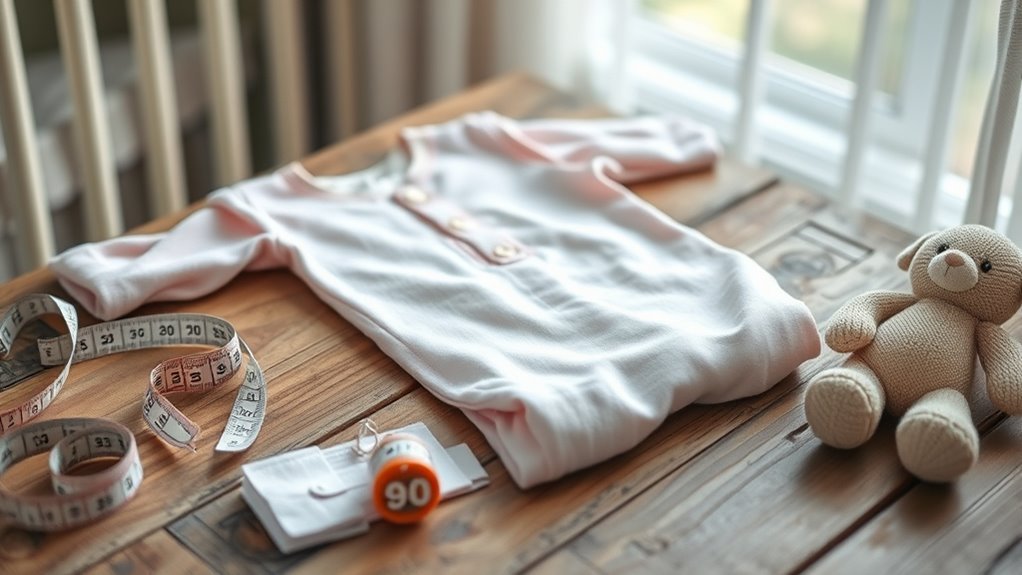
Size 90 in baby clothes refers to garments designed for toddlers around 2 to 3 years old. They typically fit children about 90 cm (35.4 inches) tall and weighing between 26 to 33 pounds.
This size is common in European sizing, which focuses on a child’s height rather than age. So, measuring your toddler’s height guarantees a better fit.
Size 90 usually corresponds to U.S. sizes 2T to 3T, covering toddlers moving out of baby clothes. Since fit can vary across brands, you should always check the specific sizing chart before purchasing.
Understanding size 90 means knowing it’s tailored for children within these height and weight ranges. This helps you choose baby clothes that truly fit your growing toddler comfortably and appropriately.
How to Choose Size 90 Baby Clothes for Your Growing Child
When selecting size 90 baby clothes for your growing toddler, focus primarily on their height rather than age or weight. This guarantees a better fit. Size 90 in baby clothes typically suits toddlers around 90 cm tall, so height is the key factor in choosing baby clothes.
For size 90 baby clothes, prioritize your toddler’s height—around 90 cm—for the best fit.
Since toddler clothing sizes can vary by brand, always consult brand size charts to find the best fit for your little one. Also, keep in mind growth spurts and take accurate measurements regularly.
To choose size 90 effectively, consider prioritizing height over weight for a proper fit. Check European sizing differences and specific brand size charts too.
And don’t forget to allow extra room for growth spurts and comfort. This approach assures baby clothing sizes fit well and accommodate your toddler’s development.
Frequently Asked Questions
Is Size 90 a 2T?
Yes, size 90 usually matches 2T in U.S. toddler clothes. You’ll want to check your child’s height and weight, though, since sizing can vary between brands.
Always compare measurements before buying to guarantee a good fit. It’s the best way to make sure the clothes will be comfy and just right!
What Is Size 90 Equivalent To?
Size 90 is equivalent to about 2T in U.S. toddler sizing, fitting kids around 90 cm tall or 26-33 pounds.
What Is 90 in Amazon Baby Clothes?
On Amazon, size 90 in baby clothes usually fits toddlers around 2 to 3 years old, roughly 35 inches tall.
It’s a good idea to check each product’s specific size chart to confirm a perfect fit. Sizing can vary by brand, so don’t just rely on the number alone.
Does 6 Month Baby Clothes Mean 3 6 or 6 9?
Oh, sure, because babies love confusing math—6-month clothes mean just that: for babies around 6 months old, not “3-6” or “6-9.”
You’ve got to check labels carefully; they’re not all made equal!
Conclusion
Now that you understand what size 90 means in baby clothes, you’re closer to making the perfect choice for your little one. But here’s the twist—size isn’t just a number; it’s a clue to your child’s growth and comfort.
Choosing the right fit can change everything. So next time you shop, remember: size 90 isn’t just about clothes—it’s about embracing the next exciting stage in your child’s journey.
When you pick the right baby clothes size 90, you’re not only ensuring a comfortable fit but also supporting your child’s development. It’s all about finding that sweet spot where style meets comfort. Ready to take that step and make shopping for baby clothes easier and more enjoyable? With size 90, you’re one step closer!



One Comment