How Long Does a Baby Sleep in a Bassinet
You can safely have your baby sleep in a bassinet until they’re about 4 to 6 months old or reach the bassinet’s weight limit, usually 15 to 20 pounds.
This is a great way to keep your little one close during those early months when they need a lot of care and attention.
Watch for signs like rolling over, pulling up, or feeling cramped—these mean it’s time to move to a crib.
Staying aware of your baby’s growth and milestones guarantees a safer sleep environment.
Keep an eye on these cues to make the shift smooth and safe.
That way, you’ll know exactly when your baby is ready for the next sleeping stage without any hassle.
Key Takeaways
- Babies typically sleep in a bassinet until they are 4 to 6 months old. Weight limits for bassinets usually range from 15 to 20 pounds.
- It’s a good idea to transition once the baby starts rolling over or pulling up. That cramped space or hitting developmental milestones usually means it’s time to switch to a crib.
- Room sharing with the bassinet is advised for at least six months to help reduce the risk of SIDS. Keeping your baby close during that time can provide peace of mind for many parents.
How Long Can a Baby Safely Sleep in a Bassinet?
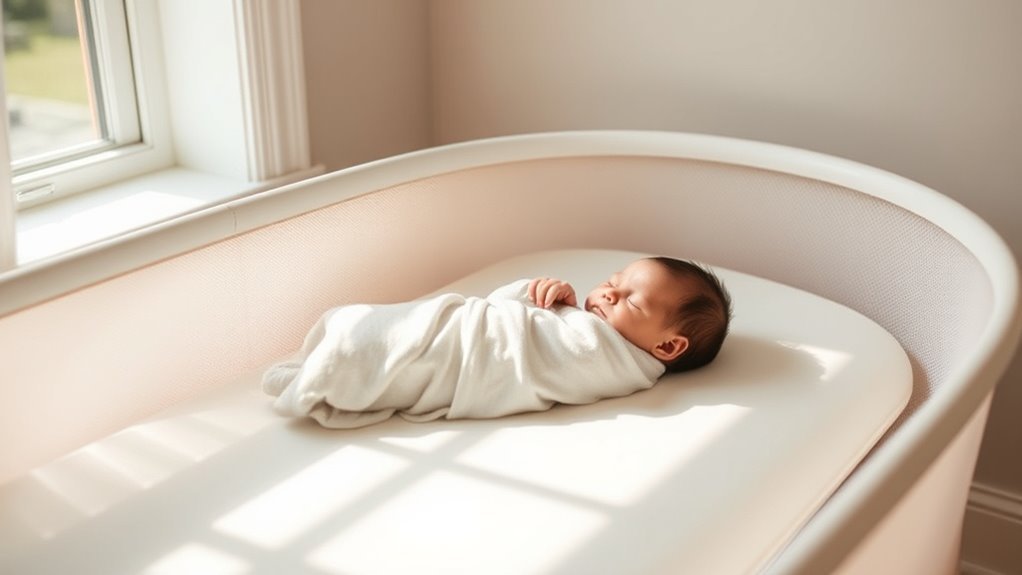
How long can your baby safely sleep in a bassinet? Typically, babies can sleep safely in a bassinet until they’re about 4 to 6 months old. This depends on their weight and developmental milestones.
Most bassinets have weight limits between 15 to 20 pounds, so once your baby approaches this, the bassinet might not be safe or stable anymore. The American Academy of Pediatrics recommends room sharing for at least six months to reduce the risk of Sudden Infant Death Syndrome.
Keep an eye on signs it’s time to change, such as your baby rolling over, pulling up on the sides, or looking cramped in the bassinet. Regularly monitoring your baby’s growth and readiness guarantees a safe sleep environment throughout these months.
When Should You Transition Your Baby From a Bassinet to a Crib?

When is the right time to move your baby from a bassinet to a crib? Typically, you should shift your baby between 4 to 6 months, following safe sleep guidelines.
Key signs it’s time include your baby exceeding the bassinet’s weight limit of 15-20 pounds, rolling over, or pulling up on the sides. The American Academy of Pediatrics (AAP) recommends moving your baby when they can push up on hands and knees, often around 5 months.
Move your baby to a crib when they exceed 15-20 pounds, roll over, or start pulling up.
If your baby seems cramped or can’t stretch comfortably, it’s a clear sign to switch. To ease this change, keep a consistent bedtime and maintain a comfortable temperature in the new crib or playard.
This way, your baby can adapt smoothly to their new sleeping space.
Frequently Asked Questions
When Should Babies Stop Sleeping in a Bassinet?
You should stop letting your baby sleep in a bassinet once they start rolling over, pushing up, or pulling themselves up.
Also, it’s time to switch when they weigh around 15 to 20 pounds.
This usually happens between 4 to 6 months.
It’s all about safety, so keep an eye on those milestones!
What Is the 5-3-3 Rule for Baby Sleep Training?
Think of the 5-3-3 rule as gently dimming a lullaby’s volume. You start soothing your baby for 5 minutes, then 3, then 3 again.
This helps them learn to drift off on their own with patience and love. It’s all about giving your little one space to settle while still feeling supported.
What Age Do You Move a Baby From Bassinet to Crib?
You typically move your baby from a bassinet to a crib between 4 to 6 months. Watch for signs like increased mobility, rolling over, or outgrowing weight limits.
These clues help guarantee a safe, comfortable shift. When you see them, it’s usually a good time to make the change.
Do Newborns Sleep Better in Bassinet or Crib?
You might think cribs offer more space, but newborns actually sleep better in a bassinet’s snug environment. It feels cozy and secure, helping your baby settle faster and stay peaceful during those early months.
Plus, that closeness can be really comforting for both you and your little one. So, even though cribs have their perks, bassinets often win out for those first few months.
Conclusion
You might wonder how long your little one should stay in a bassinet. Think of it as a cozy nest—perfect for those early weeks but not forever.
As your baby grows, so does their need for space and safety. Shifting to a crib at the right time isn’t just a milestone; it’s a leap toward independence.
Trust your instincts, and remember: every small step shapes your baby’s big journey. Knowing how long a baby sleeps in a bassinet helps you make the best choice for their comfort and safety. So, keep an eye on your baby’s size and sleep patterns, and when it feels right, transition to a crib to support their growing needs. This way, you ensure your little one sleeps safely and soundly every night.