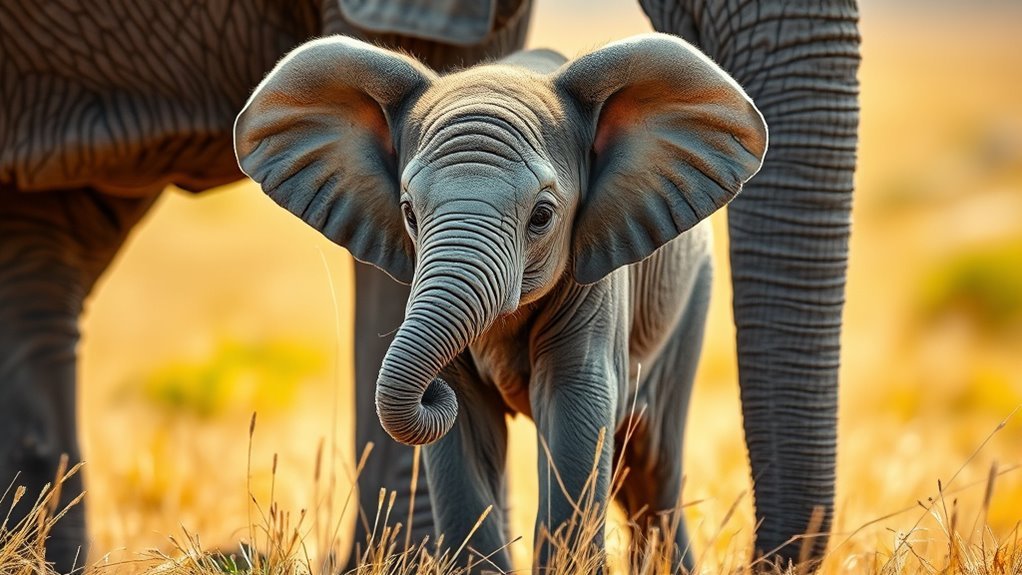
What Is a Baby Elephant Called?
A baby elephant is called a calf, and you’ll find they weigh about 250 pounds and stand around three feet tall at birth.
These little calves are part of a big, loving family called a herd, which is super important for their survival and growth.
Calves depend heavily on their herd to grow and learn, especially since they take months to master using their trunks. It’s pretty amazing to watch them figure it out!
They’re playful, social, and essential to their herd’s future.
If you want to see how these gentle giants develop and thrive within their tight-knit families, there’s plenty more to discover.
They truly are fascinating creatures worth learning about!
Key Takeaways
- A baby elephant is called a calf. Calves typically weigh around 250 pounds at birth.
- Newborn calves stand about three feet tall. Elephant gestation lasts 18 to 22 months, which is the longest in the animal kingdom.
- Calves depend on their herd for growth, learning, and protection. They really stick close to their family as they grow up.
What Is a Baby Elephant Called?
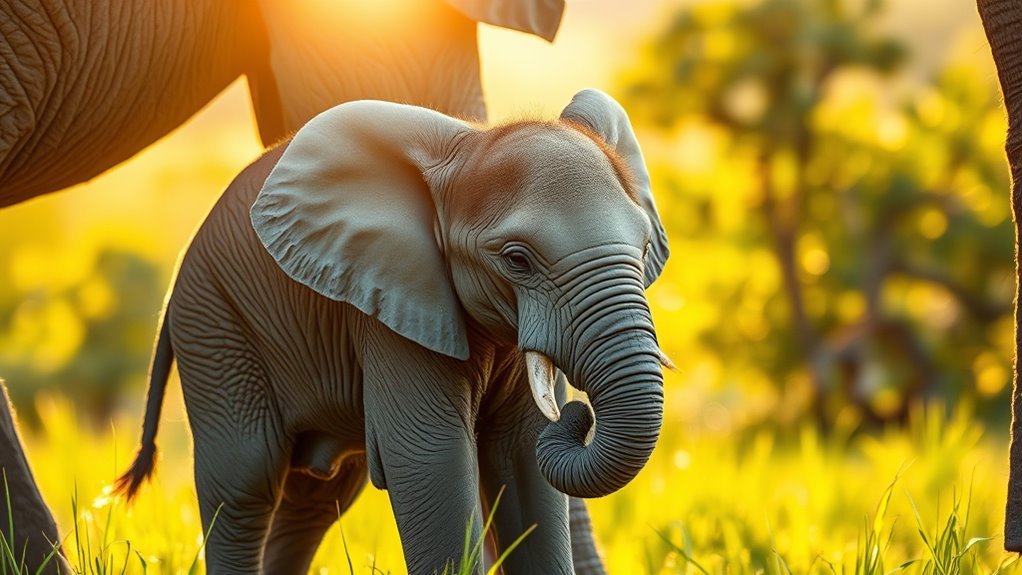
What do you call a baby elephant? It’s called a calf. When a calf is born, it typically weighs around 250 pounds and stands about three feet tall.
You might be surprised to learn that elephants have the longest gestation period in the animal kingdom, lasting 18 to 22 months. Because each mother usually gives birth to a calf every 4 to 5 years, every calf is essential to maintaining healthy elephant populations.
These calves represent the future of their herds, so their survival is critical. By understanding what a baby elephant is called and its importance, you can better appreciate the delicate balance that supports elephant communities around the world.
How Baby Elephants Grow and Learn With Their Herd
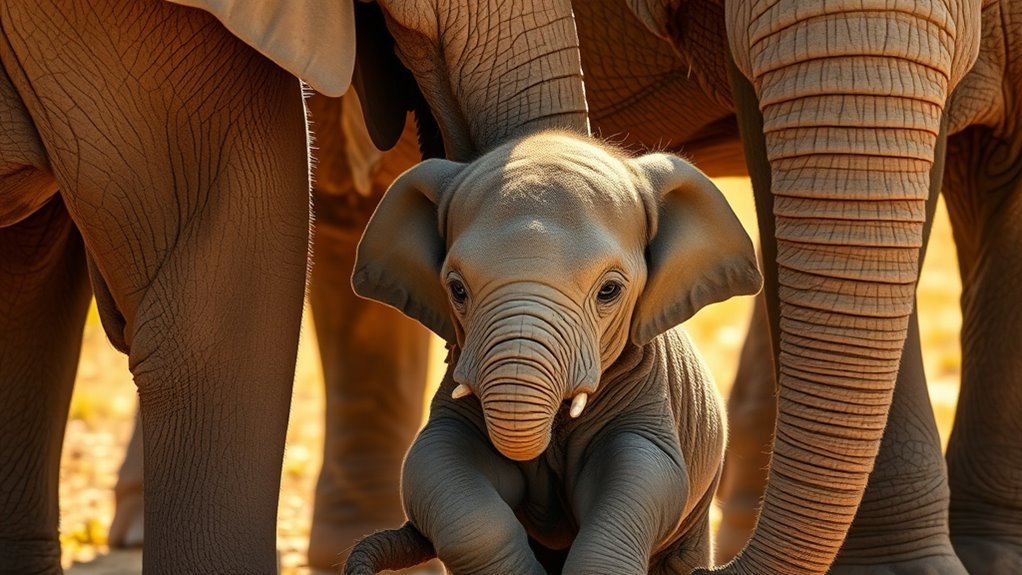
Although baby elephants, or calves, start life weighing around 250 pounds and standing three feet tall, they rely heavily on their herd to grow and learn essential skills.
As you watch a calf, you’ll notice its trunk is clumsy at first, taking up to eight months to master. In the herd, older Asian elephants teach calves how to use their trunks for feeding and communication.
You’ll see the close-knit social structure in action, with “allomothers” offering care and comfort when calves get distressed. Playfulness is key for calves, too; mud-bathing not only keeps their skin safe from sun and insects but also encourages curiosity and social bonds.
Through these interactions, calves learn survival and social skills crucial for their future.
Frequently Asked Questions
What Animal Is Pregnant for 2 Years?
You’re looking for the elephant, which is pregnant for about 18 to 22 months—almost two years.
This long gestation helps the baby develop fully. It makes sure the little one is ready for survival and bonding with its mother and herd.
What Are Baby Monkeys Called?
Baby monkeys are called infants or babies. You’ll find these fragile, faithful fledglings cling closely to their caring caretakers, learning life’s lessons through lively observation and loving mimicry.
They grow stronger with each shared moment and maternal move. It’s pretty amazing to see how they pick things up just by watching and copying.
What Are Baby Snakes Called?
A baby snake is called a hatchling or snakelet. You’ll see they’re usually independent right from birth, sometimes born live or hatched from eggs.
They often carry a yolk sac to nourish them until they hunt on their own. It’s pretty amazing how quickly they can take care of themselves!
What Is a Juvenile Elephant?
A juvenile elephant is a young elephant between about 3 and 10 years old. You’ll see it growing, playing, and learning social skills while staying close to its herd for protection and guidance during this vital stage.
It’s a really important time for them. They’re figuring out how to be part of the group and getting ready for adulthood.
Conclusion
As you watch a baby elephant take its first wobbly steps, you’re witnessing a tiny giant learning to dance with the rhythm of the herd. Like a fresh bloom unfurling under the sun, that little one grows surrounded by love and guidance.
You’ll see how each stumble turns into strength, every gentle nudge shaping a future leader. In the grand tapestry of the wild, baby elephants are the bright threads weaving tomorrow’s stories.
A baby elephant, often called a calf, is truly a marvel to watch. From those first tentative movements to playful interactions, their journey is full of wonder. So next time you see a baby elephant, remember you’re witnessing the beginning of a majestic life in the wild.