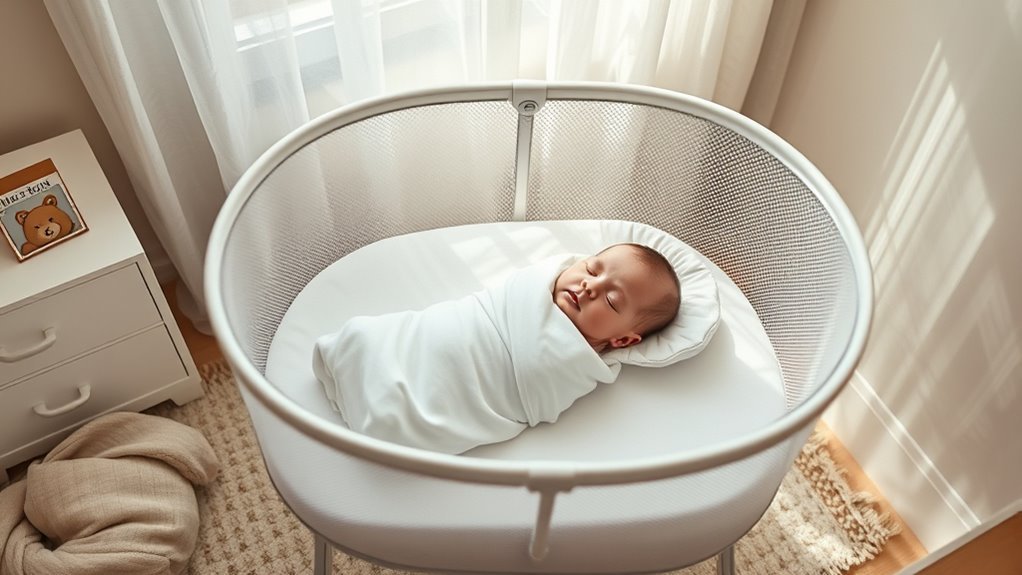
How Long Can Baby Sleep in Bassinet Safely
You can safely have your baby sleep in a bassinet until they weigh about 15-20 pounds or reach around 4 to 6 months old. This is a common guideline to ensure your little one stays comfortable and secure during sleep.
Watching for signs like rolling over or pushing up on hands and knees is important because these milestones mean it’s time to switch to a crib.
Keeping the bassinet close to your bed supports safe sleep practices and helps you keep a close eye on your baby throughout the night.
But remember, monitoring your baby’s growth and mobility is key to deciding when to move them.
If you want to know how to smoothly move from bassinet to crib, there’s more guidance ahead to help you make that transition easier for both you and your baby.
Key Takeaways
- Babies can safely sleep in a bassinet until they reach 15-20 pounds or about 4-6 months old.
- If you notice signs like rolling over or pushing up on hands and knees, it’s time to think about moving your little one out of the bassinet.
- It’s a good idea to regularly check your baby’s weight and how they’re moving to know how long the bassinet stays safe.
- Keep the bassinet close to your bed so you can easily watch your baby and support safe sleep during the night.
- Always follow the manufacturer’s weight limits, and steer clear of soft bedding to keep the sleep environment safe.
How Long Can a Baby Safely Sleep in a Bassinet?

How long can your baby safely sleep in a bassinet? Typically, babies can sleep safely in a bassinet from birth until they reach about 15-20 pounds or around 4-6 months, depending on the model.
You’ll want to watch for signs like rolling over or pushing up on hands and knees—these milestones increase the risk of falling and signal it’s time to think about a change.
The American Academy of Pediatrics recommends room sharing for at least the first six months to reduce the risk of Sudden Infant Death Syndrome. Keeping your baby close in a bassinet near your bed supports safe sleep practices.
Regularly monitoring your baby’s weight and mobility helps you know when to move them to a safer sleeping environment.
When and How to Transition Your Baby From Bassinet to Crib
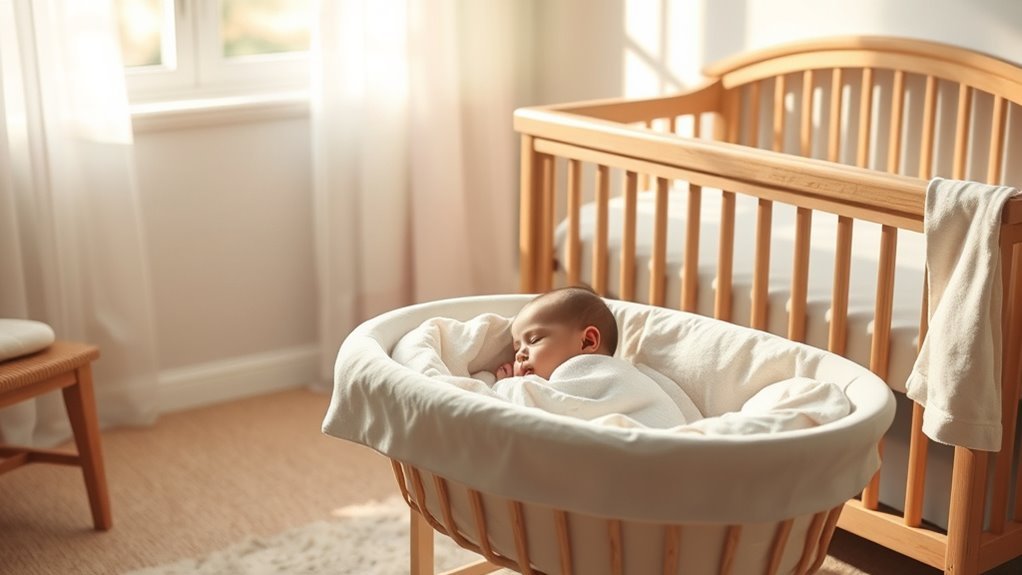
Although many parents enjoy the convenience of a bassinet during the early months, you’ll want to start planning the change to a crib between 3 to 6 months of age or once your baby outgrows the bassinet’s weight limit.
To move your baby smoothly from bassinet to crib, watch for signs that indicate readiness, such as rolling over or pulling up on the sides.
Follow these steps to guarantee a safe sleep environment:
- Gradually introduce naps in the crib to build familiarity.
- Maintain a consistent bedtime routine to comfort your baby.
- Use a firm mattress in the crib and avoid soft bedding.
- Always respect weight limits specified by the manufacturer.
These tips help your baby adapt safely and comfortably during this important change.
Frequently Asked Questions
At What Age Is SIDS No Longer a Risk?
You’re generally safe from SIDS risk after your baby turns 6 months old, but it’s best to keep following safe sleep practices for the first year.
Always place them on their back and avoid bed-sharing.
What Is the 5-3-3 Rule for Babies?
You should follow the 5-3-3 rule: keep your baby in a bassinet up to 5 months. Room-share for 3 months, and move them to a crib by 3 months if they show mobility.
This approach helps reduce the risk of SIDS considerably. It’s a simple guideline that many parents find really helpful!
Can a Baby Be Too Long for a Bassinet?
Yes, your baby can outgrow a bassinet if they become too heavy, start rolling over, or pull up on the sides.
When that happens, it’s safer to move them to a crib to prevent falls.
It’s all about keeping your little one safe and comfortable as they grow!
What Are the Risks of Using a Bassinet Too Long?
You’ll love the thrill of risking falls, suffocation, and poor sleep habits by keeping your baby in a bassinet too long.
But seriously, it hinders development and makes changing over harder—better switch when they outgrow it.
Conclusion
You’ll want to keep your baby in the bassinet for about the first 3 to 6 months, or until they start rolling over or pushing up. Think of the bassinet as a cozy nest—perfect for those early, delicate months.
Once your little one grows and becomes more active, it’s time to shift them to a crib for more space and safety. Trust your instincts, and remember, every baby’s journey is unique.
When considering how long a baby can sleep in a bassinet safely, it’s important to watch for signs like rolling over or pushing up. These milestones mean your baby needs a bigger, safer sleep space. Using the bassinet during those first months provides comfort and security, but transitioning to a crib ensures they have the room to move freely and stay safe as they grow. Always prioritize safe sleep practices and your baby’s comfort when deciding how long to use a bassinet.






One Comment