What Does a Baby Pigeon Look Like?
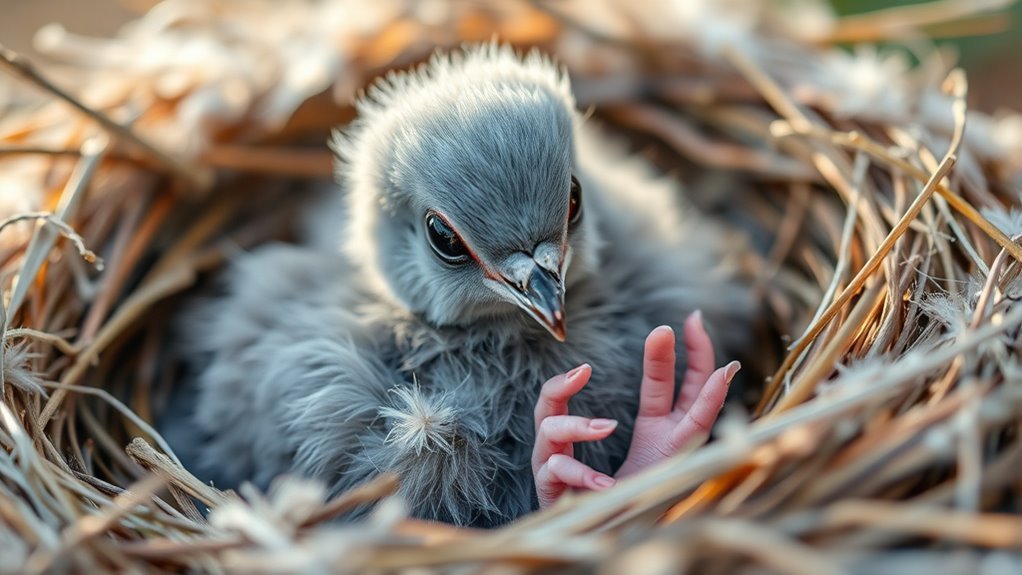
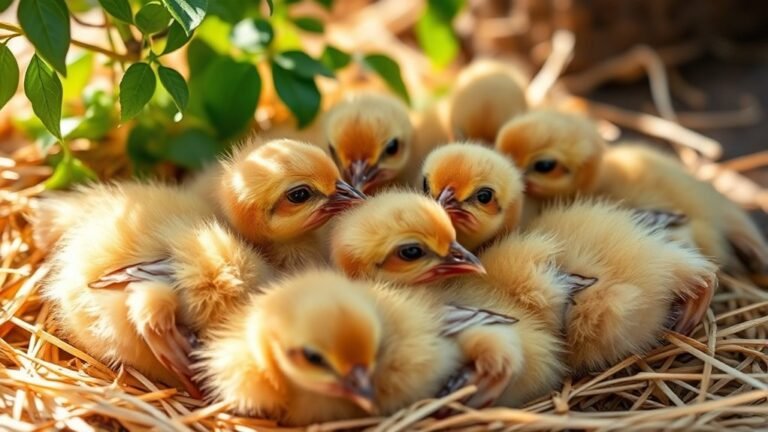
You’ll spot a baby pigeon, or squab, by its flat pink beak and patchy fuzz instead of full feathers. Its head looks smaller compared to its body, and it lacks the shiny neck feathers adults have. The cere, or the area above the beak, is a dull pinky-grey, not white like grown pigeons.
Squabs stay sheltered for a few weeks, growing quickly before they’re ready to fly and look more like adults.
There’s more to discover about their early life. It’s pretty fascinating to see how these little birds transform as they grow!
Key Takeaways
- Baby pigeons, called squabs, have flat pink beaks and patchy fuzz instead of full feathers. Their heads are smaller relative to their bodies compared to adult pigeons.
- Squabs lack the iridescent neck coloring that adult pigeons display. They have a dull pinky-grey cere, unlike the white cere of adults.
- Early squabs appear fragile and mostly covered in patchy fuzz rather than smooth feathers. Pretty different from those sleek adults, right?
How to Identify a Baby Pigeon
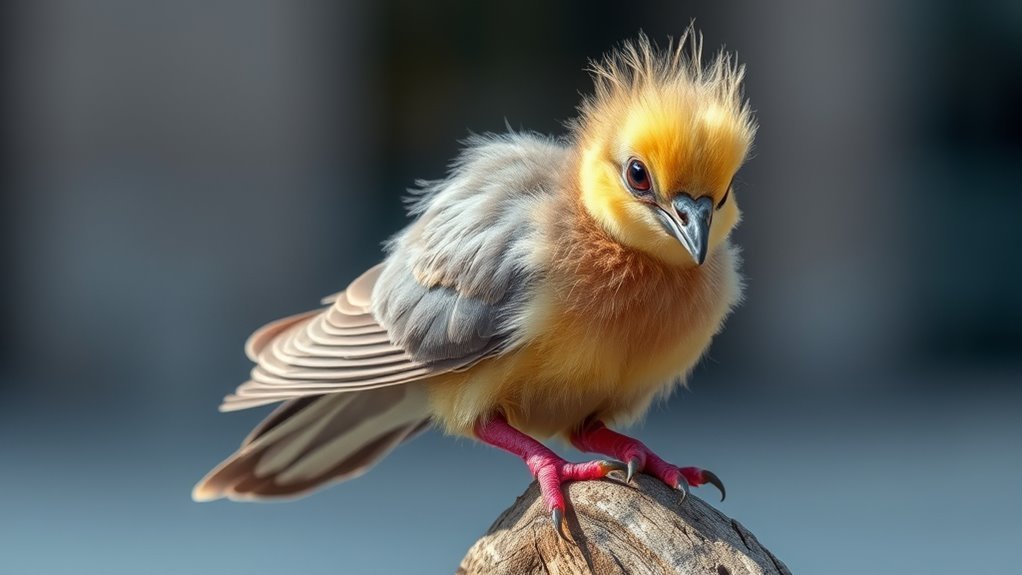
How can you tell a baby pigeon apart from an adult? Baby pigeons, or squabs, look quite different from juvenile pigeons and adults. Squabs have a flat pink beak and patchy fuzz instead of smooth feathers.
Their heads appear smaller compared to their bodies, and they lack the iridescent neck coloring you’d see on a domestic pigeon adult. Instead, baby pigeons show down feathers and have a dull pinky-grey cere, unlike the adult’s white cere.
You’ll often find squabs nesting on window ledges or other sheltered spots, staying in the nest for about four to six weeks before they’re ready to fly. Spotting them in the wild can be tricky because they stay in the nest so long, but these traits help you identify them clearly.
How Baby Pigeons Grow and Change
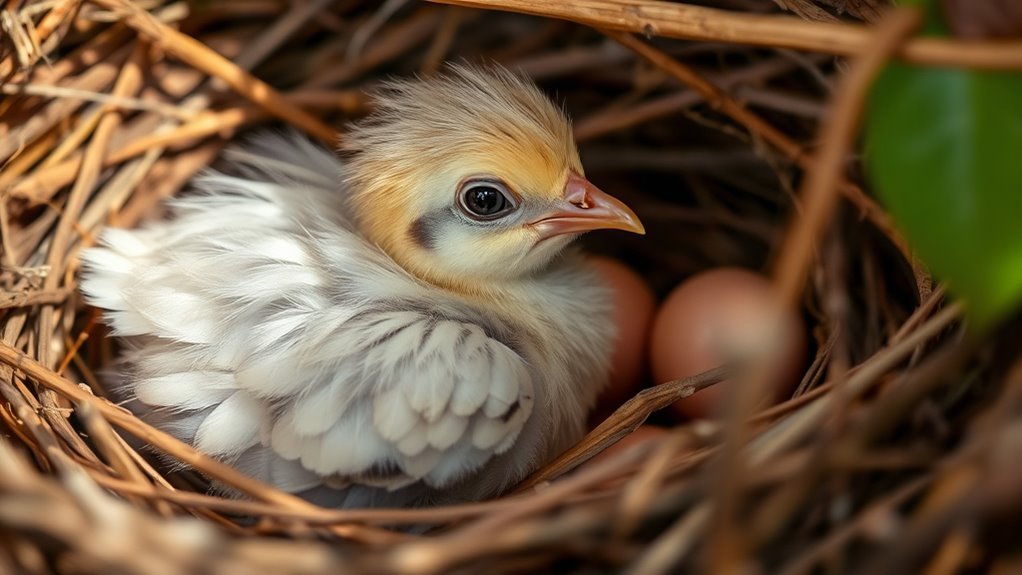
Recognizing a baby pigeon is just the first step in understanding their early life. Baby pigeons, called squabs, hatch naked with flat pink beaks and fragile skin.
During the nesting period, they quickly gain weight by feeding on nutrient-rich pigeon milk from their parents. Within two weeks, you’ll notice patchy fuzz as their feathers begin to grow. This signals the start of their development into juvenile pigeons.
These juveniles stay in the nest for about four to five weeks, growing almost to adult size and developing more defined features. By six weeks, squabs are ready to fledge.
They sport more feathers and start to resemble adult rock pigeons, though they still lack some of the mature coloration. Watching this growth shows just how rapidly these birds change.
Frequently Asked Questions
How Rare Is It to See a Baby Pigeon?
You rarely see baby pigeons because they stay hidden in nests for weeks. They only leave when they’re feathered and ready to fly.
Their secretive nature, along with the timing, makes spotting them in cities pretty uncommon. So yeah, it’s kind of a rare sight!
Why Do We Hardly Ever See Baby Pigeons?
You hardly see baby pigeons because their parents are secret agents, hiding them away like precious treasures.
They stay cloaked in nests until they’re ready to fly, leaving you only with their adult doppelgängers to spot.
What Bird Are Pigeons Most Afraid Of?
You’ll find pigeons most afraid of magpies because they aggressively attack nests and young pigeons.
You should also know hawks and falcons scare them, especially in urban areas where pigeons nest high and stay vigilant.
How Can You Tell if It’s a Baby Pigeon?
You can tell it’s a baby pigeon by its patchy pinkish skin, plump proportions, and pale, flat beak.
It won’t flaunt flashy feathers or that familiar iridescent neck shine you see on grown pigeons.
Basically, it looks a bit scruffy and soft, not quite like the sleek adults you’re used to.
Conclusion
Now that you know what a baby pigeon looks like, spotting one won’t feel like searching for a needle in a haystack. These fluffy, awkward little birds might not look like their sleek adult selves yet, but with time, they’ll grow into the pigeons you see strutting around city squares.
Remember, every big bird was once a tiny, vulnerable chick—proof that even the smallest beginnings can lead to something amazing. Baby pigeons might seem fragile now, but they’re on their way to becoming the familiar city birds we all recognize. So next time you see a baby pigeon, you’ll appreciate just how much growth and change it has ahead.




One Comment