What Is a Baby Goose Called?
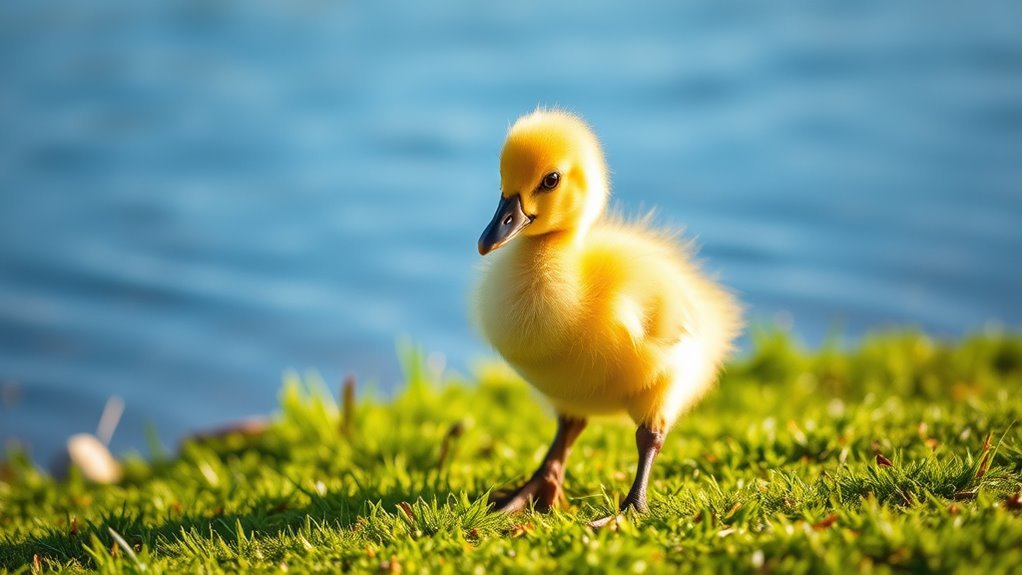
A baby goose is called a gosling. When goslings hatch, you’ll notice they have soft, fluffy yellow down. This down changes to light grey or olive green as they grow bigger.
They’re quite small at birth—only a few inches long and weighing just over 100 grams.
Even though goslings start foraging within a day, they still rely on their parents for protection and guidance.
If you’re curious about how goslings grow up, their family dynamics, and how they eventually become independent, there’s a lot more to learn.
It’s pretty fascinating to watch these little birds develop and thrive!
Key Takeaways
- A baby goose is called a gosling. Goslings hatch with soft, fluffy yellow down feathers.
- They are a few inches long and weigh over 100 grams at birth. Their color changes from yellow to light grey or olive green as they grow.
- They start walking, swimming, and foraging within 24 hours after hatching. It’s pretty amazing how quickly they get moving!
What Is a Baby Goose (Gosling) and How to Identify One
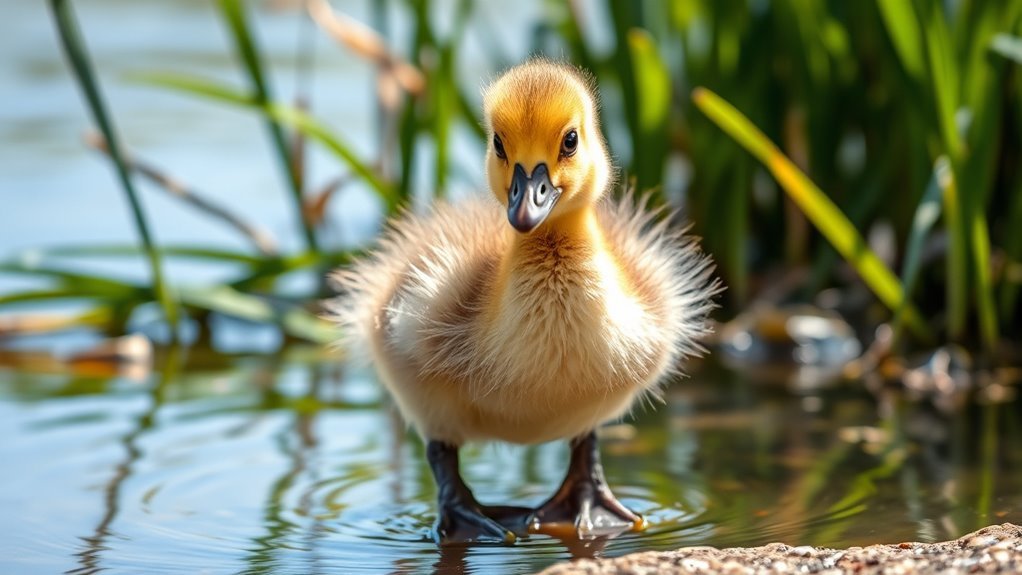
A baby goose, known as a gosling, stands out with its soft, fluffy yellow down that gradually shifts to light grey or olive green as it grows. When you spot goslings, you’ll notice they’re just a few inches long and stand about 5 to 7 inches tall, weighing over 100 grams at birth.
Baby geese like the Canada goose vary slightly in size but share these key features. Within a day of hatching, goslings start foraging for seeds, grasses, and roots, often under the watchful eyes of their parents.
After about 20 days to a month, they begin molting, replacing their fluffy down with juvenile feathers. This stage helps you identify them before they fully mature into adult geese.
Gosling Growth, Development, and Family Safety
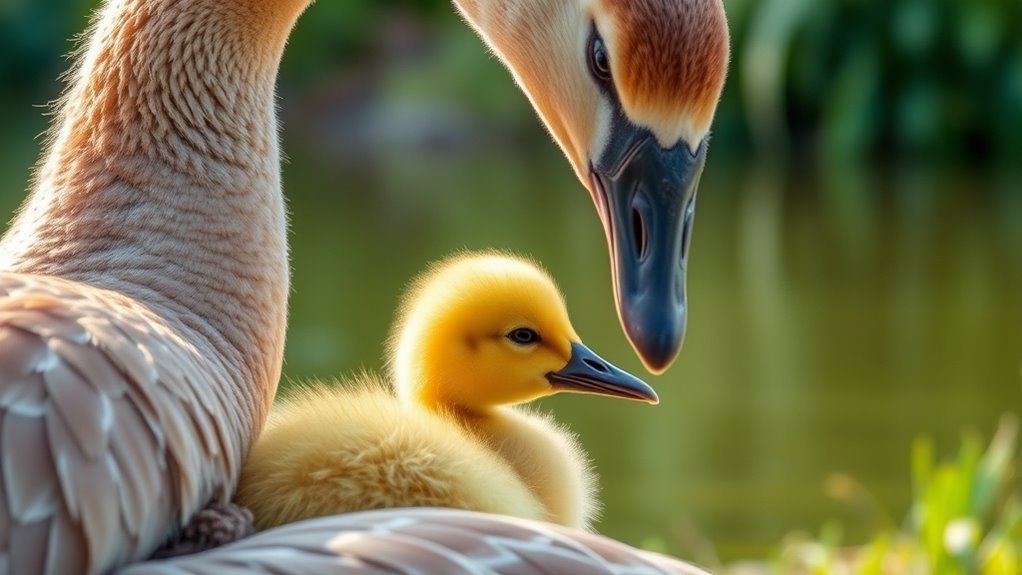
Though goslings hatch with remarkable independence, their growth and safety heavily rely on attentive parental care. Canada geese goslings weigh about 103 grams at birth and can walk, swim, and forage within 24 hours.
Around 20 days to a month, they start moulting, shifting from soft down to juvenile feathers. Despite their early abilities, goslings stay with their parents for nearly a year, forging strong family bonds.
During this time, adult geese protect them from predators and guide them in finding food like seeds, grasses, and roots. You’ll notice that these family bonds are essential for gosling survival, ensuring they develop properly and remain safe in the wild until they’re ready to thrive independently.
Frequently Asked Questions
How Do I Pronounce Gosling?
You pronounce “gosling” with a hard “g” sound, like in “go.” Emphasize the first syllable: GAZ-ling.
It rhymes with “wrestling” and “hustling,” making it easier to remember and say correctly. Easy, right? Just think of those words when you say it!
What Is a Daddy Goose Called?
Imagine a protective gander named Gus guarding his nest fiercely. You call a daddy goose a “gander.”
He leads, mates for life, and fiercely protects his family. It’s pretty cool how loyal and strong he is—kind of like nature’s own guardian.
What Is a Group of Baby Geese Called?
A group of baby geese is called a gosling brood. You’ll usually see about 5 to 10 goslings sticking close to their parents.
They’re learning to forage and grow strong together during their first year of life. It’s pretty cute to watch them all huddle and explore as a team.
What Is a Kid Goose Called?
You won’t hear “kid goose” often because it’s incorrect. Instead, you call a baby goose a gosling.
They’re adorable, fluffy, and can walk and swim shortly after hatching. Stick with “gosling” for accuracy!
Conclusion
Now that you know a baby goose is called a gosling, you can spot these sweet, soft fluffballs with confidence. Watching goslings grow gives you a great glimpse into goose family life and their gentle growth stages.
Remember, respecting their space keeps both you and the goslings safe and sound. So, stay curious, stay careful, and savor the special sight of these spirited small swimmers splashing and stepping into their big, brave world!
Seeing goslings in action is truly a joy. These baby geese, or goslings, are adorable and fascinating as they explore their environment. By giving them room and watching quietly, you help ensure they stay safe while they grow into strong adult geese. So, next time you spot a gosling, take a moment to appreciate the wonder of these young birds beginning their journey.