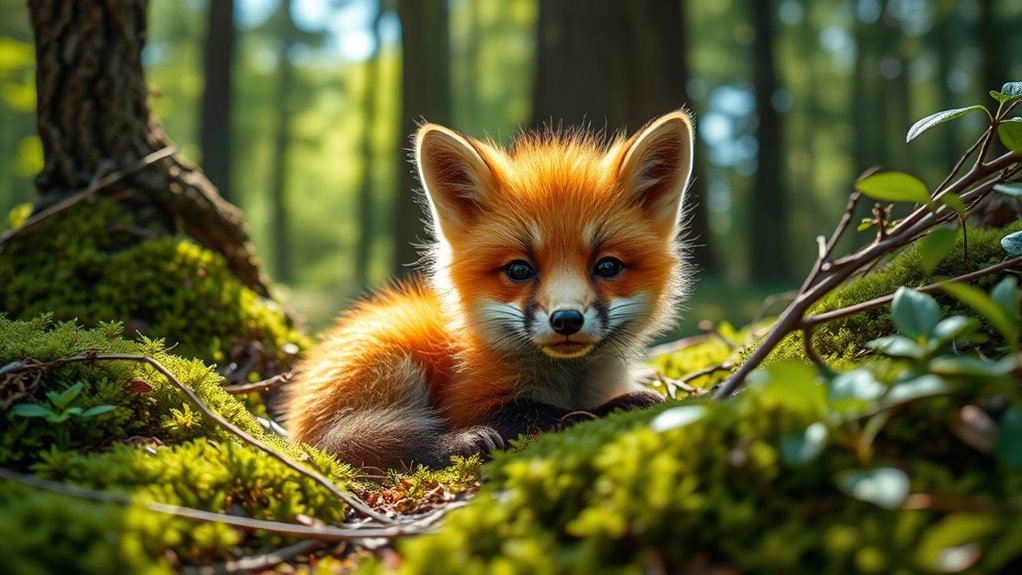
What Are Baby Foxes Called?
You’ll find baby foxes called kits, cubs, pups, or whelps, depending on where you are and which organization you follow. These adorable little creatures have different names that might surprise you.
In the US, “pups” is the common term, while British sources tend to prefer “cubs.” Some groups even opt for “kits.”
If you want to spot a baby fox, keep an eye out for their narrower faces and smaller ears. They often show playful behavior, which makes them really fun to watch compared to puppies.
Keep exploring, and you’ll discover even more about their unique traits and names. It’s fascinating how these little foxes have so many different identities!
Key Takeaways
- Baby foxes are commonly called kits, cubs, pups, or whelps depending on species and region.
- The British Mammal Society and BBC prefer the term “cubs” for baby foxes.
- In the US, the National Wildlife Federation uses “pups” to refer to baby foxes.
- The Humane Society favors calling baby foxes “kits,” reflecting cultural naming preferences.
- These varied terms help enhance communication and public awareness about foxes.
Common Names for Baby Foxes and Why They Differ
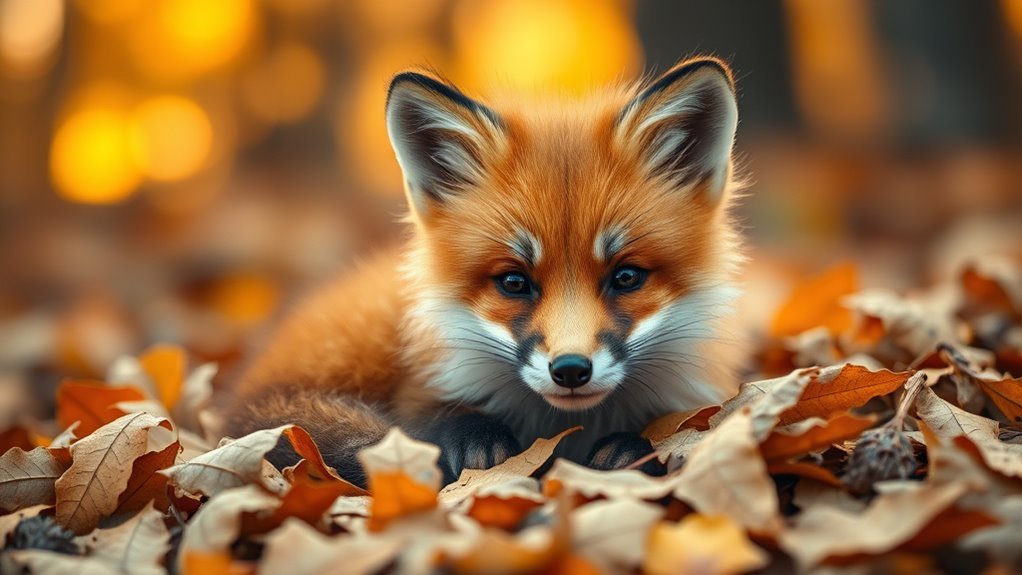
Although baby foxes have several common names, you’ll often hear them called “kits,” “cubs,” “pups,” or “whelps,” depending on the species and region. Different organizations also prefer different terminology: the British Mammal Society and BBC use “cubs,” while the National Wildlife Federation in the US opts for “pups.”
Meanwhile, the Humane Society favors “kits.” This variation reflects diverse cultural and regional views on wildlife terminology. If you’re a wildlife rehabilitator or simply interested in baby foxes, understanding these differences helps you communicate more clearly.
Engaging with others about the terms can deepen your appreciation of these animals and support better public awareness. So, don’t be surprised if you hear several names for the same adorable creature.
How to Identify Baby Foxes and Tell Them Apart From Puppies
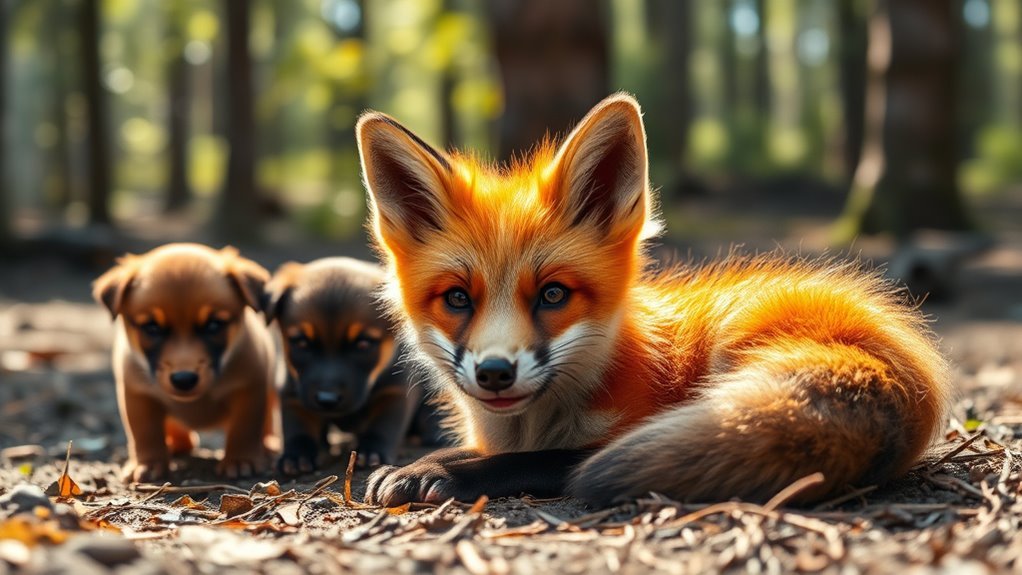
Spotting the difference between baby foxes and puppies can be tricky, but a few key features help you tell them apart. Baby foxes, called kits or fox kits, usually have narrower faces and smaller ears compared to puppies, which often have broader snouts and bigger feet.
If you see a tiny red fox kit, note that they’re altricial at birth with closed eyes, opening them around two weeks old—puppies open theirs sooner, depending on breed. You’ll also notice fox kits are more playful and curious, engaging in social behaviors that build survival skills.
Puppies’ development and temperaments vary more widely by breed. So, when you spot a small furry animal, check these traits to confidently distinguish a fox kit from a puppy.
Frequently Asked Questions
What Do You Call a Mama Fox?
You call a mama fox a vixen. She’s the female fox who cares for her kits, providing food and protection while teaching them survival skills.
You’ll notice her especially during mating season and when raising her young. Pretty cool, right?
What Do You Call a Group of Baby Foxes?
You call a group of baby foxes a litter. Usually, it includes two to seven kits born to one vixen.
Watching them play helps you appreciate how they learn essential survival skills together early on. It’s pretty amazing to see how much they pick up just by hanging out and having fun.
What Is the Name for a Baby Fox?
You call a baby fox a “kit,” though some also say “cub,” “pup,” or “whelp.”
The term “kit” is most common, especially when you’re reading about their early, delicate stages of life and growth. It just feels like the right word, doesn’t it?
Do Foxes Hate Noise?
You’d think foxes hate noise as much as cats hate water! They get stressed by loud sounds, which mess with their survival skills.
Conclusion
Now that you know baby foxes are called kits, cubs, or pups, you’re ready to spot these clever creatures in the wild. Like the fabled fox in Aesop’s tales, their names may change, but their curious spirit stays the same.
So next time you see a small, fluffy fox, remember—you’re glimpsing a timeless story of nature’s wit and wonder. Baby foxes, whether kits, cubs, or pups, embody the playful and cunning traits that make foxes so fascinating.
Observing these young foxes in their natural habitat gives you a special connection to the wild. It’s a chance to appreciate the cleverness and charm that baby foxes bring to the animal kingdom, right before your eyes.




2 Comments