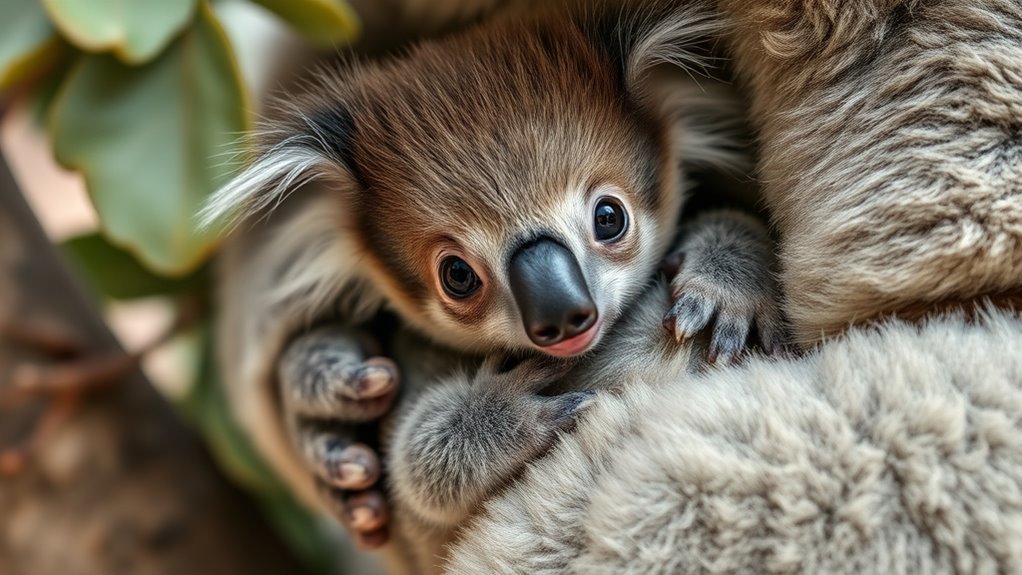
What Is a Baby Koala Called?
A baby koala is called a joey, just like all marsupial young. When the tiny joey, about 2 cm long and less than a gram, is born, it immediately crawls into its mother’s pouch to grow. This early stage is crucial for the joey’s development and survival.
Inside the pouch, it stays for around six months, nourished by a special food called pap that helps develop its digestive system. This unique food is essential because it prepares the joey to eat eucalyptus leaves later on.
You’ll discover how the joey grows and eventually becomes independent as it leaves the pouch. It’s fascinating to see how these little creatures thrive from such a tiny beginning!
Key Takeaways
- A baby koala is called a “joey.” The term “joey” is used for all marsupial young, including koalas.
- Joeys are about 2 cm long at birth and crawl immediately into their mother’s pouch. They stay in the pouch for around six months for protection and development.
- As they grow, joeys gradually gain independence. By about one year of age, they are usually ready to venture out on their own.
What Do You Call a Baby Koala?
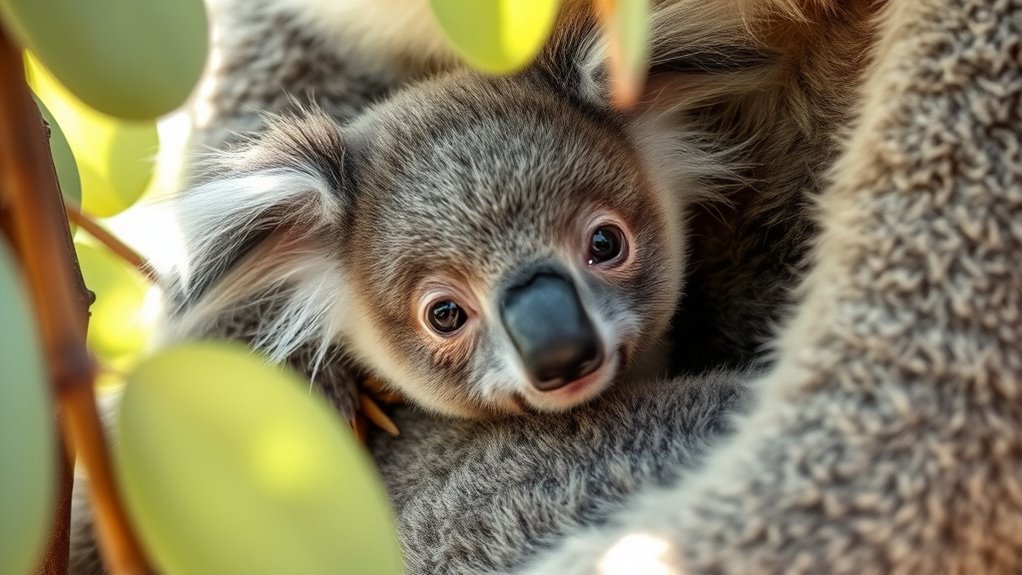
If you’re wondering what to call a baby koala, the answer is “joey.” Just like other marsupial young, baby koalas are called joeys from birth.
Right after birth, the tiny joey, about 2 cm long, immediately crawls into its koala mother’s pouch. There, the joey spends around six months developing safely.
During this time, the joey feeds on a special substance called pap, which the mother produces. Pap provides essential nutrients and probiotics that help baby koalas digest eucalyptus leaves later.
This pouch stage is vital because the joey is too underdeveloped to eat or move on its own. Thanks to the koala mother’s care and nourishment, the joey grows steadily, preparing for life outside the pouch over the following months.
How Do Baby Koalas Develop From Birth to Independence?
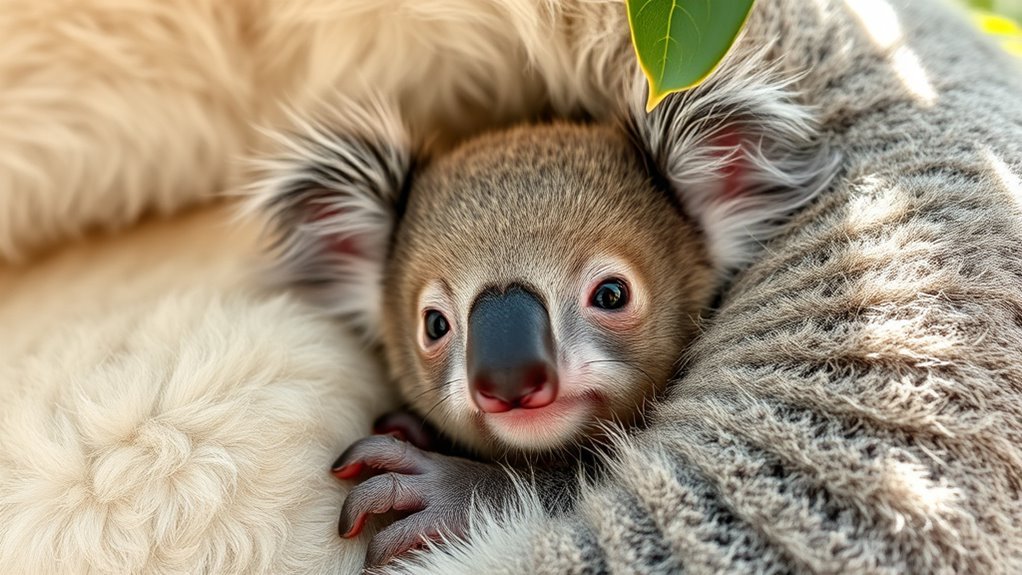
Now that you know baby koalas are called joeys and spend their early months in their mother’s pouch, it’s helpful to understand how they develop from birth until they become independent.
At birth, joeys weigh less than 1 gram and immediately crawl into their mother’s pouch, where they stay for about six to seven months. Inside the pouch, they consume pap, a special substance essential for developing gut flora to digest eucalyptus leaves.
Newborn joeys, under 1 gram, spend six to seven months in the pouch, feeding on pap for gut development.
Here’s how joeys develop:
- They develop their eyes, ears, and fur while in the pouch.
- Around 5.5 months, they start peeking out and by 8-9 months, they ride on their mother’s back.
- By one year, they reach independence, weaning off milk and leaving when new joeys arrive.
Frequently Asked Questions
Why Are Baby Kangaroos and Koalas Called Joeys?
You call baby kangaroos and koalas joeys because it’s a common term for all marsupial young. It likely started in 1839 and stuck, reflecting their shared early development inside their mother’s pouch.
It’s kind of neat how the word caught on and now we use it for all these little marsupial babies. Makes you think about how they all start out in such a similar way!
What Is a Kid Koala Called?
A kid koala is called a joey. You’ll notice the term “joey” applies to all baby marsupials, including koalas.
They stay in their mother’s pouch, growing and developing safely for several months. It’s pretty amazing how they remain tucked away while getting bigger and stronger.
Which Animal Has Chlamydia?
You might be surprised, but about 50% of wild koalas have chlamydia. This disease seriously harms them, causing blindness and infertility.
Protecting these animals means understanding and fighting chlamydia’s impact on their populations. It’s pretty important if we want to keep koalas around for a long time.
What Is the Slang Word for Baby Kangaroo?
The slang word for a baby kangaroo is “joey.” You’ll hear this term often since it applies to all marsupial young.
When you spot a tiny kangaroo in a pouch, that’s a joey you’re seeing. It’s a pretty handy word to know!
Conclusion
You might be surprised to learn that a baby koala is called a joey—just like kangaroos! It’s a funny coincidence that these unique Aussie animals share the same name for their young.
As you watch a joey grow from a tiny, blind newborn tucked safely in its mother’s pouch to an independent climber, you’ll see nature’s amazing way of nurturing life.
So next time you hear “joey,” you’ll know it’s more than just a kangaroo—it’s a baby koala too! Knowing that a baby koala is called a joey helps you appreciate how these adorable creatures develop and thrive in the wild. It’s pretty cool that both kangaroos and koalas use the same term for their babies, showing a special connection in Australia’s wildlife. Whether you’re spotting a joey in a tree or learning about Aussie animals, remember that a joey isn’t just any baby—it’s a baby koala too!


One Comment