When Can Baby Face Out in Carrier How-To Guide
You can start facing your baby outward in a carrier once they have strong neck and head control, which usually happens around 5 to 6 months old.
This is an important milestone for baby face out in carrier because it helps ensure your little one is safe and comfortable. Make sure their chin clears the carrier panel and they seem alert and curious.
Begin with short 10-20 minute sessions to see how your baby reacts.
Watch closely for any fussiness or discomfort during these early tries. Using an ergonomic carrier designed specifically for outward facing is key. It supports healthy hip positioning and keeps your baby comfy.
Remember, your baby’s comfort and safety should always come first to make this a positive experience for both of you.
Want to know how to do this safely and confidently? Keep reading!
Key Takeaways
- Baby can face out when they have strong head and neck control, typically around 5-6 months old.
- Make sure the baby’s hips and knees form an ergonomic “M” position in the carrier for healthy development.
- Start with short outward-facing sessions of 10-20 minutes. Then, gradually increase the time as your baby adjusts.
- Keep an eye on your little one for signs of fussiness or overstimulation. If that happens, switch back to inward facing.
- Use carriers that are specifically designed for outward facing with proper support. Always adjust for your baby’s comfort.
How to Tell If Your Baby Is Ready to Face Out in a Carrier
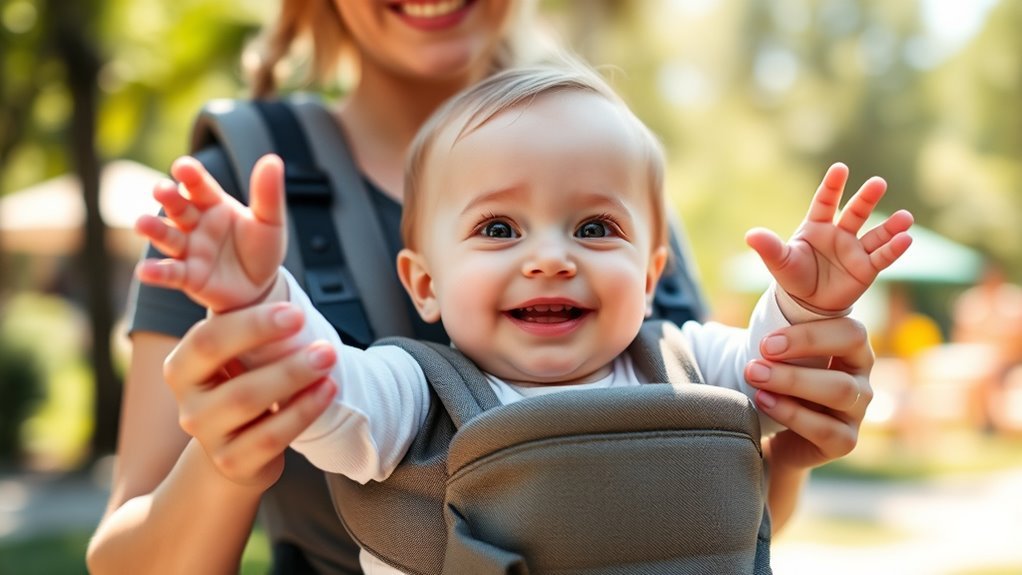
How do you know when your baby is ready to face out in a carrier? Typically, around 5-6 months, your baby will show strong neck and head control, a key sign they’re ready. You’ll notice they can hold their head up without slumping, and their chin clears the top of the carrier panel comfortably.
Another clear sign is your baby’s growing curiosity and desire for more visual stimulation—they’ll want to explore their surroundings actively. Make sure your baby is alert and engaged before facing out.
Also, prioritize ergonomic support: the baby’s hips should form an “M” position, with knees higher than the bottom, which promotes healthy development while facing out. Watch for these signs, and you’ll know when to make the switch safely.
How to Safely Start Facing Out in a Carrier
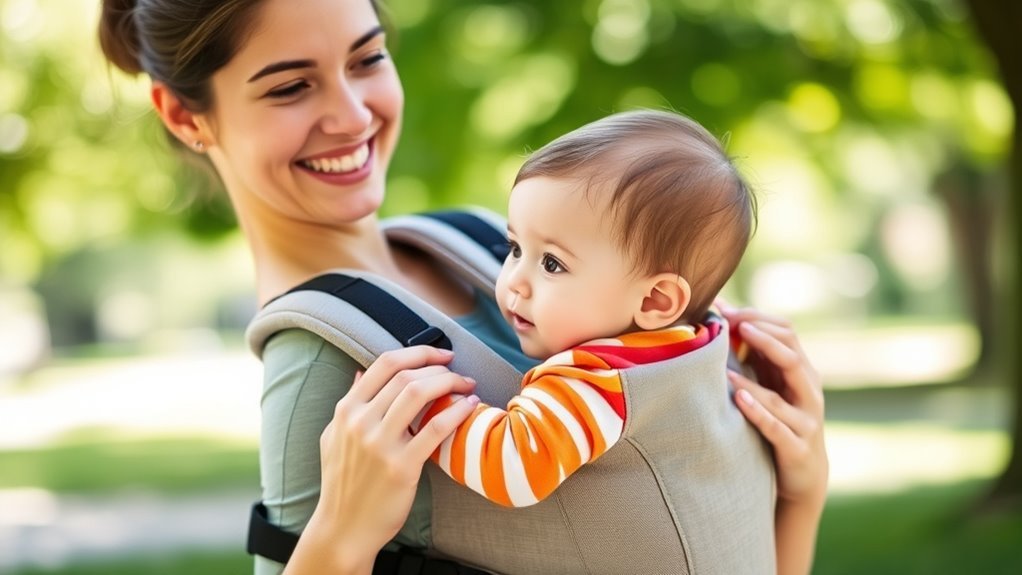
Once your baby shows strong head and neck control and seems curious about the world, you can start trying the outward facing position in your carrier. Look for clear signs of readiness, like steady head holding and interest in surroundings.
Begin with short durations of 10-20 minutes to avoid overstimulation. Use baby carriers designed for outward facing that provide ergonomic support, ensuring your baby’s hips stay in the healthy M position.
Always monitor cues—if your baby fusses or turns away, be ready to switch back to inward facing or take breaks. Prioritizing comfort and safety helps your baby enjoy new views while protecting their developing body.
This cautious approach fosters confidence for both of you as you explore the world together.
Frequently Asked Questions
When Can I Put My Baby Outward Facing in a Carrier?
You can put your baby facing outward around 5-6 months when they have strong head control. They should also show interest in their surroundings, and their chin needs to clear the carrier.
It’s a good idea to limit the time to 20-30 minutes for both comfort and safety. This way, your little one stays happy and secure while exploring the world!
When to Turn Baby to Front Facing in Carrier?
You’ll know it’s time to turn your baby front-facing when they stand like a lighthouse—steady and strong—around 5-6 months, with solid head control and curiosity lighting the way.
Keep sessions short and safe.
It’s all about making sure your little one is ready and comfortable before switching things up.
Can a 2 Month Old Face Forward in a Carrier?
No, your 2-month-old shouldn’t face forward yet. They lack head control and can get overstimulated.
It’s best to keep them facing you until they’re about 5-6 months old. That way, they can hold their head up steadily for safety and comfort.
Can I Put My 3 Month Old Baby in a Carrier?
You want to comfort, protect, and bond with your baby. Yes, you can put your 3-month-old in a carrier, but keep them facing inward.
Make sure to support their head, and watch for signs of overstimulation or discomfort. It’s all about keeping them safe and happy while you get to be close.
Conclusion
When your baby reaches around 5 months and can hold their head up steadily, they’re usually ready to face out in a carrier.
Remember, about 60% of parents find facing out helps their little ones explore the world while feeling secure.
Start gradually, keeping outings short and watching for signs your baby needs a break.
With care and attention, facing out can be a fun, safe way to share new sights together.
Facing your baby out in a carrier allows them to engage with the world more actively, which can be great for their development. Just make sure your little one has good head control and isn’t overstimulated. Always keep an eye on their comfort and safety during your outings. Following these tips will help you enjoy the benefits of babywearing while ensuring your baby’s well-being and happiness.






3 Comments