What Are Baby Cheetahs Called?
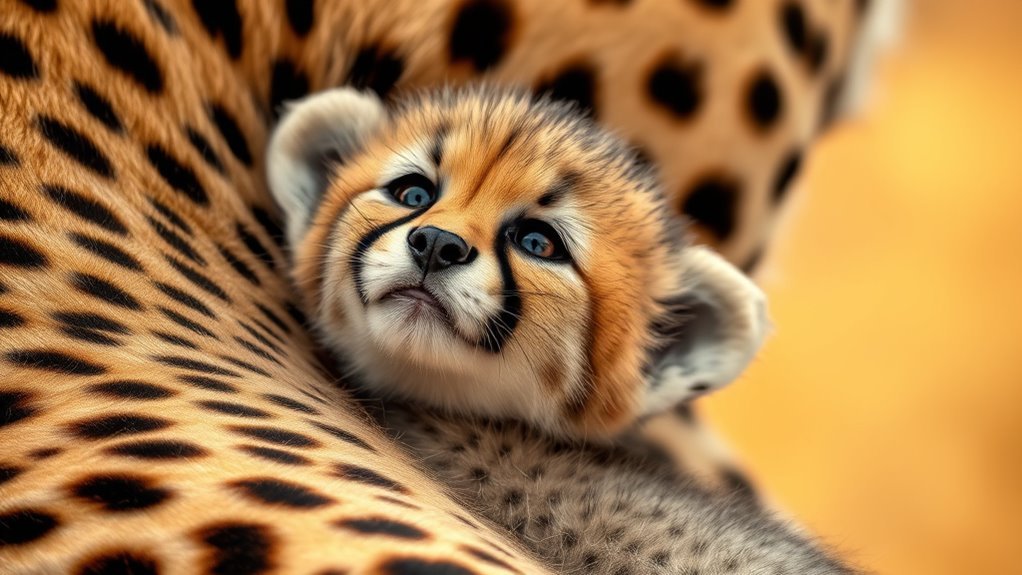
You call baby cheetahs cubs, tiny creatures weighing just 8.5 to 15 ounces at birth. They are born blind and helpless, covered in a silvery-grey mantle that helps hide them from predators. This special fur is like a built-in camouflage.
Their unique spots develop later and make each cub easy to identify. Cubs face a tough start, with high risks from predators, relying heavily on their mother’s care. It’s a fragile beginning for these little cheetahs.
If you want to understand how these early challenges shape their survival, there’s plenty more to discover.
Baby cheetahs’ first weeks are crucial as they grow stronger and learn to navigate the wild. It’s fascinating to see how these cubs develop into the fastest animals on land!
Key Takeaways
- Baby cheetahs are called cubs. Cubs are born blind and entirely dependent on their mother.
- Each cub has unique spots used for individual identification. They also have a thick silvery-grey mantle for camouflage at birth.
- Cubs are completely helpless and vulnerable in their early weeks. So, the mom has to be super protective during that time.
What Are Baby Cheetahs Called?
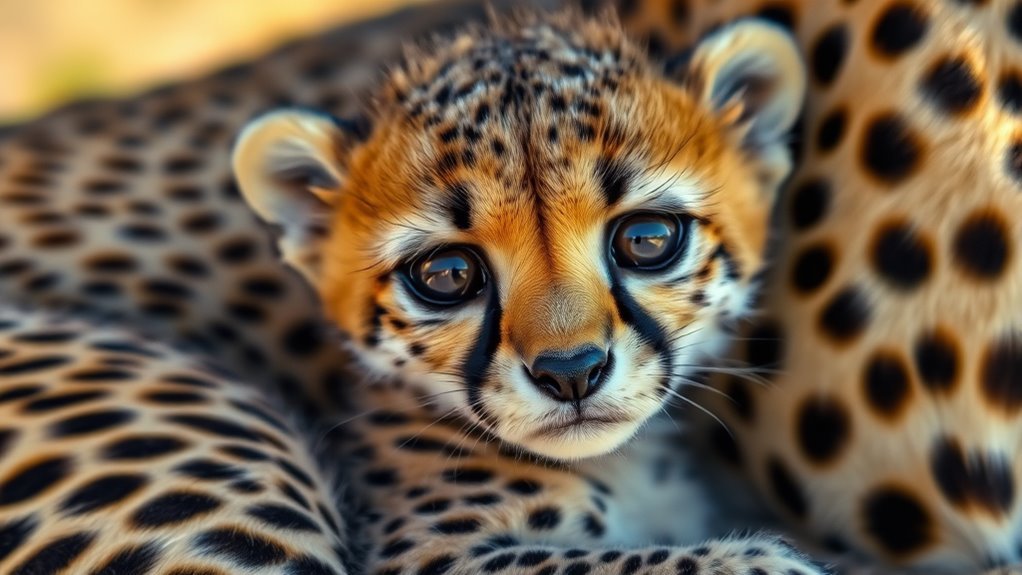
Baby cheetahs are called cubs, just like the young of many other animals. When baby cheetahs are born, they’re blind and completely dependent on their mother’s milk to survive during these vulnerable early weeks.
You’ll notice each cheetah cub has unique spots—about 2,500 markings—that help with identification. This makes it easier to track individual cubs.
Unfortunately, the mortality rate for cheetah cubs is alarmingly high, often reaching 75% in the wild due to predation and other dangers.
Unlike other big cats, cheetah cubs can’t roar because their anatomy doesn’t have the specialized structures needed for roaring.
Understanding these facts about baby cheetahs helps you appreciate how delicate their early life is and why their survival depends so much on their mother’s care.
Physical Traits and Survival Challenges of Baby Cheetah Cubs
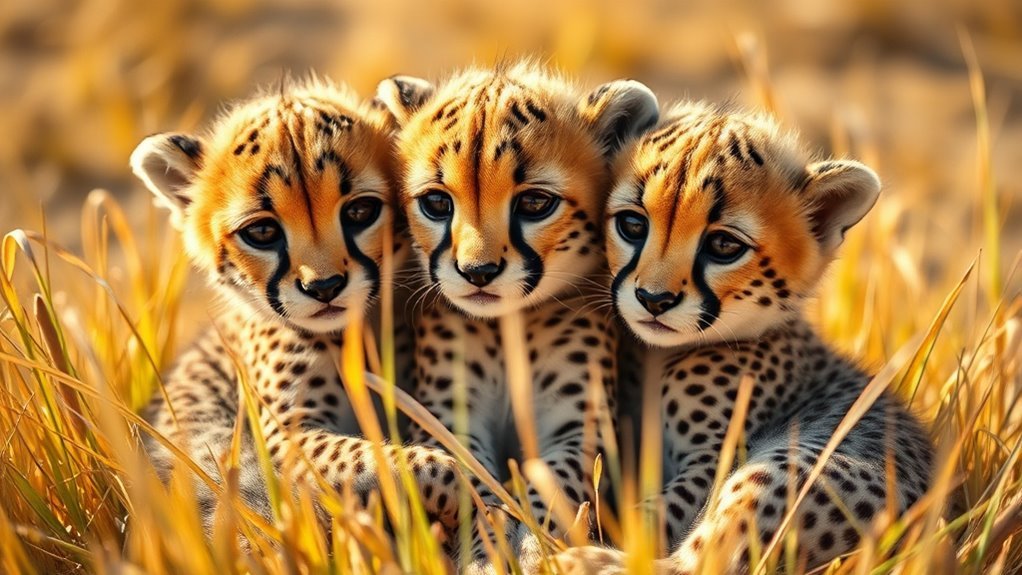
Cheetah cubs enter the world blind, helpless, and weighing just 8.5 to 15 ounces. They are completely dependent on their mother’s milk for survival.
Their physical traits include a thick silvery-grey mantle that offers camouflage. This helps reduce predation risks during their vulnerable early weeks.
Despite these adaptations, baby cheetah cubs face a high mortality rate of up to 75% within the first three months. It’s a tough start for these little ones.
Each cub’s unique spots develop later, which allows researchers and caretakers to identify them individually. As they grow, cubs develop essential hunting skills through play and climbing.
This playtime is super important because it prepares them for independence. Their mother trains them in hunting between 12 to 15 months, which is vital for survival in the wild.
Understanding these traits really helps you appreciate the cubs’ fragile start and their resilience. They may be small and vulnerable, but they’re tough fighters.
Frequently Asked Questions
Are Baby Cheetahs Called Cheetos?
No, baby cheetahs aren’t called cheetos; they’re called cubs. You’ll find that cubs rely heavily on their mom for survival, learning essential skills before they strike out on their own around 18 months old.
Is a Cheetah a Cub or a Kitten?
A baby cheetah is a cub, not a kitten. You’ll notice cubs need their mother’s care to survive early on and learn hunting skills.
This makes them more like small wild cats than domestic kittens. So, when you see a baby cheetah, remember it’s a cub through and through!
What Is a Group of Cheetahs Called?
You call a group of male cheetahs a coalition, a team that hunts, defends, and roams together.
Female cheetahs, on the other hand, usually live alone, except when they’re raising their cubs.
It’s pretty interesting how their social lives differ, right? Male cheetahs stick together, but females prefer flying solo most of the time.
How Do You Call a Baby Jaguar?
You call a baby jaguar a cub. These cubs are born blind and totally depend on their mother for care.
They stay with her for about two years to learn how to hunt. Each cub has its own unique spot patterns, which is pretty cool!
Conclusion
Now that you know baby cheetahs are called cubs, you can appreciate their adorable agility and amazing adaptations. These tiny trackers tackle tough terrains, learning life’s lessons with lively leaps and little mistakes.
Watching them grow, you’ll witness their wild willpower and wondrous ways. So, stay curious and celebrate these speedy, spotted sprinters.
Cheetah cubs capture your heart with courage, charm, and cheeky challenges. Every moment with them is a magical masterpiece in the magnificent world of wildlife. Their playful nature and determination show just how special these baby cheetahs are. So, next time you see a cheetah cub, remember you’re watching a future champion of speed and survival, full of energy and spirit.