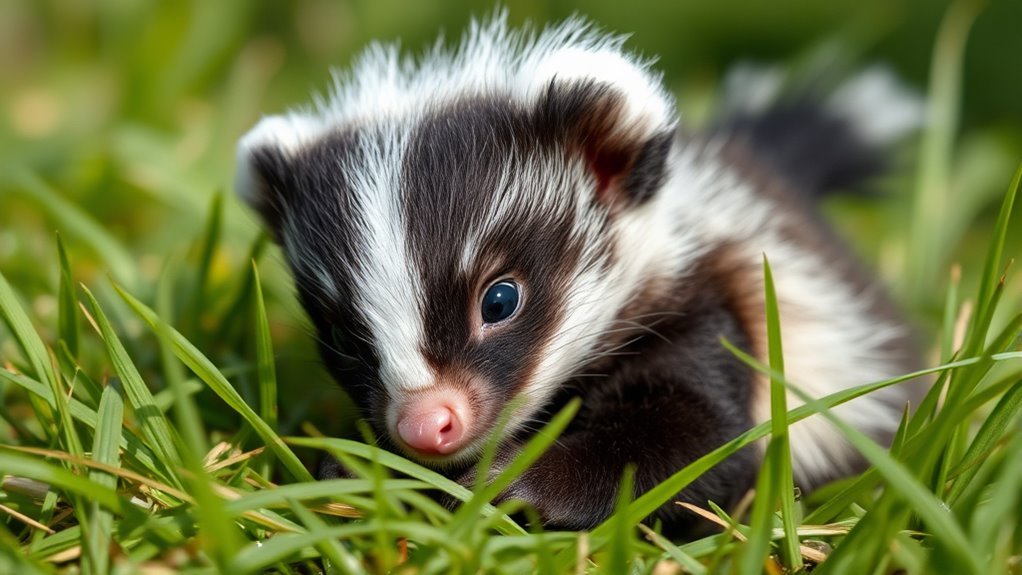
Can Baby Skunks Spray and How to Handle Their Defense
Baby skunks start spraying around three to four weeks old, but their spray is weaker and less controlled than adults’.
Yes, even baby skunks can spray, though it’s not as strong as the full-grown ones. If you find yourself handling one, it’s important to stay calm and move slowly to avoid startling it.
Keep your approach gentle because sudden movements can trigger their defense.
Watch out for warning signs like tail-raising or foot-stamping before they spray. Wearing gloves and covering the skunk with a towel can help reduce stress and prevent spraying.
You’ll find helpful tips on managing their behavior safely ahead.
Key Takeaways
- Baby skunks begin developing spraying ability around 3-4 weeks and have fully functional scent glands by 8 weeks.
- Young skunks first display warning behaviors like stamping feet and raising tails before spraying.
- Approaching baby skunks slowly and calmly reduces the chance of triggering a defensive spray.
- Wearing protective clothing and covering the skunk with a towel helps minimize stress during handling.
- Placing the skunk in a secure, quiet, and well-ventilated container ensures safety for both skunk and handler.
When Do Baby Skunks Start Spraying?
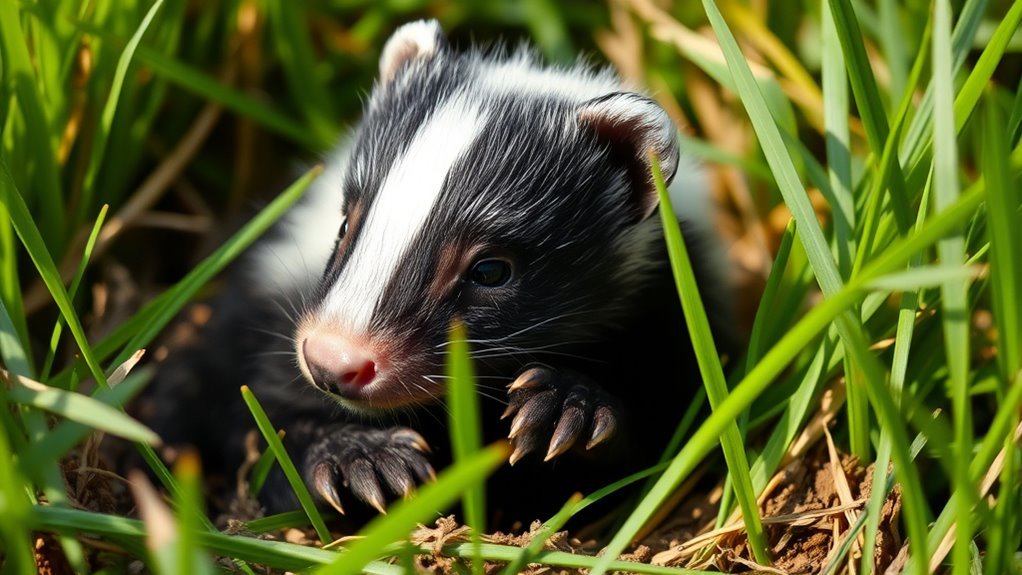
Although baby skunks, or kits, don’t start spraying right after they’re born, they begin developing this defense around three to four weeks old. At this stage, their spraying ability slowly forms as part of their natural defense mechanism.
By eight weeks of age, young skunks have fully functional scent glands and can spray effectively. Their spray isn’t as strong or controlled as adult skunks yet, though.
You’ll notice kits showing warning behaviors, like stamping their feet or raising their tails, before they actually spray. This is a key part of wildlife behavior that signals they feel threatened.
Even an orphaned baby skunk will rely on these instincts to protect itself. Understanding when baby skunks start spraying helps you respect their space and know what triggers their defense.
How to Handle Baby Skunks Without Getting Sprayed
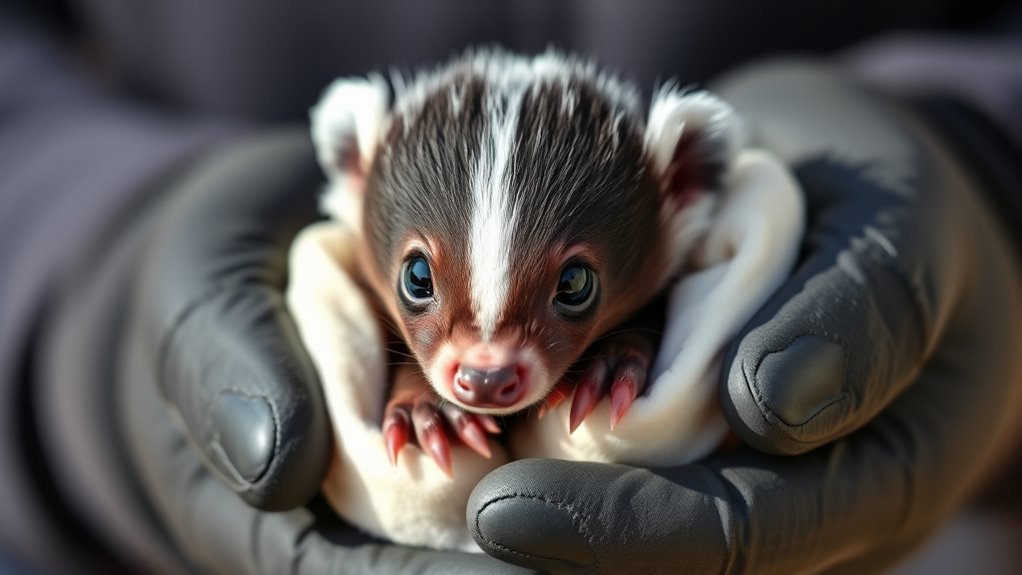
When you need to handle a baby skunk, staying calm and moving slowly is key to avoiding its spray. Since skunks can spray as a defense, you should always approach slowly and maintain a non-threatening behavior by speaking softly.
Wearing protective clothing, like gloves and long sleeves, helps minimize risk. If you’re involved in wildlife rescue, handle gently by covering the baby skunk with a towel to reduce stress.
Place it carefully in a secure container that’s well-ventilated and away from loud noises. Remember, sudden movements can trigger spraying, so keep your actions deliberate and calm.
Following these steps guarantees you protect yourself while safely assisting the baby skunk without causing unnecessary distress.
Frequently Asked Questions
How to Keep a Baby Skunk From Spraying?
To keep a baby skunk from spraying, stay calm and avoid sudden moves. Keep a safe distance and speak softly.
If you need to approach, do it slowly. You can gently cover its eyes with a towel to help reduce panic. Also, make sure to keep pets away.
Do Skunks Come Back After They Spray?
Skunks don’t ghost the scene forever after spraying; they usually retreat but come back if food or shelter’s nearby.
You’ll notice they avoid places smelling like their own perfume until things calm down again.
What Smell Do Skunks Absolutely Hate?
Skunks absolutely hate strong citrus scents like lemon and orange, as well as vinegar’s pungent odor.
You can also use peppermint, eucalyptus, or garlic smells to keep them away effectively from your garden or property.
These smells are pretty powerful and can really make skunks think twice before coming around.
What Will Neutralize a Skunk Spray?
You can neutralize skunk spray with a mix of hydrogen peroxide, baking soda, and dish soap. Use it fresh, wear gloves, and avoid getting it in your eyes.
Make sure to rinse thoroughly afterward to eliminate the odor safely from skin or pets. It really works best when you act quickly!
Conclusion
So, you’ve met a baby skunk and now wonder if it can spray? Spoiler alert: it’s got the stink power, just not the full force of a seasoned pro. Handle with care—think ninja moves, not wrestling champion.
Remember, baby skunks are like tiny stink bombs on a timer; one wrong step and you’re the punchline of the neighborhood. So, respect the spray, or you’ll be the one airing out your wardrobe!
In conclusion, while baby skunks can spray, their defense isn’t as strong as adult skunks. It’s important to handle them gently and cautiously to avoid getting sprayed. Understanding how to handle their defense helps keep both you and the little skunk safe. So, if you ever encounter a baby skunk, remember to give it space and respect its natural ability to spray. That way, you can avoid the stink and keep your clothes fresh!




One Comment