
When to Transition Baby to Crib – 3 Key Signs
You should shift your baby to a crib once they start rolling over, sitting up, or crawling, as these movements show they’re ready for a bigger space.
These key signs are important to watch for when deciding the right time to transition your little one.
Also, when your baby exceeds the bassinet’s weight limit (usually around 20 lbs), it’s time to switch.
This is a clear indicator that the bassinet no longer provides the safe support your baby needs.
Finally, if you notice more fussiness or frequent waking, it might mean your baby’s outgrowing the bassinet.
These changes in behavior can be a sign that your baby needs more room and comfort.
Keep these signs in mind to guarantee a safe, comfortable move, and discover how to make the shift smoother.
Moving your baby to a crib at the right time helps ensure they sleep soundly and safely.
Key Takeaways
- Baby starts rolling over, sitting up, or crawling, showing physical readiness for crib transition.
- Baby exceeds the bassinet weight limit, typically around 20 pounds.
- Increased fussiness or frequent waking suggests discomfort in the bassinet.
- Active movement indicates the baby may be outgrowing the bassinet space.
- Noticeable changes in sleep patterns signal the need for a more spacious sleeping environment.
How To Recognize When Your Baby Is Ready To Move To A Crib
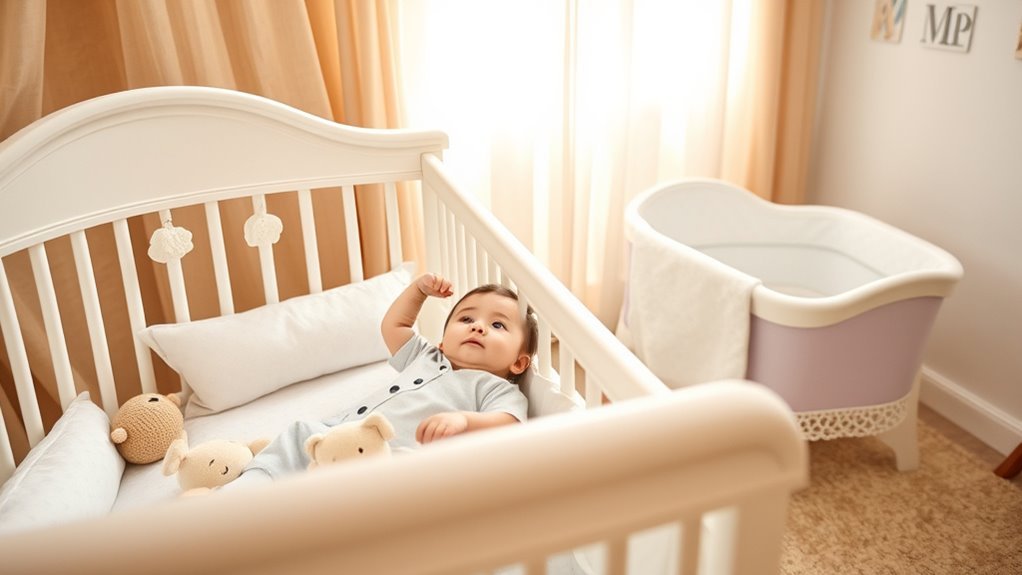
When your baby starts rolling over, sitting up, or crawling, it’s a clear sign you should consider moving them to a crib. These developmental milestones indicate they’re ready for a safer, more spacious sleep environment.
If your baby exceeds the bassinet’s weight limit—usually around 20 lbs—that’s another significant sign to shift. You might notice your baby becoming fussy or waking frequently, suggesting they’re uncomfortable in their current space.
Prioritize safety by making the switch before your baby becomes too active for the bassinet. Also, pay attention to your baby’s sleep patterns and your own readiness to manage the change.
Moving to a crib not only supports your baby’s development but guarantees they sleep comfortably and securely through this important growth stage.
Understanding Signs Like Rolling Over And Sleep Changes That Show Readiness

As your baby gains the ability to roll over or sit up, you’ll notice important changes that signal it’s time to switch to a crib. When your baby shows signs like rolling over independently or pushing up, it’s a clear indicator they’ve outgrown their bassinet.
Changes in sleep patterns, such as frequent wake-ups or fussiness, often mean your little one is experiencing discomfort and needs more space. Establishing a consistent bedtime routine helps you monitor these shifts and decide when it’s time to change to a crib.
Moving now guarantees safe sleep and supports your baby’s ability to self-soothe in a larger, more secure environment. Paying attention to these signs keeps your baby comfortable and safe as they grow.
How To Make The Move To The Crib Smooth And Safe

Although shifting your baby to a crib can feel challenging, starting gradually makes the process smoother and safer for both of you. To move your baby effectively, follow these steps:
- Introduce the crib early by letting your baby play in it briefly to create a positive experience with the new sleep environment.
- Move your baby slowly by starting with one sleep period, like the first nap, and increase as comfort grows.
- Maintain a consistent bedtime routine with calming activities to signal sleep time clearly.
- Verify the crib has a firm mattress and is free from soft bedding or toys to reduce the risk of suffocation.
Watch for signs of discomfort, be patient, and allow your baby to adjust independently during this crib move. It might take some time, but you’ll get there together!
Frequently Asked Questions
Is 3 Months Too Early to Transition to Crib?
No, 3 months isn’t too early to shift your baby to a crib if they’re showing signs like rolling over or fussiness.
Starting early can help build good sleep habits and keep them safe as they grow.
What Is the 5-3-3 Rule for Babies?
You’ll find the 5-3-3 rule helps you teach your baby to self-soothe by waiting 5, then 3, then 3 minutes before comforting them.
It’s a gentle way to encourage independent sleep for babies over 4 months. Give it a try, and see how your little one responds!
Why Is SIDS Highest at 2-4 Months?
SIDS is highest at 2-4 months because your baby’s sleep patterns change. They start rolling over and become more mobile.
These factors increase risk, so you need to guarantee safe sleep positions and environments during this vulnerable time.
What Is the Hardest Month for a Baby?
You’ll feel like you’re climbing Everest when your baby hits 4 months — it’s the hardest month. Their sleep goes haywire, fussiness spikes, and teething begins.
Brace yourself, because this stage tests every bit of your patience. It’s tough, but you’re not alone in this!
Conclusion
When you notice your baby rolling over or having disrupted sleep, it’s a clear sign they’re ready for the crib. Making the shift smooth and safe helps both of you adjust comfortably.
Did you know that about 60% of parents move their babies to a crib between 4 to 6 months? Trust your instincts and watch for those key signs.
Recognizing when to transition your baby to a crib can make this milestone easier and more enjoyable. Paying attention to these signs ensures a safe and comfortable shift for your little one. So, keep an eye out and embrace this exciting step in your baby’s sleep journey!






2 Comments