
How to Burp a Sleeping Baby in 3 Easy Steps
To burp your sleeping baby gently, start by lifting them upright against your chest. Make sure to support their head and back securely to keep them comfortable and safe. This gentle hold helps prevent waking while you prepare to burp them.
Next, use soft, gentle pats or circular rubs with a cupped hand on their back. This encourages gas release without disturbing their sleep.
If you find this isn’t enough, try laying your baby face down across your lap for added comfort and support.
With a little patience and these gentle techniques, burping your sleeping baby can become easier and less stressful.
Keep practicing, and soon you’ll have a smooth routine. Want to learn more helpful tips and burping positions? Keep reading!
Key Takeaways
- Gently lift the baby upright against your chest, supporting the head and back securely. Rest the baby’s chest on your shoulder, keeping their head supported and slightly elevated.
- Use gentle, light pats or circular rubs on the baby’s back to encourage gas release. Keep a burp cloth handy to catch any spit-up during the process.
- Be patient and stop if the baby remains calm and comfortable without burping. It’s all about making sure they feel cozy and happy.
How to Burp a Sleeping Baby Gently
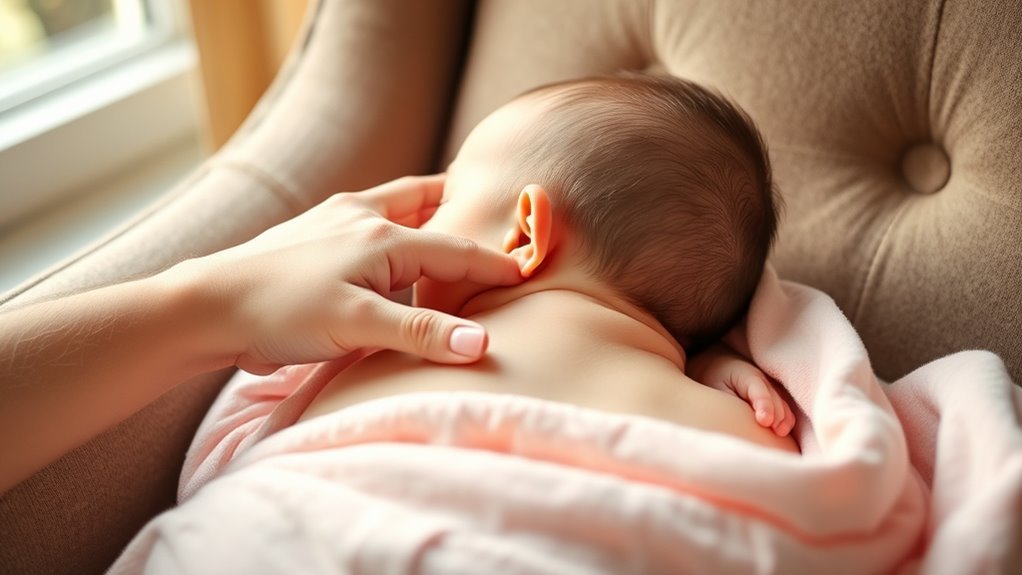
When you need to burp a sleeping baby gently, lift them upright against your chest while supporting their head and back. This position helps you softly pat or rub their upper back to encourage a burp without waking them.
You can also rest the baby’s chest on your shoulder, making sure their head is secure. Use light, rhythmic pats to release trapped air.
Another effective technique is laying the baby face down across your lap with their head turned slightly to the side. Then, gently pat their back.
The across-the-arm method works too: lay the baby on your forearm with their head elevated and supported. Then rub their back gently.
These techniques help release air calmly, keeping your sleeping baby comfortable. It’s all about being gentle and patient.
Gentle Patting and Rubbing Techniques to Release Gas
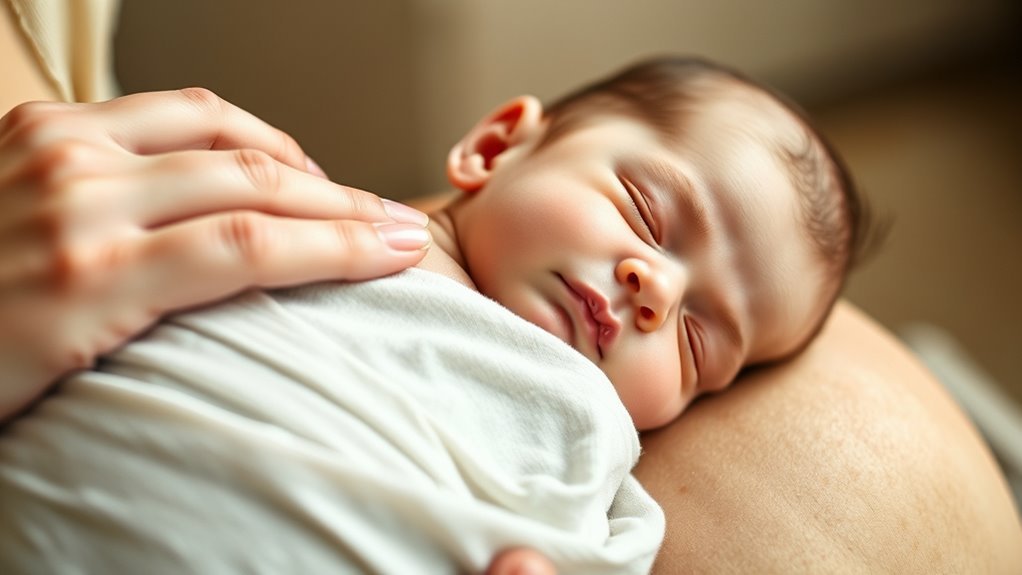
Gently patting or rubbing your baby’s back can help release trapped gas without disturbing their sleep. Use gentle patting or circular rubbing with a cupped hand, applying light pressure to encourage burping.
Hold the baby in a comfortable position—over your shoulder or across your lap—with their head elevated to aid gas release. Keep a burp cloth nearby to catch any spit-up.
Try different positions, like the “Sloth Hold” or laying your sleeping baby face down across your arm, to find what suits them best. Spend 5-10 minutes using these gentle patting techniques, but stop if your baby seems calm and comfortable.
How to Help When Your Baby Won’t Burp
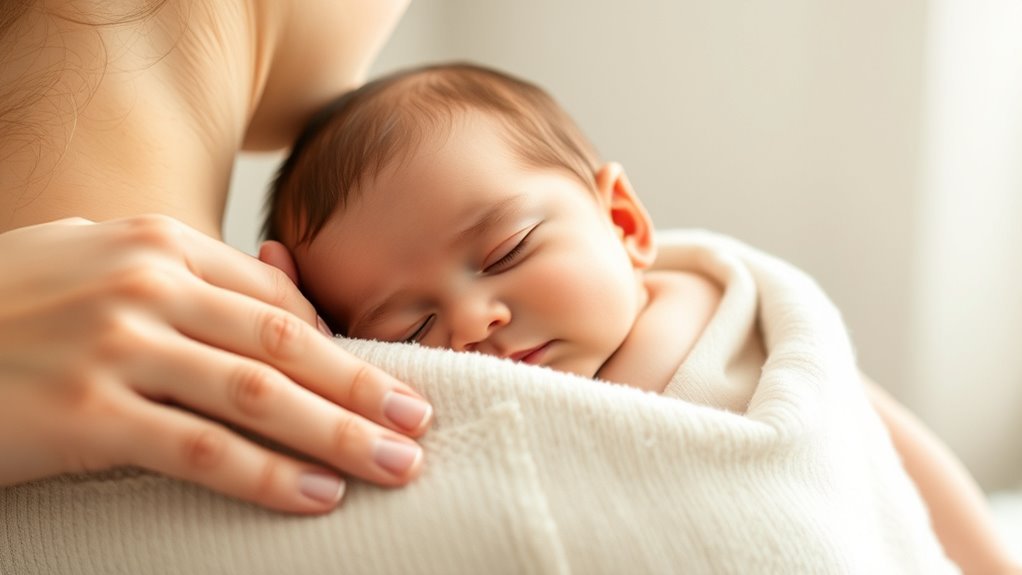
If your baby doesn’t burp after a few minutes, don’t worry—you can try changing their position to see if another hold works better. Babies respond differently to techniques, so switching from a shoulder hold to a sitting position might help release trapped gas.
When your baby is sleeping, gently pat or rub their back in circular motions instead of firm pats. This can be more soothing and effective.
You can also try light tummy massages or bicycle leg movements to stimulate gas release. Keeping your baby upright for 10-15 minutes after feeding supports natural gas release and helps prevent discomfort.
Frequently Asked Questions
How to Make Baby Burp Fast While Sleeping?
You can make your baby burp fast while sleeping by gently lifting them upright against your shoulder and softly patting or rubbing their back.
Stay patient, using light pressure, and try different comfortable positions until the burp comes up. It might take a little time, but keeping calm really helps.
What to Do if Baby Fell Asleep and Won’t Burp?
If your baby fell asleep and won’t burp, don’t worry—you can gently hold them upright or try soft pats on their back without waking them.
Often, they’ll naturally release gas while resting peacefully. Just keep things calm and easy.
How to Make a Baby Burp Easily?
Hold your baby gently against your shoulder or across your lap. Then softly pat or rub their back in small circles.
Stay patient and try different positions. Keep going until you find what helps your baby burp easily.
Is It Okay to Let Baby Sleep Without Burping?
About 60% of babies naturally release gas during sleep, so it’s okay to let your baby sleep without burping if they seem comfortable.
Just watch for fussiness or spit-up, and burp when you notice discomfort. It’s all about paying attention to what your little one needs.
Conclusion
Remember, about 30% of babies experience discomfort from trapped gas, making gentle burping essential—even during sleep. By using soft patting and rubbing techniques, you can help your baby release gas without waking them up.
If your little one won’t burp right away, stay patient and try different positions until you find what works best. With these simple steps, you’ll keep your baby comfortable and help them sleep peacefully through the night.
Burping a sleeping baby doesn’t have to be tricky. Just remember to be gentle and patient, using soft pats or rubs to avoid waking your baby. Finding the right position can make all the difference, so keep trying until your baby burps comfortably. These easy burping techniques will help your baby release trapped gas and stay cozy, ensuring they get a restful, peaceful sleep.






3 Comments