What Is Baby Bear Baby Bear Do You See About?
In *Baby Bear, Baby Bear, What Do You See?*, you’ll join Baby Bear on a fun adventure to find his Mama Bear.
Along the way, you’ll meet ten different North American animals. Each animal is shown with colorful, engaging illustrations that really bring them to life.
The story uses fun, repetitive rhymes that make learning enjoyable. It’s easy to follow along and remember the animals because of the catchy rhythm.
Plus, the book gently highlights the importance of family bonds and respecting wildlife.
As you keep exploring, you’ll discover more about each animal and the story’s deeper messages.
It’s a great way to enjoy a heartwarming tale while learning about nature and the world around us.
Key Takeaways
- The book follows Baby Bear searching for Mama Bear while meeting ten North American animals.
- It features repetitive, rhyming text to engage young readers.
- Illustrations by Eric Carle use bright colors and collage techniques to depict animals vividly.
- The story highlights family bonds and the importance of mother-child connections.
- It promotes ecological awareness and respect for North American wildlife.
- Overall, it’s a fun and colorful way for kids to learn about animals and love.
What Happens in *Baby Bear, Baby Bear, What Do You See?*?
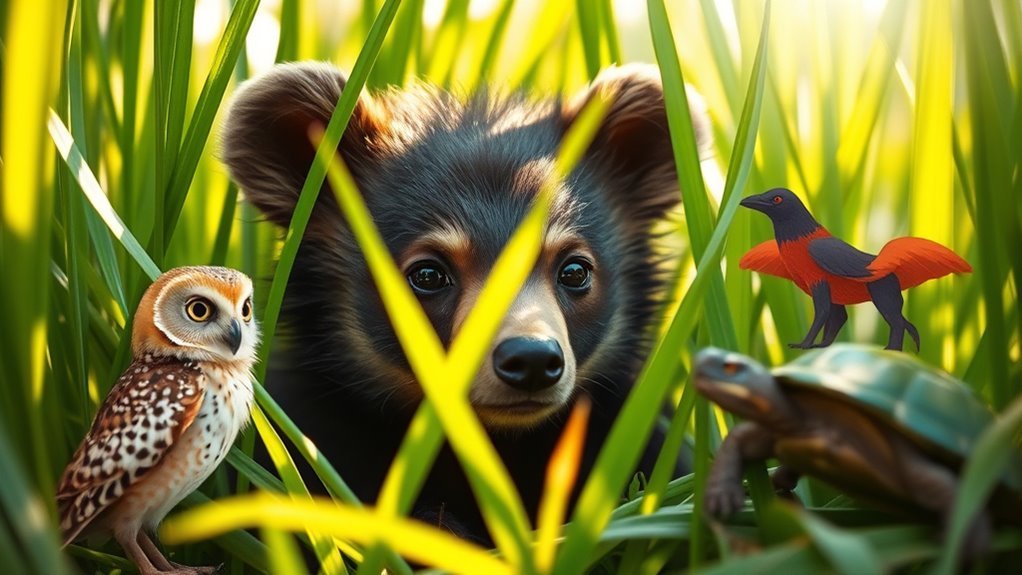
In *Baby Bear, Baby Bear, What Do You See?*, you follow Baby Bear as he journeys through the forest to find Mama Bear. Along this quest, Baby Bear meets ten different North American animals, each introducing you to unique wildlife.
The repetitive, rhyming text supports early literacy by engaging readers in a predictable pattern, making it easier to follow and anticipate. As you turn each page, Eric Carle’s vibrant illustrations bring these animals to life, enhancing your connection to the story.
This journey culminates in a heartwarming reunion between Baby Bear and Mama, reinforcing the importance of family bonds. Through this blend of storytelling and visuals, you not only enjoy Baby Bear’s adventure but also learn about native animals and their habitats.
Animals and Themes in *Baby Bear, Baby Bear, What Do You See?*
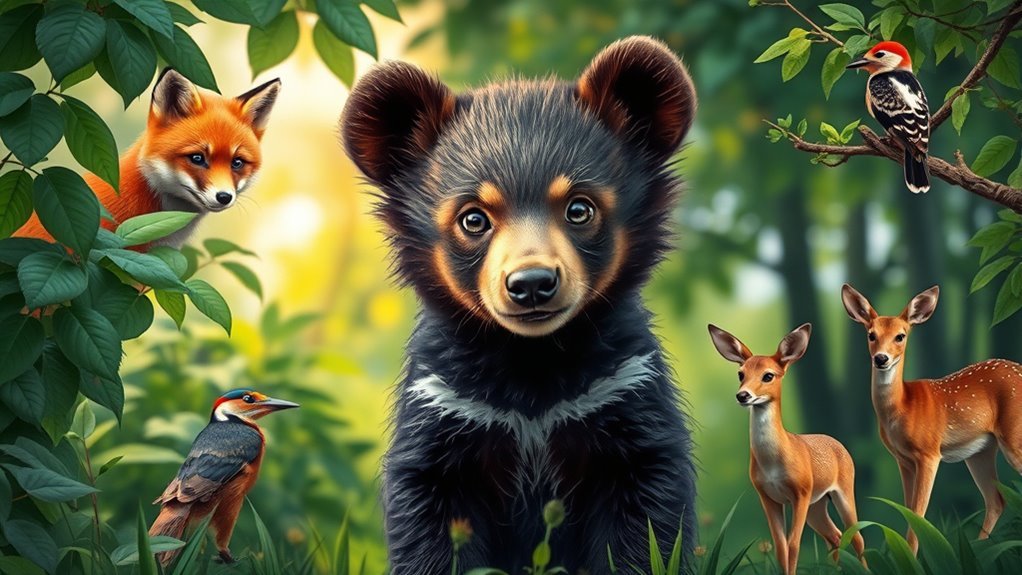
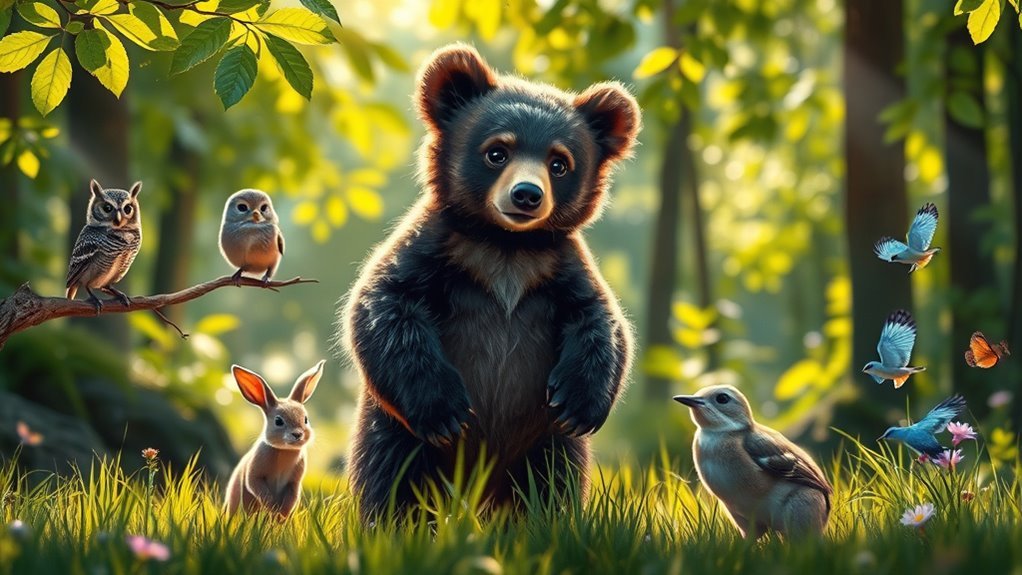
Baby Bear’s encounters with ten native North American animals, like the bison, red fox, and owl, bring the story’s themes vividly to life. As you follow Baby Bear’s search for Mama, you see the strong mother-child bond at the heart of the tale.
The animals appear in their natural habitats, highlighting themes of wildlife conservation and respect for nature. You’ll notice how Eric Carle’s bright colors and collage techniques make each animal pop, boosting engagement and helping with early literacy through repetitive, rhyming text.
This clever combination not only introduces you to diverse animals but also fosters ecological awareness. By reading, you connect with Baby Bear’s journey and gain appreciation for the animals and their environments, making the story both educational and visually enchanting.
Frequently Asked Questions
What Is the Story “Baby Bear, Baby Bear, What Do You See?” About?
You follow Baby Bear as he searches for Mama, meeting different animals along the way.
You’ll enjoy the rhythmic text and colorful pictures that teach you about wildlife, family, and love.
It’s all done in a fun, engaging way that keeps you hooked.
Why Was Brown Bear Brown Bear What Do You See Banned?
You see a simple, colorful book cherished by many, yet it’s been banned because some parents worry its repetitive text and illustrations push certain ideologies or hinder literacy.
This has sparked debates about what’s appropriate for kids. People have very different opinions on it. Some think it’s harmless, while others aren’t so sure.
What Is the Meaning of Baby Bear?
Baby Bear represents curiosity and the search for connection. You’ll see how he explores his world, learning about animals while longing for his mother.
She symbolizes love, safety, and the importance of family bonds in your life. It’s all about that warm feeling you get from being close to those you care about.
Can You Summarize the Story of Brown Bear, Brown Bear, What Do You See?
You might think it’s just a simple animal parade, but you’ll find yourself enthusiastically spotting each colorful creature as Brown Bear asks “What do you see?”
You’ll join the rhythm, learning and smiling all along.
Conclusion
As you journey through *Baby Bear, Baby Bear, What Do You See?*, you’ll see each animal symbolize a unique voice in nature’s chorus. It’s a gentle reminder that every creature, big or small, plays an essential role.
Baby Bear’s curious eyes reflect your own wonder, encouraging you to embrace discovery and kindness. So, keep looking closely—
because just like Baby Bear, you’re part of a beautiful, interconnected world. This story invites you to explore and appreciate the amazing animals and the natural world around you. It’s all about seeing, understanding, and valuing every part of our environment.