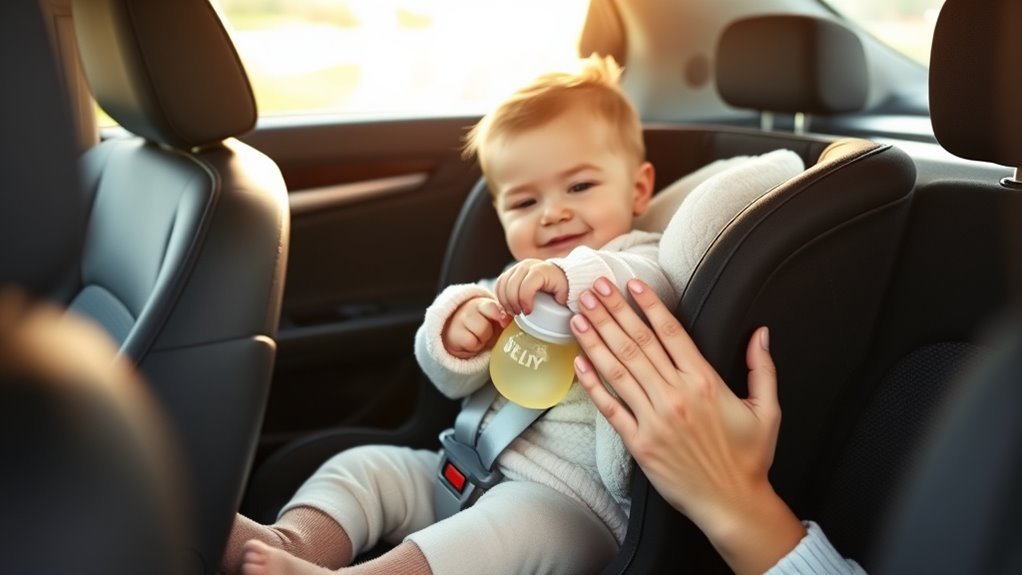
10 Tips to Safely Feed Your Baby in a Car Seat
When feeding your baby in a car seat, always pull over in a safe spot to focus fully and prevent distractions. This is one of the most important tips to safely feed your baby in a car seat.
Keeping your baby upright at a 30–45 degree angle helps reduce the risks of choking and reflux.
Use clean, BPA-free bottles to keep things safe and healthy. Also, make sure to secure loose items around the car seat to avoid any accidents while feeding.
Plan regular breaks for feeding, burping, and diaper changes. It’s easier on both you and your baby to take these pauses during the trip.
Keep a close eye on your baby’s hunger cues so you can feed them on time.
And don’t forget to prepare for messes and emergencies on the road. These tips help make feeding safer and smoother on your trip.
Key Takeaways
- Always pull over to a safe spot before feeding. This helps avoid distractions and reduces choking risks.
- Keep the car seat reclined between 30 to 45 degrees. Make sure to monitor your baby’s posture so their airway stays clear.
- Use BPA-free, spill-proof bottles. Don’t forget to sanitize all feeding supplies thoroughly after each use.
- Try to schedule regular breaks every 2-3 hours for feeding. It’s best to remove your baby from the seat for upright feeding and extra comfort.
- Carry burp cloths, extra bottles, and a first-aid kit. This way, you’re ready to handle messes and any emergencies that might pop up.
Understand Why You Should Stop to Feed Your Baby

Because feeding your baby in a car seat increases choking risks and distracts you while driving, you should always stop the vehicle first. Car seat safety is essential. Feeding your baby while the car is moving puts them in a semi-reclined position that can obstruct their airway, raising the risk of choking.
Feeding in a moving car also divides your attention, increasing the chance of accidents that endanger both you and your baby. Loose items around can become dangerous projectiles if you stop suddenly, posing injury risks.
Furthermore, feeding on the go may cause aspiration, where food or liquid enters the lungs, leading to respiratory problems. Prioritizing safety by stopping guarantees your baby is fed upright, minimizing choking hazards and promoting comfort.
Always Pull Over to Feed Your Baby Safely
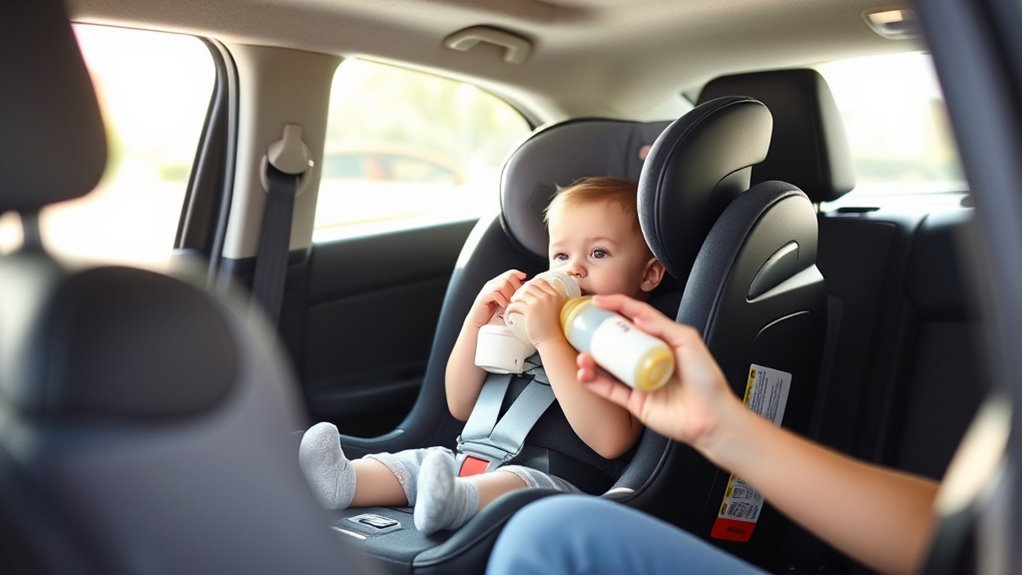
To keep your baby safe during feeding, always pull over to a secure spot before starting. Feeding your baby while the car is moving raises choking risks and distracts you from driving.
Stopping in a safe place lets you focus fully on your little one and prevents aspiration caused by vehicle motion.
Here’s why pulling over matters:
| Benefit | Reason |
|---|---|
| Safe place | Prevents choking hazards |
| Full attention | Minimizes driving distractions |
| Upright feeding position | Reduces reflux and discomfort |
| Comfort check | Guarantees baby’s posture is correct |
Keep Your Baby Upright in the Car Seat to Prevent Choking
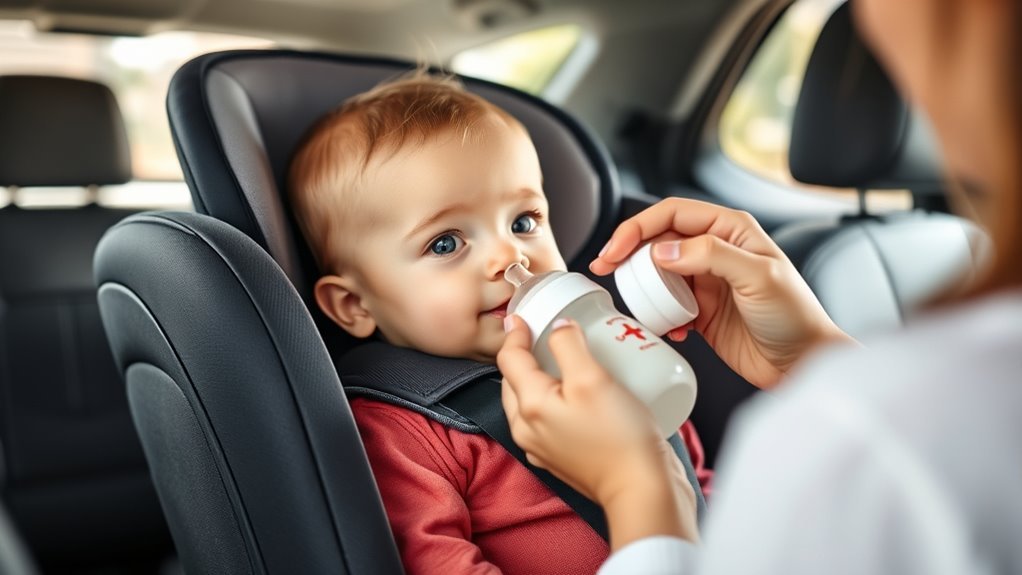
Make sure your baby’s car seat is properly reclined to keep them as upright as possible during feeding.
Keep a close eye on their position to prevent slumping, which can increase choking risks.
Adjust the harness snugly to support their posture and help keep them safe.
Proper Seat Recline
When you keep your baby upright at a 30 to 45-degree angle in their car seat, you help reduce the risk of choking during feeding. Proper seat recline is essential for safe feeding because a semi-reclined position can interfere with swallowing.
Always adjust the car seat to the proper seat recline angle recommended by the manufacturer. And don’t forget to secure your baby with the harness to minimize movement. This way, they stay in the safest position.
| Recline Angle | Effect on Baby |
|---|---|
| 0-15° | Too upright, uncomfortable |
| 30-45° | Ideal for feeding |
| 46-60° | Too reclined, choking risk |
| Manufacturer Guidelines | Must be followed |
Make sure to check the recline regularly. This helps keep your baby comfortable and safe while feeding.
Monitor Baby’s Position
Although feeding your baby in a car can be challenging, keeping them upright in their car seat greatly reduces the risk of choking. To monitor baby’s position effectively, make certain the car seat is adjusted properly—avoid reclining it too far, which can increase choking risks.
The American Academy of Pediatrics recommends feeding infants in a more upright angle to minimize aspiration, especially when bottle-feeding. Regularly check your baby’s posture during travel and feeding to guarantee they stay safely upright.
If your baby seems uncomfortable or fussy, pull over safely to readjust their position and attend to their needs. By staying vigilant and monitoring baby’s position, you help keep feeding safe and comfortable while on the road.
Use Clean, Portable Feeding Supplies on the Go
Because your baby’s safety and hygiene come first, you should always choose BPA-free bottles and utensils that are easy to clean when feeding on the go. Using spill-proof cups and soft-tip spoons helps reduce messes, especially with car seat covers protecting your car’s interior.
Keep all feeding supplies in a dedicated, portable bag for quick access. After use, sanitize everything thoroughly to prevent bacteria buildup.
Insulated containers keep pre-prepared milk at the right temperature, ensuring safe feeding anytime. It’s a simple way to make feeding your little one easier and cleaner while you’re out and about.
Plan Regular Breaks for Feeding and Burping
You should schedule regular breaks every 2-3 hours to feed and burp your baby safely. Always take your baby out of the car seat and hold them upright during these stops to reduce choking risks.
Giving your baby time to burp helps keep them comfortable and happy throughout the trip. It’s really important to make these pauses part of your routine. That way, both you and your baby can enjoy the journey more!
Schedule Frequent Feeding Stops
When traveling long distances with your baby, plan to stop every 2 to 3 hours for feeding and burping. These feeding stops let you safely take your baby out of the car seat and feed them in a comfortable, stationary spot.
Use these breaks not just for feeding but also to change diapers and let your baby stretch. It helps keep them calm and happy.
Try to pick safe, quiet places like rest areas or parking lots for these stops. This way, you can enjoy a peaceful feeding time.
Regular stops help reduce fussiness and discomfort, making the trip easier for both of you. And remember, feeding while the car is moving can increase choking risks, so always feed during these planned breaks outside the car seat.
Prioritize Upright Feeding Positions
Although feeding your baby in a car seat might seem convenient, maintaining an upright position during feeding is essential to reduce choking risks and aid digestion. Car seats often position babies at a semi-reclined angle, which increases the chance of choking or aspiration.
To keep your baby safe, plan regular breaks every 2-3 hours during travel. Use these pauses to remove your baby from the car seat and feed them in an upright feeding position, either in a portable high chair or on a blanket placed on a flat surface.
This posture supports proper digestion and comfort. Scheduling feeding breaks in safe, calm locations like rest areas guarantees a relaxed environment for you and your baby, making feeding safer and more comfortable.
Allow Time For Burping
Since feeding in the car seat can lead to gas buildup and discomfort, plan regular breaks every 2-3 hours to feed and burp your baby properly.
These breaks help you hold your baby upright for 15-20 minutes after feeding, encouraging burping and reducing reflux risk.
Keep a burp cloth handy to manage spit-up and maintain cleanliness. Use breaks to check your baby’s posture and provide nurturing interactions, making travel more comfortable.
| Break Time | Action | Benefit |
|---|---|---|
| Every 2-3 hr | Feed baby | Satisfy hunger |
| After feeding | Burp baby | Release gas, reduce discomfort |
| During break | Check posture | Maintain safety |
Regular burping during breaks keeps your baby comfortable and safe while traveling.
Stop Feeding While the Car Is Moving
Because feeding your baby while the car is moving can create serious safety risks, you should always stop the vehicle before offering food or milk. Feeding a baby in the car during transit increases choking hazards, especially with sudden stops or bumps that can cause food to block their airway.
The semi-reclined position in car seats makes it easier for milk to enter the lungs, leading to aspiration and respiratory problems. Plus, trying to feed while driving distracts you, which raises the chance of accidents.
Many laws also prohibit unbuckling your baby from the car seat when the car is moving, so safe feeding on the go isn’t really possible. It’s best to prioritize safety by pulling over to a secure spot. That way, you can make sure your baby is properly positioned and monitored while eating.
Watch for Your Baby’s Feeding Cues Carefully
You’ll want to watch closely for your baby’s hunger signals, like rooting or hand-to-mouth movements.
At the same time, notice when they turn away or seem full so you can stop feeding.
Responding quickly to these cues helps keep your baby comfortable and safe during feeding in the car seat.
Recognize Hunger Signals
When your baby starts rooting, sucking on their hands, or making smacking sounds, these early signs mean they’re ready to eat. Recognizing these hunger signals helps you feed your baby before they become distressed.
Since crying is a late hunger sign, responding to early cues is vital. Newborns often need feeding every 2-3 hours, so watching for these signals lets you establish a healthy routine.
Remember, each baby has unique patterns—observe closely to understand your little one’s needs.
| Hunger Signal | What It Means |
|---|---|
| Rooting | Searching for food |
| Sucking on Hands | Hunger is growing |
| Smacking Sounds | Ready to feed |
| Crying | Late hunger, urgent feed |
Identify Fullness Indicators
Fullness indicators are just as important as hunger signals when feeding your baby. Recognizing these cues helps you avoid overfeeding and keeps your baby comfortable.
When feeding a baby, watch for these key fullness indicators:
- Turning away from the bottle or breast, slowing down, or stopping sucking.
- Pushing the nipple away with their tongue.
- Relaxed hands, body, and facial expressions signaling satisfaction.
- Eyes closing or decreased engagement, showing readiness to stop feeding.
Also, fussiness or irritation might mean your baby is full or uncomfortable, not hungry. So, paying close attention to these fullness indicators guarantees safer, more effective feedings in the car seat.
Don’t forget to discuss your baby’s feeding cues with your pediatrician regularly for proper growth guidance. It really helps keep everything on track!
Respond Promptly to Cues
Because your baby relies on subtle body language to communicate hunger and comfort, watching for feeding cues is vital. Pay close attention to rooting or sucking motions—these clearly show your baby is ready to feed.
Fussiness or crying often signals discomfort or hunger, especially during travel. If you delay responding, you increase the risk of unnecessary stress for both you and your baby.
Promptly recognizing and reacting to these cues helps maintain a calm atmosphere, reducing fuss and frustration. Always prioritize stopping the vehicle safely before feeding; trying to feed while moving poses a safety risk and can make your baby uncomfortable.
Keep Loose Items Secure to Avoid Flying Hazards
Three simple steps can keep your baby safe by preventing loose items from becoming dangerous projectiles in the car. When feeding your baby in a car seat, you need to manage loose items carefully to avoid hazards during sudden stops or accidents.
Prevent loose items from becoming dangerous projectiles to keep your baby safe during car rides.
- Secure bottles, snacks, and feeding supplies in designated compartments.
- Use car-friendly storage bins or organizers to contain loose items and reduce clutter around the car seat.
- Regularly inspect the area for any loose items or debris that could pose a risk.
- Fasten toys and accessories securely to the car seat and never place heavy or sharp objects nearby.
Handle Feeding Messes Safely in the Car Seat
While feeding your baby in a car seat, you’ll want to be prepared for spills and messes that can happen unexpectedly. Keep a set of burp cloths handy to quickly manage feeding messes as they arise.
Use spill-proof bottles or containers to minimize leaks and protect the car seat fabric. If you’re offering solids, choose low-mess options like puffs or purees in squeeze pouches to reduce cleanup.
Clean any food residue immediately using disinfectant wipes that are safe for the car seat’s material. This helps prevent bacteria and odors from building up.
Also, remember to regularly vacuum the car seat area to remove crumbs and debris. Keeping things tidy maintains a clean and hygienic space for your baby during every trip.
Handling feeding messes promptly keeps your car seat fresh and safe, making travel more comfortable for both you and your little one.
Prepare for Feeding Emergencies on the Road
To stay prepared for feeding emergencies on the road, pack extra bottles, formula, or breast milk so you won’t run out during your trip. Having sufficient feeding supplies guarantees your baby stays nourished, no matter the delays.
Always pack extra bottles, formula, or breast milk to keep your baby nourished during unexpected travel delays.
When planning your road trip, consider these essentials:
- Use insulated bags to keep milk or formula at the right temperature.
- Carry a portable changing pad and wipes for quick diaper changes after feeding.
- Allocate extra time for unscheduled feeding stops and breaks.
- Bring a first-aid kit with items for minor spills or discomfort.
These little steps can make a big difference while you’re on the go. It’s all about staying ready, so your trip goes smoothly!
Frequently Asked Questions
Is It Safe to Bottle Feed a Baby in a Car Seat While Driving?
No, it’s not safe to bottle feed your baby in a car seat while driving. You risk choking and distractions.
Always stop the car, remove your baby from the seat, and feed them safely in an upright position. It’s just the safest way to go about it.
What Is the 2 Hour Rule for Newborns in Car Seats?
The 2-hour rule means you shouldn’t keep your newborn in a car seat for more than two hours at once to avoid breathing issues.
Take breaks every 1-2 hours to reposition and guarantee their safety and comfort.
It’s super important to give your baby a break so they can stretch and breathe easily.
Keeping them safe and comfy is the top priority!
What Is One of the Most Common Mistakes Parents Make With Car Seat Safety?
One of the most common mistakes you make is feeding your baby in the car seat. It increases choking risks, distracts the driver, and can compromise harness safety, putting your child in danger during the ride.
Honestly, it’s better to wait until you’re parked or at your destination. That way, you keep your little one safe and avoid any unnecessary distractions while driving.
How Do I Make My Baby Stop Crying in the Car Seat?
You can stop your baby from crying by making sure they’re comfortable. Take regular breaks for feeding and soothing.
Try entertaining them with soft toys or some gentle music. Also, keep the car at a nice, comfortable temperature.
And remember, stay calm yourself—it really helps your baby relax.
Conclusion
Feeding your baby in a car seat takes extra care, but isn’t your little one worth the effort? By pulling over safely, keeping your baby upright, and using clean supplies, you’re protecting them from choking and other risks.
Planning breaks and staying alert to their cues makes the journey smoother for both of you. So next time you hit the road, remember these tips to keep feeding safe and stress-free.
Ready to make every trip safer? Following these simple steps ensures your baby stays comfortable and secure while eating in their car seat. Safe feeding while traveling not only prevents choking hazards but also helps you enjoy a calm, worry-free ride. Keep these 10 tips in mind, and you’ll be well-prepared to feed your baby safely on the go.