What Is a Baby Duck Called?
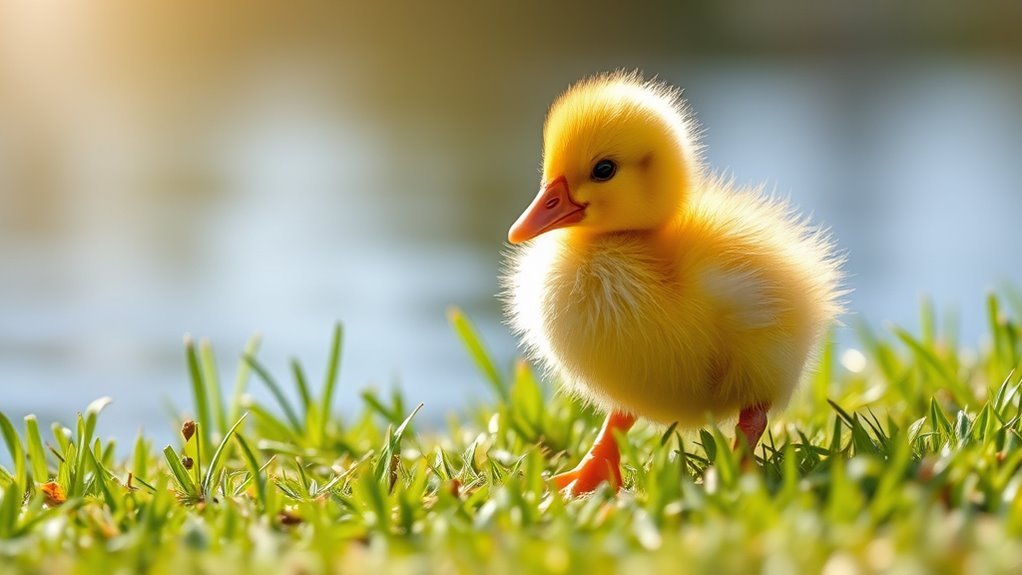
You call a baby duck a duckling. It’s a tiny bird covered in soft, downy feathers, usually yellow or brown. Ducklings are just a few inches long and weigh only a few ounces.
They stay close to their mother, who guides them to food and teaches them important survival skills like swimming and foraging.
This maternal care is key for their growth and independence.
Keep exploring to discover how these little birds develop and thrive.
It’s fascinating to see how a baby duckling grows into a strong, graceful adult.
Key Takeaways
- A baby duck is called a duckling. Ducklings are covered in soft, downy feathers.
- They commonly have yellow or brown coloring. Ducklings measure about 2-3 inches long at birth.
- They weigh only a few ounces when hatched. It’s pretty amazing how tiny and delicate they are!
What Is a Baby Duck Called?
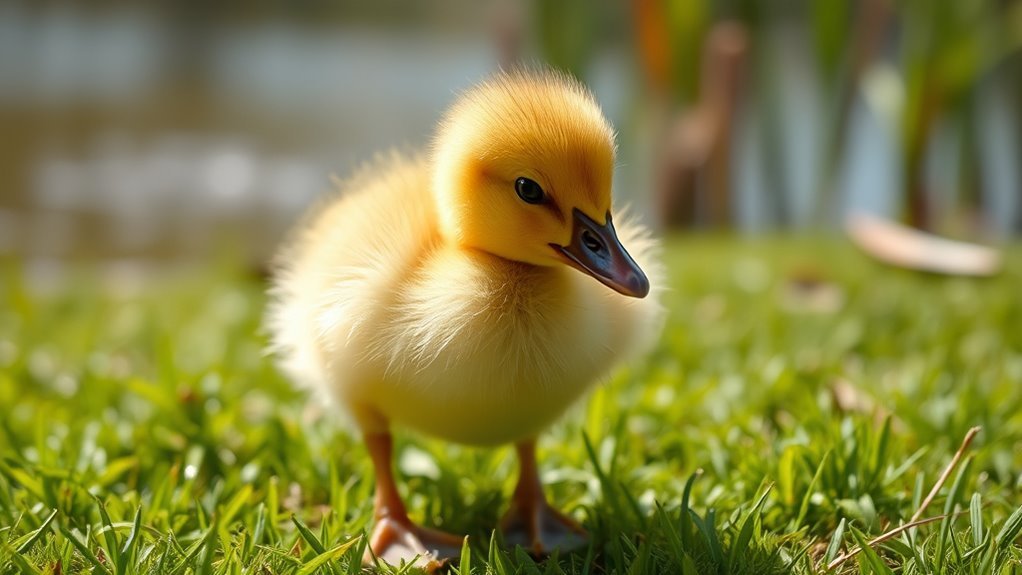
Wondering what a baby duck is called? It’s called a duckling. When a young duck hatches, you’ll notice it’s covered in soft, downy feathers, usually yellow or brown.
Ducklings are tiny, weighing just a few ounces and measuring only 2-3 inches long. From the start, female ducks—the mothers—lead their ducklings to food sources like aquatic plants.
Watching their mother, ducklings learn to swim quickly and begin to explore their environment. This early stage lasts about 60 days, during which ducklings grow and develop adult feathers.
Ducklings quickly learn to swim and explore as they grow adult feathers during their first 60 days.
Domestic ducks and wild ducklings behave similarly as they follow their mother’s guidance, gaining independence bit by bit. You’ll see how essential the mother’s role is in teaching survival skills to her young duck.
How Do Baby Ducks Grow and Learn From Their Mothers?
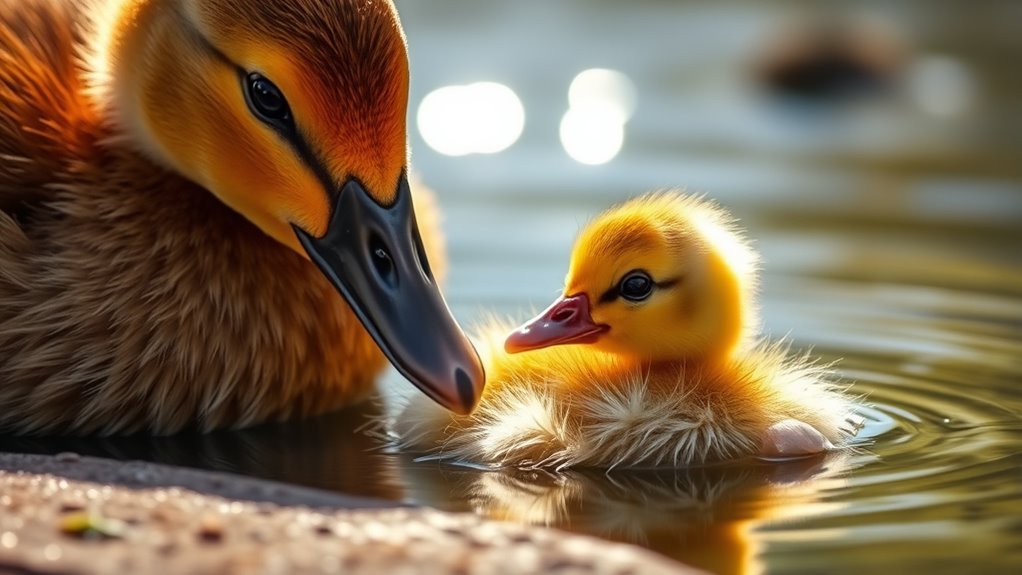
Although baby ducks start life vulnerable and small, they quickly grow and learn by closely following their mothers. When ducklings hatch, mother ducks provide warmth and protection, guiding them as they adapt to their environment.
This maternal care is important to prevent dangers and teach survival skills. You’ll notice sexual dimorphism and body shape differences become clearer as they mature.
Here’s how ducklings grow and learn from their mothers:
- Following their mother, they learn to forage, including catching small fish and other food.
- Mother ducks teach them to recognize safe and nutritious items.
- Over 30-60 days, ducklings gain independence while still relying on maternal guidance.
This process guarantees ducklings develop essential skills to thrive in the wild.
Frequently Asked Questions
What Is Another Name for a Baby Duck?
Another name for a baby duck is a duckling. You’ll hear this term used until the duck grows up, usually around one year old.
Ducklings are soft, fluffy, and totally dependent on their mom for care. They really need her to stay safe and warm.
What Is a Small Duck Called?
Think of a small duck as a tiny feathered explorer called a duckling. You’ll see it waddling with soft down feathers, learning the world by following its mother’s footsteps.
It’s growing stronger day by day, discovering new things with every little step. Cute, curious, and full of life, that’s a duckling for you!
What Are Duck Babies Called?
Duck babies are called ducklings. You’ll notice they’re small, fluffy, and rely on their mother for warmth and learning how to find food.
You’ll watch them grow from hatchlings to independent adult ducks. It’s pretty amazing to see how quickly they develop!
What Is a Female Duck Called?
You might not guess it, but a female duck is called a hen. She’s usually camouflaged with brown feathers, quietly nesting and protecting her ducklings.
Meanwhile, her male counterpart shows off with bright colors to attract mates. It’s a clever way nature helps keep them safe and noticed!
Conclusion
Now that you know a baby duck is called a duckling, imagine watching those fluffy little explorers waddle beside their mother, learning the dance of life. You’ll see how these tiny adventurers grow, guided by gentle wings and warm quacks.
Like a hopeful sunrise, their journey reminds you that with love and care, even the smallest beginnings can blossom into something truly beautiful. So, treasure every moment with those precious ducklings.
Seeing a baby duck, or duckling, develop day by day is a special experience. Each step they take shows how important nurturing and kindness are in helping these little creatures thrive. Remember, a baby duck called a duckling isn’t just cute—they’re a symbol of growth, hope, and the wonders of nature. So keep an eye out for these adorable ducklings, because their story is one of love and life unfolding in the most heartwarming way.






One Comment