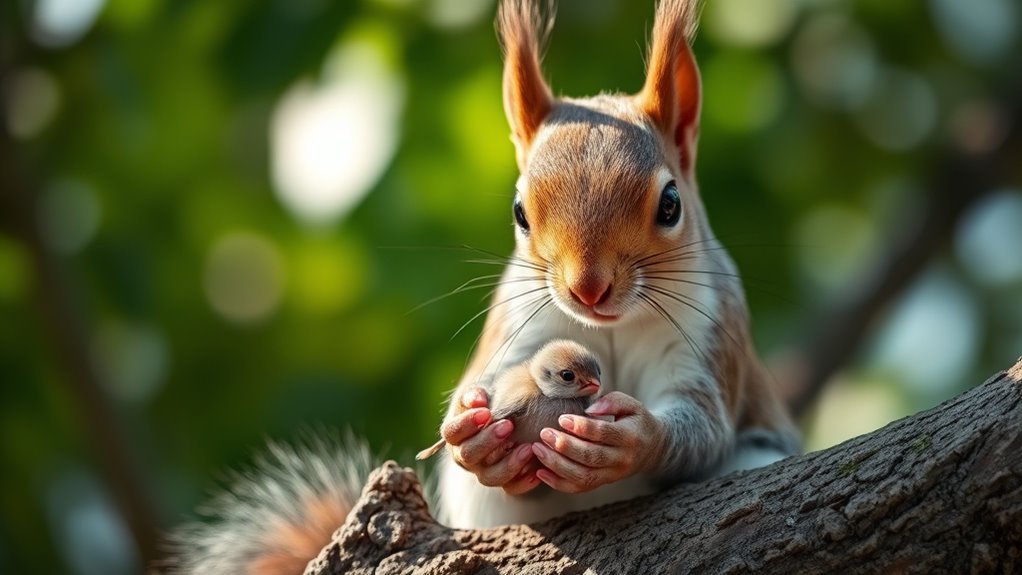
How Do Squirrels Eat Baby Birds?
When food gets scarce, you’ll see squirrels use their sharp claws and agility to raid bird nests for baby birds.
They rely on keen eyesight to spot vulnerable, defenseless nestlings and act quickly before the young can react. This opportunistic behavior helps meet their protein needs during tough times.
Squirrels are flexible hunters, adjusting their diet based on availability.
If you want to understand how environmental factors influence this behavior and its impact on bird populations, there’s more to uncover.
It’s pretty fascinating how these little creatures adapt to survive!
Key Takeaways
- Squirrels use their agility and sharp claws to get into nests. They especially target those in lower tree forks or open areas.
- They have keen eyesight that helps them spot nests with baby birds that can’t move yet.
- These quick, opportunistic raids let squirrels grab the baby birds before they have a chance to escape.
- Baby birds are a great source of protein, which squirrels need, especially when food is scarce or the weather is tough.
- Once caught, squirrels usually eat the nestlings right away, often staying close to the nest while they do.
How Squirrels Find and Access Baby Birds in Nests
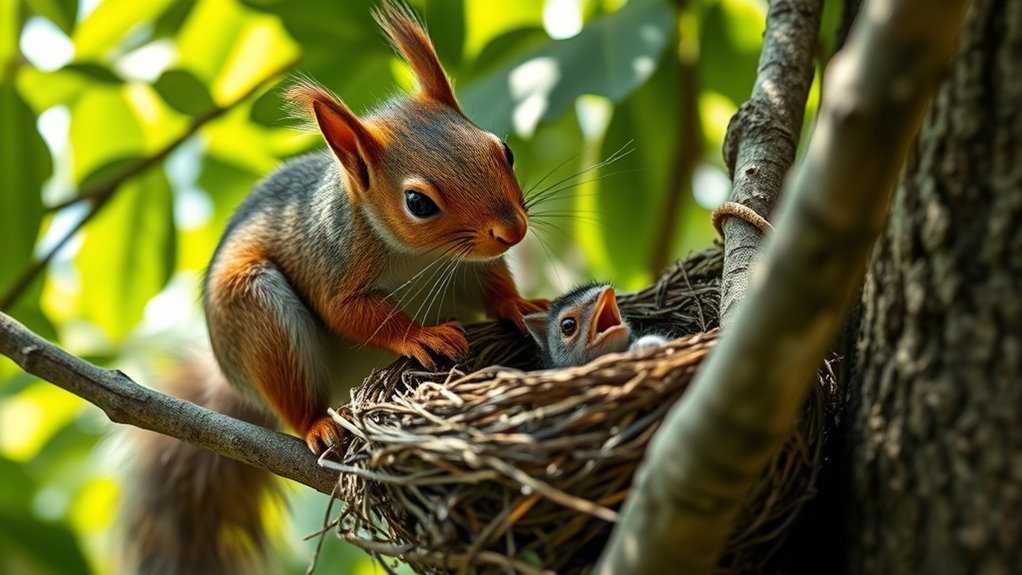
When food is scarce or weather turns harsh, squirrels don’t hesitate to raid nests for baby birds. You’ll notice grey squirrels are especially opportunistic, using their agility and sharp claws to access nests in lower tree forks or open habitats.
They have a keen sense of sight that helps them locate nests containing vulnerable young birds. Since baby birds can’t flee, squirrels quickly take advantage of these easy food sources to meet their nutritional needs.
Their adaptability means they’ll exploit whatever’s available, including eggs and nestlings, to survive tough times. So if you spot a squirrel near a nest, it’s likely scouting for a chance to raid, driven by the need to find sufficient food when other options run low.
How Squirrels Catch and Eat Baby Birds in Nests
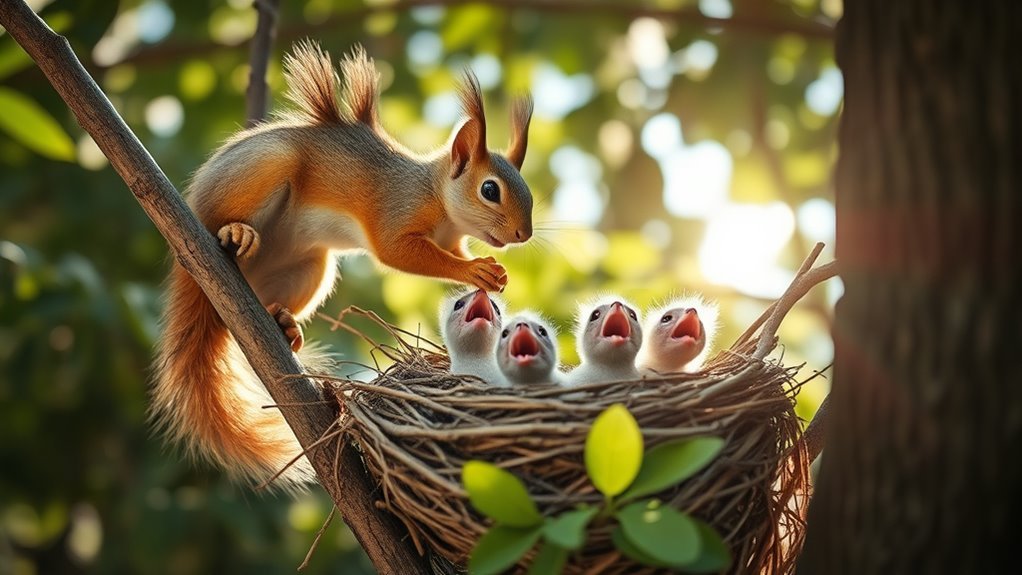
Squirrels rely on their agility and sharp senses to quickly capture baby birds before they can react. When red squirrels spot a vulnerable nest, they seize the moment to raid it, targeting baby birds who can’t escape like adult birds do.
This opportunistic behavior kicks in especially when other food sources run low. By eating baby birds, squirrels fulfill essential nutritional needs, gaining protein-rich meals vital for growth, pregnancy, and lactation.
Nest raiding takes advantage of the nestlings’ limited mobility and defenses, making them an easy, high-reward target. You’ll notice red squirrels adapt their diet based on availability, showing flexibility in finding food.
Frequently Asked Questions
Will Squirrels Bother Baby Birds?
Yes, squirrels will bother baby birds, especially when food is scarce. You’ll notice they raid nests to eat the vulnerable chicks, seeking easy protein.
What Eats Baby Birds at Night?
You’ll find that raccoons, owls, snakes, feral cats, and opossums hunt baby birds at night. They use keen senses and agility to raid nests while the chicks are vulnerable and defenseless in the darkness.
These animals are pretty clever when it comes to finding their next meal. Baby birds don’t stand much of a chance once night falls. It’s all about timing and stealth for these nighttime hunters.
Why Do You Rarely See Baby Squirrels?
You rarely see baby squirrels because they spend their first 8-10 weeks hidden in nests, protected by their mothers. During this time, they’re vulnerable and stay out of sight.
They grow quickly before venturing outside. So, it’s pretty normal not to spot them around until they’re a bit older and more independent.
What Birds Are Squirrels Afraid Of?
You’re usually cautious around hawks and owls since they’re bigger predators.
Agile birds like jays can also scare you off, especially when they defend their nests aggressively during breeding seasons.
That kind of behavior makes you more alert and careful.
Conclusion
Just like a squirrel sneaking into a nest, life sometimes takes what you cherish most when you least expect it. You’ve seen how they find and eat baby birds—swift, cunning, and relentless.
Remember, challenges can feel like those hidden squirrels, testing your grip on what matters. But just as the birds grow stronger after each trial, you too can rise, protecting your dreams with the same fierce determination.
Keep your nest safe, no matter what. Like squirrels that eat baby birds, life’s obstacles may seem sudden and harsh. But facing them head-on builds resilience. So stay alert, guard your goals, and don’t let anything snatch away what you value most. Your strength grows with every challenge, just like those birds learning to survive.




2 Comments