What Is a Baby Elephant Called?
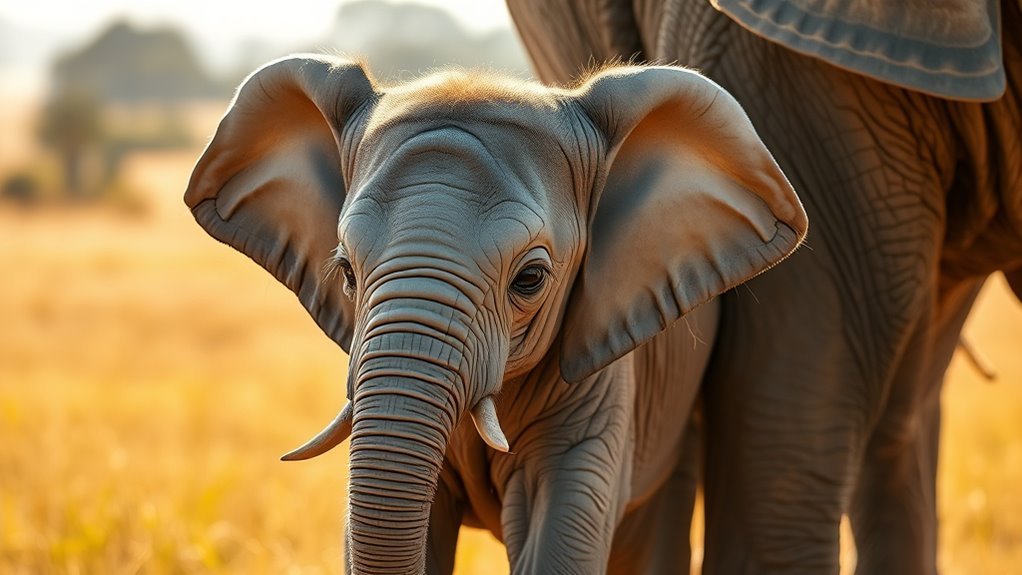
You call a baby elephant a “calf,” a name that highlights its key role within the herd and the strong maternal care it receives.
Baby elephants, or calves, are truly fascinating creatures, and their early life is full of learning and growth. From birth, calves rely heavily on their mothers, who invest long months of energy and protection to help them survive.
These young elephants start off weighing about 90 kilograms and learn essential skills by observing older herd members.
It’s amazing how much they pick up just by watching and interacting with their family. If you keep exploring, you’ll discover how calves grow and thrive in such nurturing social environments.
The bond between the calf and its herd is really something special!
Key Takeaways
- A baby elephant is called a “calf.” The term “calf” reflects the young elephant’s role within the herd.
- Calves rely heavily on maternal care for survival and development. It’s really important because they need a lot of support growing up.
- Female elephants typically have 3 to 5 calves in their lifetime. Each calf is essential for maintaining stable elephant populations. So, every little one counts!
What Is a Baby Elephant Called? Why the Name Matters
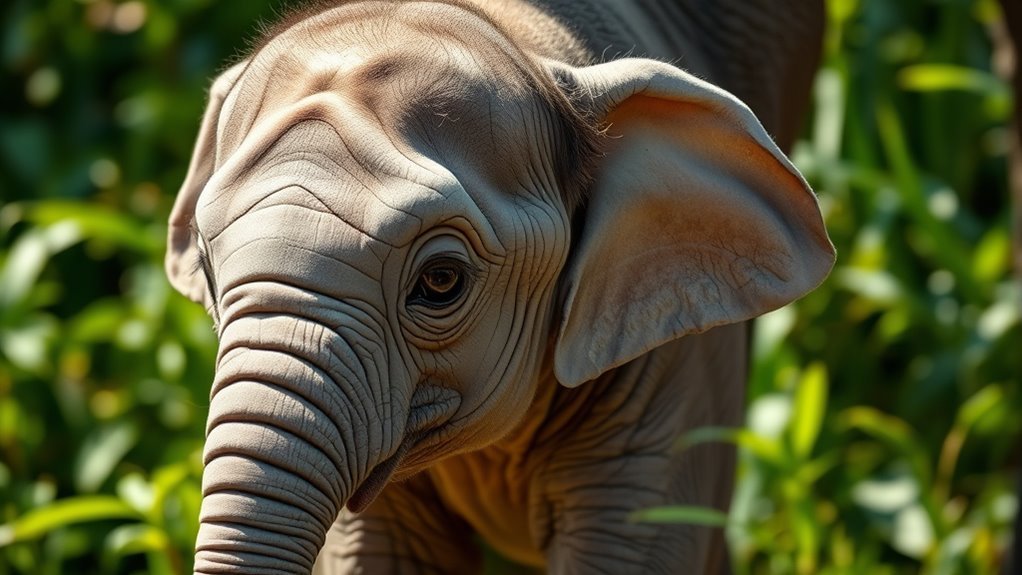
Although you might already know that a baby elephant is called a “calf,” understanding why this name matters reveals much about elephant family life. The term “calf” highlights the young elephant’s role within the herd and the deep maternal care involved.
Since female elephants usually have only 3 to 5 calves in their lifetime, each calf is essential for maintaining stable elephant populations. These calves depend heavily on their mothers, who invest significant time and energy during a long gestation of 18 to 22 months.
How Baby Elephants Grow Up and Learn
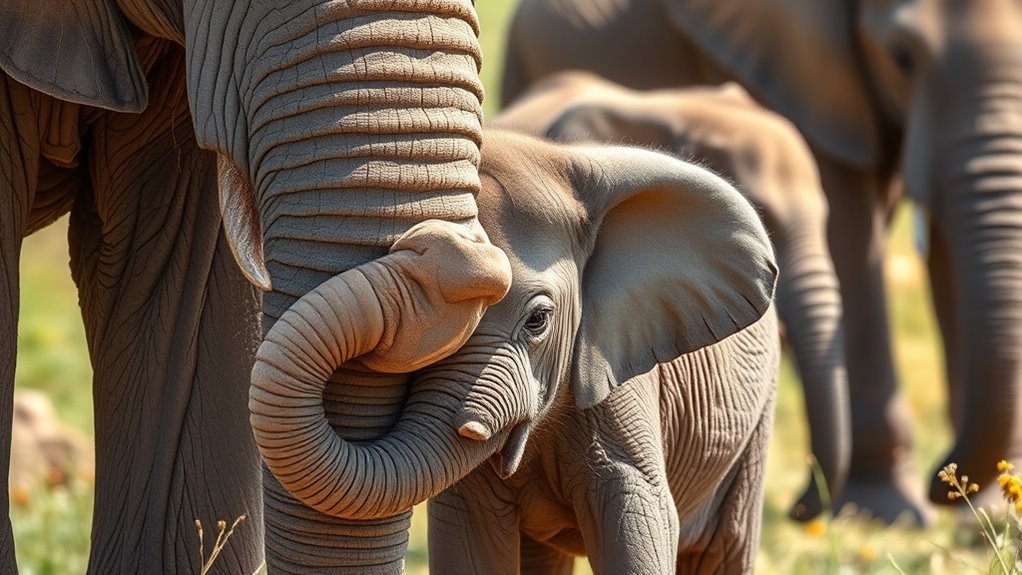
Understanding why baby elephants are called calves helps you appreciate the deep connections within elephant families, but it’s just the start.
As baby elephants grow, especially the Asian elephant calves, they learn essential skills through observation and practice.
Here’s how they develop:
Born weighing around 90 kilograms and about waist-high, calves start life strong yet dependent. They spend about eight months mastering their trunks, moving clumsily at first but improving quickly.
Calves mimic older herd members to learn feeding, communication, and survival skills.
Emotional bonds form as allomothers help care for calves, strengthening social ties within the herd.
You’ll see how this nurturing environment shapes baby elephants into resilient, intelligent adults.
Frequently Asked Questions
What Animal Is Pregnant for 2 Years?
You’re wondering which animal stays pregnant for about two years? It’s the elephant!
Their gestation lasts 18 to 22 months, so you can say they’re really patient when it comes to growing their babies inside. Pretty amazing, right?
What Are Baby Monkeys Called?
You’ll find baby monkeys called infants, tiny explorers clinging to their mothers like leaves on a branch. They’re playful, curious, and learning life’s dance.
They grow fast as they mimic adults in their jungle classroom. It’s like they’re always ready for a new adventure!
What Are Baby Snakes Called?
A baby snake’s called a snakelet if born live, or a hatchling if hatched from eggs. You’ll notice they’re independent right away and don’t get much parental care.
They’re ready to survive and hunt on their own from the start. It’s pretty amazing how self-sufficient they are!
What Is a Juvenile Elephant?
You might think a juvenile elephant is just a small adult, but it’s actually between 1 and 10 years old.
It’s still learning and playing as it grows into its role within the herd’s social structure and survival skills.
Conclusion
Now that you know a baby elephant is called a calf, you can appreciate just how special these little giants are. Watching a calf grow is like seeing a tiny seed blossom into a mighty tree—full of strength and wisdom.
So next time you spot one, remember, you’re witnessing the start of an incredible journey. Baby elephants aren’t just cute; they’re the heartbeats of the wild, learning and thriving every step of the way.
Baby elephants, or calves, play a crucial role in their herds. They learn essential survival skills from their mothers and other adults, which helps them grow into the majestic creatures we admire. So, whenever you see a baby elephant, know that you’re seeing the future of the wild, full of promise and life.