What Do Baby Turtles Eat and How to Feed Them
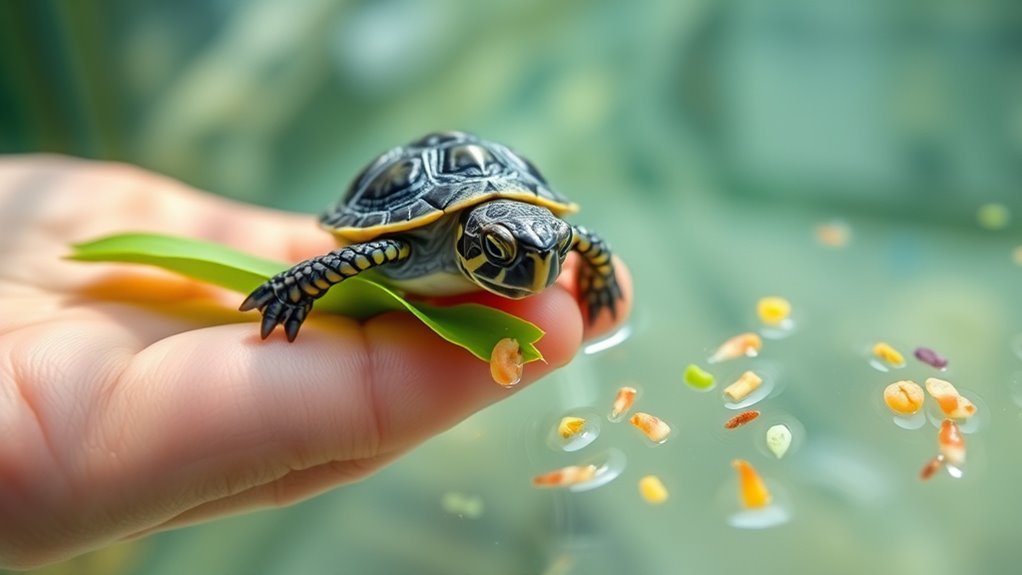
You should feed baby turtles a balanced diet including protein sources like mealworms, crickets, and small fish. These provide the essential nutrients they need to grow strong and healthy.
Along with protein, make sure to include calcium-rich foods and dark leafy greens to support shell growth and overall health.
Establish a consistent feeding routine by offering food once or twice a day for about five minutes. This helps avoid overfeeding and prevents water contamination.
Don’t forget to dust their food with vitamins A and D when needed to keep them in top shape.
Keep an eye on their growth so you can adjust their diet as they develop.
There’s always more to learn about keeping your turtles strong and happy, so stay curious and enjoy the journey!
Key Takeaways
- Baby turtles eat protein sources like mealworms, crickets, and small fish, along with dark leafy greens and high-quality pellets.
- Feed baby turtles once or twice daily, offering food for about five minutes. This helps avoid overfeeding and keeps the water clean.
- Include calcium-rich foods and dust feed with vitamins A and D. These support shell growth and boost their immune health.
- Keep an eye on their growth and adjust the diet based on their size, health, and development. This ensures they get balanced nutrition.
- It’s best to maintain a varied diet by combining live food, pellets, and greens. This helps keep your baby turtle healthy and interested in their food.
Key Nutrients and Foods Baby Turtles Need Daily
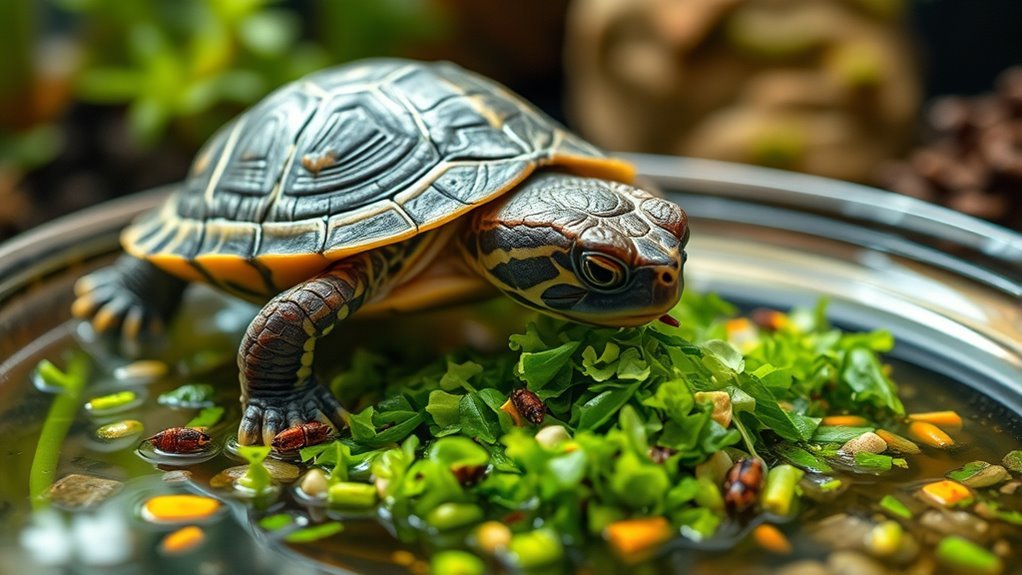
Because baby turtles grow quickly, you’ll need to provide a diet rich in protein from animal sources like mealworms, crickets, and small fish to support their muscle development. Animal protein is essential for aquatic turtles, fueling their rapid growth and energy needs.
Alongside protein, calcium plays an important role in strengthening their shells, so include calcium-rich foods and supplements regularly. Vitamins, especially A and D, are crucial for immune health and proper calcium absorption, ensuring your baby turtles stay healthy.
Don’t forget to add fresh, dark leafy greens to their diet for extra nutrients and dietary variety. Establishing a consistent feeding routine helps you monitor their intake, making sure they get all necessary nutrients daily and promoting their overall well-being.
Feeding Tips and Schedules to Help Baby Turtles Grow Strong
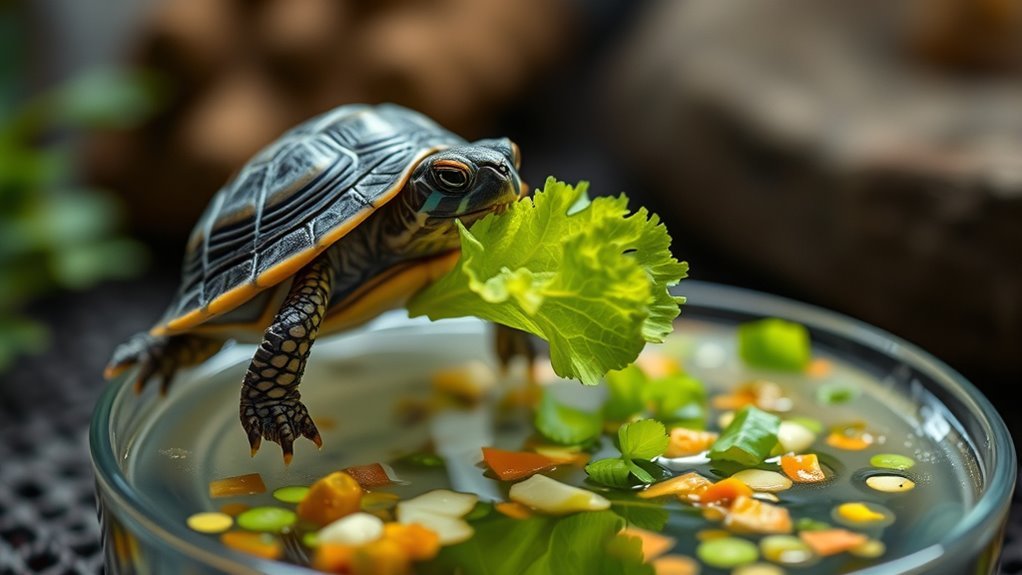
To help your baby turtles grow strong, you’ll want to establish a consistent feeding schedule that meets their nutritional needs. Feed your pet a balanced diet daily, including high-quality pellets, live food like mealworms, and dark leafy greens.
Establish a consistent feeding schedule with balanced pellets, live mealworms, and leafy greens for strong baby turtles.
Stick to a feeding routine of once or twice a day. Offer food for about five minutes to avoid overfeeding and water contamination.
Make certain to include calcium and essential vitamins and minerals by dusting their food with supplements as needed. Regularly monitor growth and adjust their diet based on their size and development.
This careful approach guarantees your baby turtles get the nutrients they need for healthy shell formation and overall well-being. It’s all about keeping them happy and healthy!
Frequently Asked Questions
What Can I Feed a Baby Turtle From My House?
You can feed your baby turtle small pieces of cooked, unseasoned chicken or turkey, some leafy greens like kale or romaine, and occasional fruits like berries.
Just make sure you avoid anything seasoned or processed. That way, they stay healthy and happy.
How Many Days Can a Baby Turtle Live Without Food?
A baby turtle can survive about 3 to 6 days without food, but you shouldn’t let it go that long.
You’ll want to feed it daily to support healthy growth and avoid any health problems. It really makes a big difference to their well-being.
How Do I Keep a Baby Turtle Alive?
You can’t just wish a baby turtle alive—it needs your full attention! Feed it daily, keep its habitat spotless, and provide fresh water.
Also, watch for any signs of health problems. With care, it’ll thrive and grow strong.
How Often Should a Baby Turtle Be Fed?
You should feed your baby turtle every day to support its growth.
As it gets older, you can reduce feeding to every 2-3 days.
Always watch how much it eats and adjust accordingly.
Conclusion
Feeding your baby turtle the right foods is like painting a vibrant garden of health and growth. By providing key nutrients daily and sticking to a consistent feeding schedule, you’ll watch your little shell-friend thrive and grow strong.
Remember, patience and care go a long way—your turtle’s happiness and health depend on the love you put into every meal.
Keep nurturing, and you’ll create a lifelong bond filled with joy. Feeding baby turtles properly is essential for their development, so always offer a balanced diet rich in proteins, vegetables, and calcium.
With the right foods and attentive care, your baby turtle will flourish, making feeding time a rewarding experience for both of you.