
How to Uncover What Caused Baby David’s Death
To uncover what caused Baby David’s death, start by focusing on driver behavior. Was the driver drunk or distracted?
Eyewitness accounts are also super important because they give us key details that might not be obvious at first.
Next, take a close look at the physical evidence from the scene. Check out the road conditions and visibility. These little things can tell us a lot.
Putting all these pieces together helps us reconstruct what really happened. It reveals vital facts that explain the circumstances.
By exploring these elements, we get a clearer picture of the serious dangers that led to this tragedy.
Key Takeaways
- Examine driver behavior and scene conditions to identify potential distractions or impairment. Take a close look at what might have distracted the driver or if there was any sign of impairment.
- Collect and analyze eyewitness accounts to establish a detailed timeline of events. These firsthand stories can really help piece together what happened minute by minute.
- Investigate physical evidence, including vehicle damage and road conditions, for clues. Every scratch or skid mark might tell us something important.
- Review surveillance footage and other recordings for additional context and driver actions. Sometimes cameras catch details that no one else sees.
- Conduct a thorough scene analysis to understand visibility, speed, and pedestrian safety factors. Knowing how clear the driver’s view was and how fast things were moving can shed light on the incident.
Key Evidence Revealing the Cause of Baby David’s Death

Anyone investigating Baby David’s tragic death will find that key evidence centers on the driver’s behavior and the scene’s conditions. You’ll learn that the driver was either a distracted driver or a drunk driver, both of which pose serious threats to pedestrian safety.
Eyewitness accounts play an essential role in piecing together what happened, offering firsthand details about the driver’s actions and how the accident unfolded. By focusing on these accounts and physical evidence from the scene, you can better understand the factors contributing to this heartbreaking incident.
Recognizing the dangers of impaired or inattentive driving is critical. It especially highlights the need for stronger awareness around pedestrian safety and the consequences of distracted or drunk driving.
Investigating Driver Behavior and Scene Details in Baby David’s Death
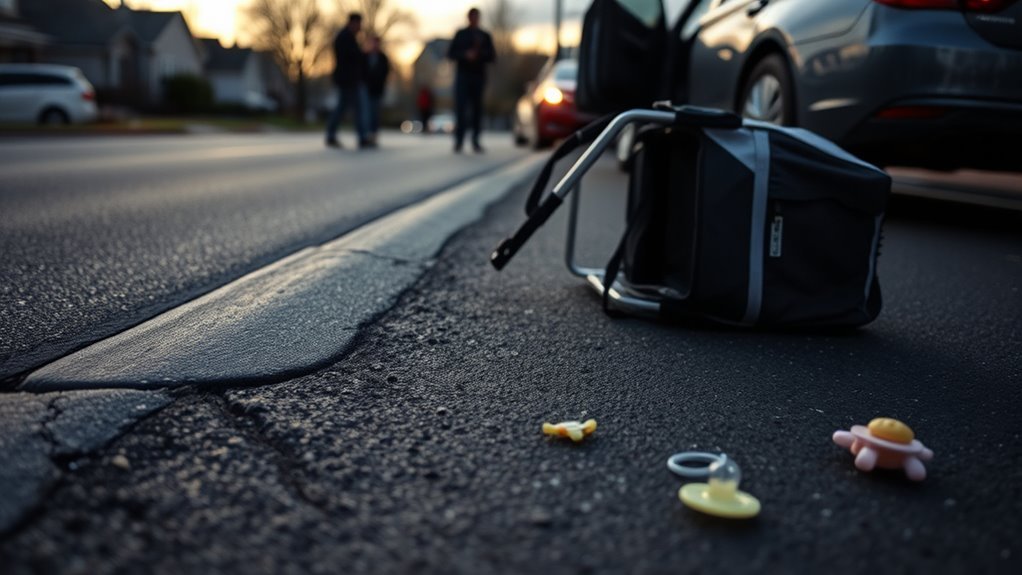
When you investigate Baby David’s death, examining the driver’s behavior and the accident scene reveals essential insights. You focus on whether distracted driving contributed, looking for signs like mobile device use or impairment. Since distracted driving is a leading cause of pedestrian fatalities, this angle is significant.
You analyze the scene’s details—visibility, speed, and road conditions—to understand the driver’s state and actions. Witness accounts and surveillance footage add valuable context, helping you piece together the driver’s behavior before the accident.
This thorough accident investigation not only clarifies what happened but also supports accountability and helps prevent similar tragedies. By scrutinizing these elements, you uncover the facts behind Baby David’s death with accuracy and care.
Frequently Asked Questions
What Caused Baby David’s Death Impact?
Baby David’s death impacts you by highlighting the deadly consequences of distracted driving. It really makes you stop and think about how dangerous it can be when your attention isn’t fully on the road.
It pushes you to stay focused every time you get behind the wheel. Plus, it supports stricter laws to keep everyone safer out there.
And honestly, it motivates you to spread awareness. Sharing what happened can help prevent similar tragedies on the road.
What Caused Baby David’s Death in Impact Texas?
You should know that distracted driving causes 25% of crashes.
Baby David’s death in Impact Texas was caused by a drunk and distracted driver, highlighting why you must stay alert and avoid impaired driving at all costs.
It’s a harsh reminder that even a moment of inattention can have devastating consequences.
What Caused Baby David’s Death Killed by a Drunk Driver Distracted Driver Walking Across the Street With?
Baby David’s death was caused by a drunk driver who was distracted while you were walking across the street with him.
You need to stay alert and promote road safety to prevent such tragedies from happening again.
What Caused Baby Sean’s Brain Injury?
Baby Sean’s brain injury likely happened because someone didn’t use proper safety measures during a vehicle accident.
You should always guarantee kids are secured in child safety seats and seatbelts to prevent such serious injuries.
It’s really important to double-check these things every time you’re on the road. Safety first, right?
Conclusion
You might expect the cause of Baby David’s death to be clear-cut, yet the tangled mix of driver behavior and subtle scene details tells a different story. While impulsive actions suggest blame, the overlooked evidence reveals a quieter, more complex truth.
By balancing what you see with what you don’t, you uncover the real cause. It shows that sometimes, the loudest clues aren’t the most important ones. Understanding the full picture means paying attention to both obvious and hidden factors.
Uncovering what caused Baby David’s death isn’t just about quick judgments. It requires looking deeper into the driver’s behavior and the subtle details at the scene. Only then can you piece together the truth behind this tragic event.





4 Comments