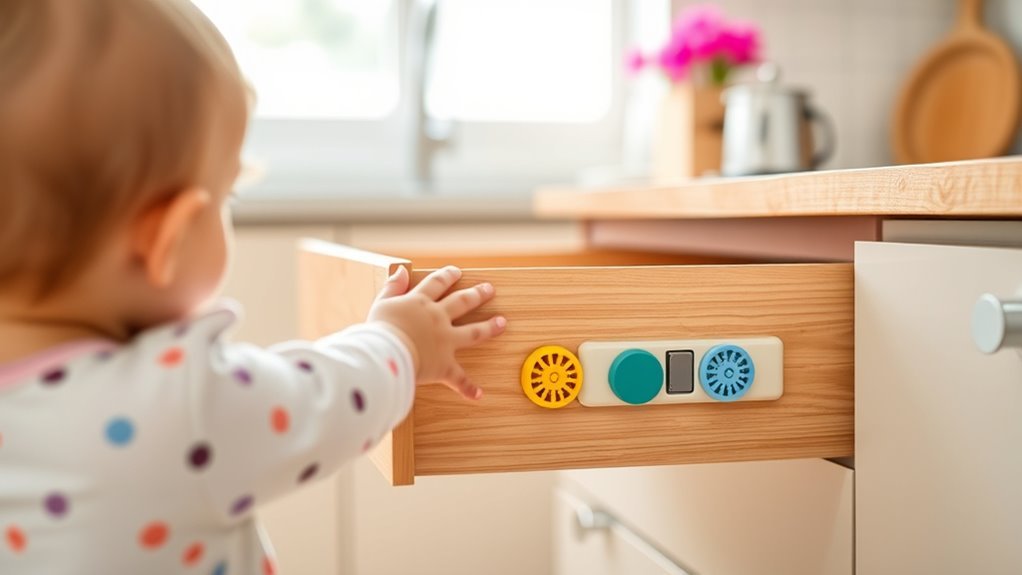
How to Baby Proof Drawers in 10 Essential Steps
To babyproof drawers in 10 essential steps, start by removing dangerous items and relocating hazards out of reach. This simple first step helps create a safer environment for your little one right away.
Next, measure your drawers carefully to pick the right locks, like magnetic or adhesive types, that fit perfectly.
Then, install these locks securely to keep curious hands out. Adding corner guards and knob covers provides extra protection from bumps and pinches.
Don’t forget to secure heavy furniture to prevent any tipping accidents.
As your child grows, regularly check and adjust these safety measures to make sure they still work effectively.
Keep going to discover how these simple actions create a safe space for your little explorer.
Babyproofing your home doesn’t have to be overwhelming—it’s all about taking these easy, practical steps!
Key Takeaways
- Identify and remove hazardous items from drawers. Then, relocate dangerous objects to higher or locked spaces.
- Measure drawer dimensions accurately. This helps you pick the right childproof locks and safety devices that fit perfectly.
- Install magnetic or adhesive childproof locks inside drawers. These offer secure protection without needing tools, or provide durable safety.
- Use extra safety items like corner guards, knob covers, and furniture straps. They really help boost overall drawer safety.
- Make sure to regularly check and maintain locks and other safety measures. Adjust them as your child grows and becomes more mobile.
Why You Need to Babyproof Drawers
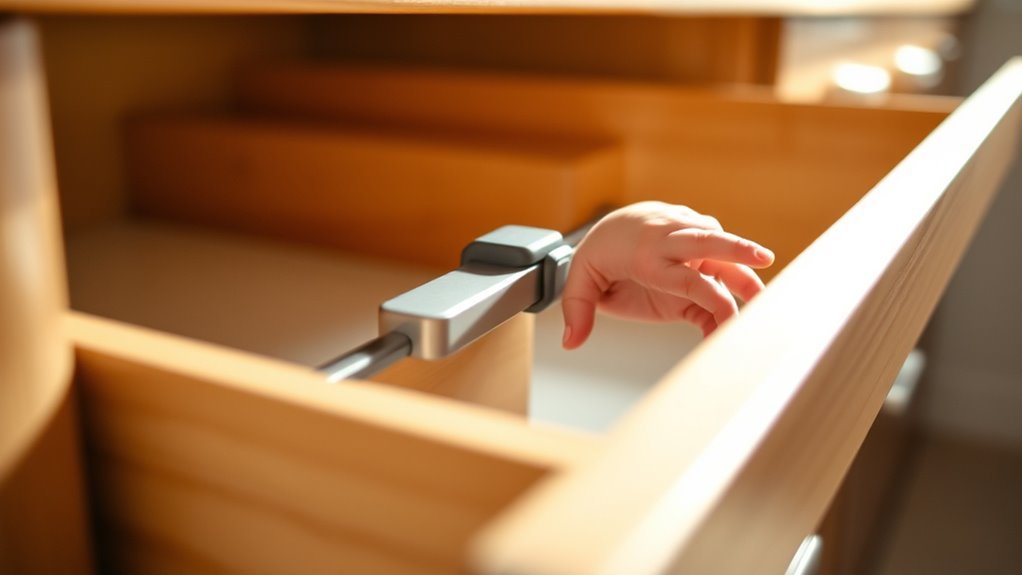
As your baby starts moving around and exploring between 6 to 12 months, you need to babyproof drawers to keep them safe. Drawers often contain potential hazards like sharp tools or small objects that curious children can easily access.
Without proper childproofing, these areas pose serious safety risks. By investing in quality safety devices and securing drawers, you create a safer environment where your child can explore without danger.
Investing in quality safety devices transforms risky drawers into secure spaces for your child to explore safely.
Babyproofing drawers is an essential step in childproofing your home, reducing the chances of accidents and giving you peace of mind. Remember, as your child grows, regularly reassess your safety measures since their abilities change quickly.
Taking these precautions guarantees your home stays a secure place for your little one. It’s all about making sure they’re safe while they discover the world around them.
Remove Dangerous Items From Drawers
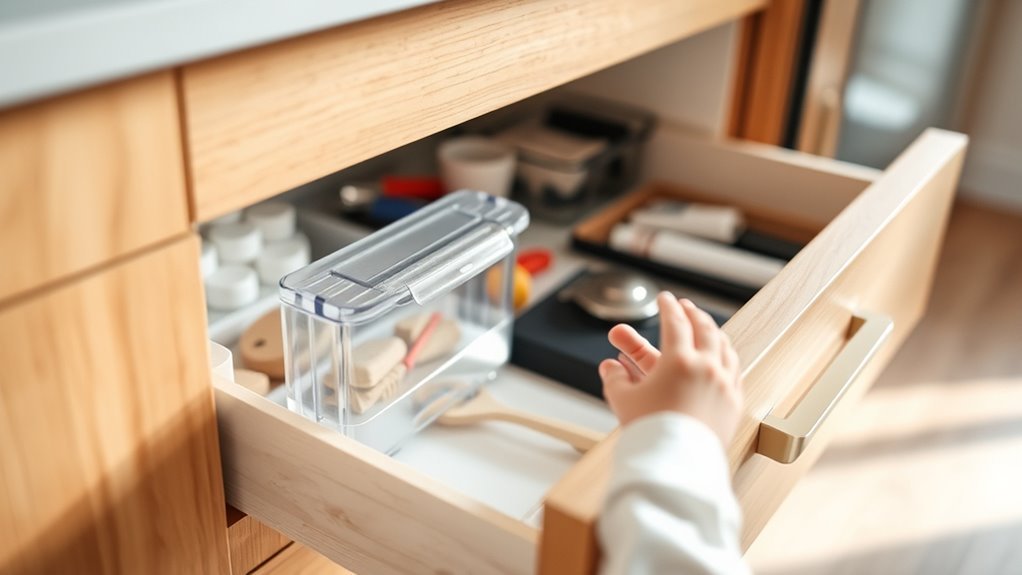
Start by identifying any hazardous items in your drawers, like medications, sharp tools, or cleaning products. Then, relocate these items to higher or locked drawers where your child can’t reach them.
It’s a good idea to regularly check and update the contents. This way, you keep your little one safe as they grow.
Identify Hazardous Contents
Identifying hazardous contents in your drawers is essential to keep your child safe from potential harm. You should remove medications, personal care items, and hazardous cleaning products from reachable drawers.
Sharp objects like knives and scissors also need secure storage. Important documents deserve protection too, so use drawer locks or place them out of reach.
Remember to regularly reassess drawer contents as your child grows to maintain safety.
| Hazardous Item | Recommended Action |
|---|---|
| Medications | Remove from accessible drawers |
| Sharp Objects | Store in upper drawers |
| Hazardous Cleaning Products | Keep in high cabinets |
| Important Documents | Secure with drawer locks |
Taking these steps helps you create a safer environment and prevents accidents effectively. It’s all about staying proactive and keeping an eye on what’s within your child’s reach.
Relocate Items Safely
Once you’ve pinpointed which items pose risks, the next step is to remove or relocate them to safer spots. Start by taking medications, hazardous materials, and cleaning supplies out of accessible drawers to prevent accidental ingestion or injury.
Store sharp kitchen tools and utensils in higher drawers, well out of reach, to promote child safety. Don’t forget to relocate beauty products like lipsticks and lotions to upper shelves to avoid choking hazards and skin irritations.
Keep important documents and any remaining hazardous materials locked away in drawers that aren’t easily accessible to kids. Regularly check lower drawers to verify no new dangerous items have slipped in.
Store Hazardous Items Safely Out of Children’s Reach
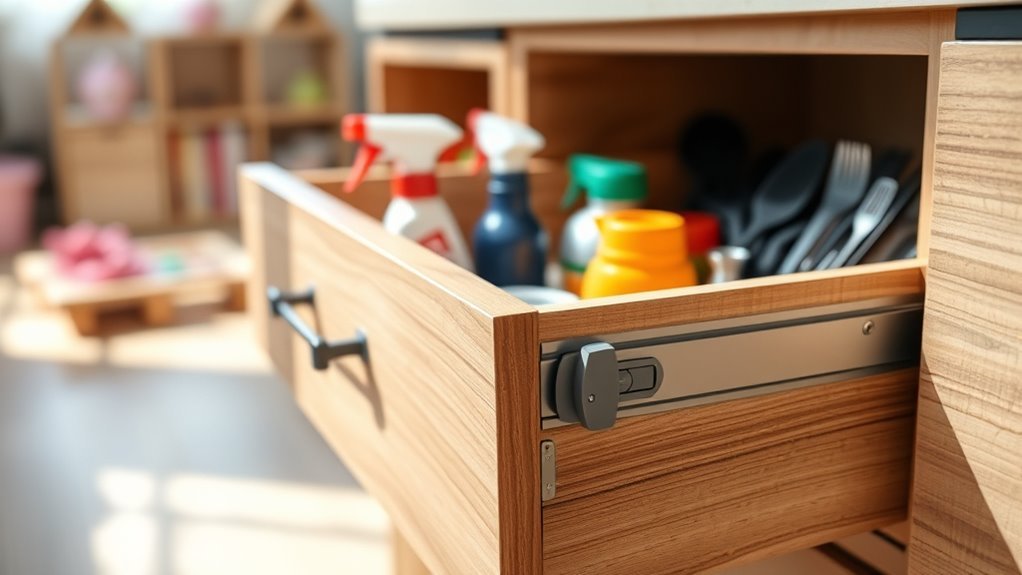
Because kids are naturally curious, you’ve got to store hazardous items like cleaning supplies, sharp tools, and medications well out of their reach. When babyproofing your home, focus on organizing cabinets and drawers safely to prevent accidents.
Use childproof locks on lower storage spaces and keep hazardous items in higher cabinets, ideally above waist level. Also, watch out for choking hazards by securing small objects in locked drawers.
To store safely, follow these safety measures:
- Install sturdy childproof locks on all accessible cabinets and drawers
- Store hazardous items in high, out-of-reach cabinets
- Regularly check your storage to make sure no dangerous items are left accessible
Measure Drawers to Choose the Right Locks
Start by measuring the width, height, and depth of each drawer to guarantee the locks you choose will fit properly. It’s important to get these measurements right to avoid any issues later on.
Check the drawer style and location since these factors affect which lock models will work best. Different locks suit different drawer types, so keep that in mind.
Keeping detailed measurements and notes will make selecting and installing the right locks much easier. Trust me, staying organized saves a lot of hassle!
Accurate Drawer Measurements
Measuring each drawer’s width, depth, and height accurately is essential to choosing the right childproof locks. Use a measuring tape to get precise dimensions, including allowances for any obstructions like handles or drawer slides.
Accurate measurements help guarantee the drawer locks fit securely and work effectively. Don’t forget to measure the drawer opening space, as some locks need extra clearance for installation.
Document measurements for every drawer requiring childproofing to create a thorough list, simplifying your shopping process. Before purchasing, double-check your numbers against the installation instructions to avoid compatibility issues.
Here’s what to focus on:
- Measure width, depth, and height, including obstructions
- Document all measurements in a thorough list
- Verify measurements before buying drawer locks for effective childproofing
Lock Compatibility Check
To pick the right locks, you’ll need to check each drawer’s height, width, and depth carefully. Accurate drawer dimensions are essential for lock compatibility and ensuring a snug fit.
Don’t forget to take into account the drawer style—whether frameless or inset—since this influences which types of locks will work best. Review the locking mechanism’s installation requirements to confirm they align with your drawer’s design and materials. Some locks stick better to wood than metal or plastic, so keep that in mind.
Always verify the manufacturer’s recommendations to match lock types with specific drawer sizes and styles. This step guarantees ideal security and smooth installation.
Taking these factors into consideration helps you choose locks that protect effectively without damaging your drawers or compromising their function.
Drawer Location Assessment
Evaluating every drawer in your home that needs childproofing helps you create a thorough safety plan. Start with a detailed drawer location assessment by identifying all drawers, especially those containing hazardous items like cleaning supplies or sharp tools.
Measure each drawer’s dimensions carefully to choose locks that fit perfectly and suit the drawer style. This guarantees your baby-proof drawer efforts are effective and reliable.
Keep these tips in mind:
- List all drawers needing childproofing and note their locations.
- Measure width, height, and depth for proper lock selection.
- Prioritize drawers with hazardous items for immediate attention.
Remember to regularly reassess your childproofing measures as your child grows and becomes more curious. Adjust your safety plan and locks accordingly to maintain a secure environment.
Choose the Best Childproof Drawer Locks
When you’re choosing childproof drawer locks, it’s important to evaluate the level of security and ease of use that fits your needs.
Magnetic locks offer highly secure options since they’re installed inside drawers and need a special key, making them tough for kids to bypass.
Magnetic locks provide strong security by being hidden inside drawers and requiring a special key.
Adhesive locks provide a convenient, tool-free installation, perfect for temporary babyproofing or renters.
Traditional tab latches allow limited drawer opening and are usually placed inside cabinets, but older children might eventually figure them out.
Keep in mind that the effectiveness of these locks can change as your child grows, so regularly check and adjust your chosen locks.
Gather Tools and Prepare for Installation
Before you start installing the childproof locks, gather all the tools you’ll need, like a screwdriver, measuring tape, and the right screws. It’s best to have everything ready before you dive in.
Measure each drawer carefully to pick the best-fitting locks. Taking your time here makes the rest of the job easier.
Clear your workspace and review the instructions to make the installation smooth and safe. Trust me, a little prep goes a long way!
Tools Needed
A well-prepared toolkit makes baby-proofing drawers much easier and safer. Before starting the installation, gather the essential tools to guarantee a smooth process.
You’ll need a reliable screwdriver to fasten locks and latches securely on your drawers or cabinet. Measuring tape helps you check dimensions accurately, so the locks fit perfectly.
Sometimes, tight spaces require a right-angle drill attachment to reach tricky spots without hassle.
Here are the key tools you’ll need:
- Screwdriver for attaching locks and latches
- Measuring tape to size drawers and cabinets
- Right-angle drill attachment for tight spaces
Using Spax #6 x 5/8 screws guarantees durable installation. Always follow manufacturer instructions for best results.
This toolkit helps you install locks precisely and safely.
Installation Preparation
Although gathering tools might seem straightforward, preparing properly guarantees a smooth installation process. Start your installation preparation by measuring each drawer and cabinet carefully to confirm your chosen childproofing devices fit perfectly.
Check the manufacturer’s instructions for specific requirements and tips to avoid mistakes. Next, clean surfaces thoroughly, especially if you’re using adhesive locks—this assures they stick securely and last longer.
Inspect your drawers and cabinets for any existing hardware or obstacles that could interfere with installation. Having a screwdriver, measuring tape, and the correct latches or locks on hand before you begin will save time and frustration.
Install Magnetic, Adhesive, or Tab Drawer Locks
When you want to keep your little one safe without sacrificing convenience, installing magnetic, adhesive, or tab drawer locks offers effective solutions. These safety devices cater to different needs and drawer styles, helping you maintain childproofing without hassle.
Magnetic locks sit inside drawers, needing a special key to open, so they’re discreet yet secure. Adhesive drawer locks install quickly without tools, perfect for fast, effective childproofing. Tab locks stop drawers from opening fully, granting limited access while keeping hazardous items out of reach.
Remember to take into account your drawer’s style and size for the best fit. Also, perform regular testing of the locks’ functionality to guarantee they continue protecting your child as they grow and explore.
Use Corner Guards and Knob Covers for Drawer Safety
Since toddlers love to explore every corner, using corner guards and knob covers on your drawers can greatly reduce the risk of injuries and prevent little hands from opening them. Corner guards made from soft materials like foam or rubber cushion sharp edges, protecting your child from bumps and bruises.
Knob covers serve as an effective barrier, deterring children from gripping and pulling drawers open. This helps prevent access to potentially dangerous items inside.
Together, corner guards and knob covers form a thorough safety strategy that enhances drawer safety and supports your childproofing efforts. Remember to regularly check these protective devices for wear and tear. That way, you keep them effective and continue to prevent injuries as your little one grows and explores.
Secure Drawers to Prevent Pull-Out Accidents
Secure your drawers with childproof locks to keep curious toddlers from pulling them out completely and accessing dangerous items. These locks effectively prevent pull-out accidents by limiting how far drawers open, making it hard for little hands to pull them out fully.
To enhance safety, secure drawers in heavy furniture using safety straps that anchor dressers to the wall, preventing tipping hazards.
Here’s how to protect your home:
- Install childproof locks that restrict drawer openings.
- Use safety straps to stabilize heavy furniture.
- Keep hazardous items out of reach by locking drawers.
Regularly Inspect and Adjust Drawer Locks and Safety Measures
After installing childproof locks and safety straps, make it a habit to inspect them regularly to confirm they’re working properly. You should check drawer locks and safety measures at least once a month to verify they remain secure and functional.
As your child grows and reaches new milestones, adjust the safety measures accordingly to keep up with their increased mobility. Always inspect for signs of wear and tear, and replace any damaged or ineffective devices to maintain a safe environment.
It’s also important to reassess the placement of hazardous items during each inspection to ensure they stay out of reach. Involve all caregivers in these regular checks to maintain consistent safety and protect your child effectively.
Frequently Asked Questions
How to Childproof Sliding Drawers?
You should install childproof locks or sliding latches on your sliding drawers. This helps prevent little hands from opening them and getting into trouble.
Also, make sure to store hazardous items out of reach. It’s a simple step that can really keep your child safe.
Don’t forget to regularly check if the locks are working properly. Things can wear out over time, so a quick check now and then is a smart move.
And if you have older kids, teach them to respect these safety measures. When everyone understands the rules, it’s easier to keep the whole family safe around drawers.
What Is the Best Childproofing for Drawers?
The best childproofing for drawers is installing magnetic or adhesive locks. They prevent your child from opening drawers and accessing dangerous items.
Combine this with safety latches and store hazardous materials out of reach for maximum protection. It’s all about layering your safety measures to keep curious little hands safe.
How Can I Childproof My Drawers?
You can childproof your drawers by installing locks or latches, removing dangerous items, and adding corner guards. Anchoring furniture to walls is also a smart move.
It’s a good idea to regularly adjust these safety measures as your child grows. That way, you keep them protected effectively at every stage.
How to Lock Drawers for Babies?
To lock drawers for babies, latch low-level lockers like magnetic or adhesive locks. These limit little hands’ leverage and keep curious fingers safe.
You can also layer with lever covers for extra protection. Make sure to regularly review these restrictions. This way, you’re reassuring safety while quickly reducing risks in your restless, roaming toddler’s reach.
Conclusion
By babyproofing your drawers, you’re not just protecting your little one—you’re also creating peace of mind for yourself. As you remove hazards and install locks, you’ll notice how safety and convenience can coexist effortlessly.
It’s no coincidence that a well-secured home feels calmer and more welcoming. So, take these steps seriously; every lock you install and every drawer you secure brings you closer to a safer, happier space for your child and your family.
When you babyproof drawers, you’re making your home a safer place, reducing risks of accidents. Plus, it gives you the freedom to relax knowing your child is protected from sharp objects or harmful items inside those drawers. Babyproofing isn’t just about safety—it’s about creating a worry-free environment where your family can thrive. So start today, and enjoy the peace of mind that comes with a well-babyproofed home.





2 Comments