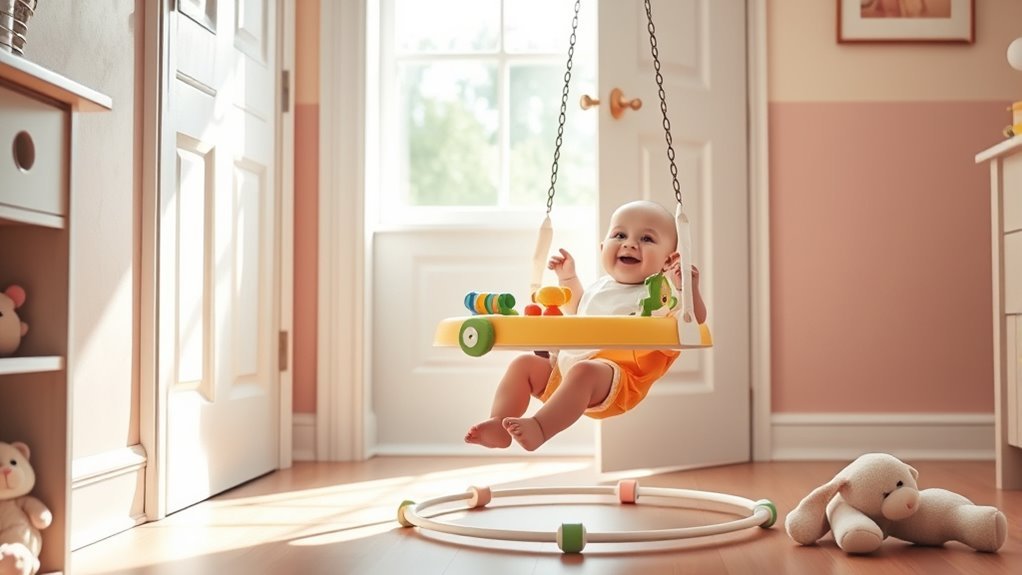
When Can Baby Use a Jumper?
You can start using a baby jumper when your little one is between 4 to 6 months old and has strong head and neck control.
It’s important that your baby shows interest in standing and has enough back strength to stay safe while using the jumper. These are key signs your baby is ready for this fun activity.
Always adjust the jumper height so their feet touch the floor comfortably. This helps your baby bounce safely without straining.
And don’t forget to supervise closely during short 10 to 15-minute sessions. Keeping an eye on your baby ensures they stay happy and secure while enjoying their jumper time.
To keep your baby safe and happy, there are important guidelines you’ll want to know next.
Following these tips will make jumper time fun and safe for your little one!
Key Takeaways
- Babies can start using a jumper typically between 4 to 6 months of age. Good head and neck control is essential before using a jumper.
- You might notice signs like interest in standing and bouncing, which usually means your baby is ready for a jumper.
- It’s important that your baby has enough back strength and has met certain developmental milestones before trying a jumper.
- Always check with your pediatrician to make sure your little one is ready for this new activity.
When Can My Baby Start Using a Jumper?
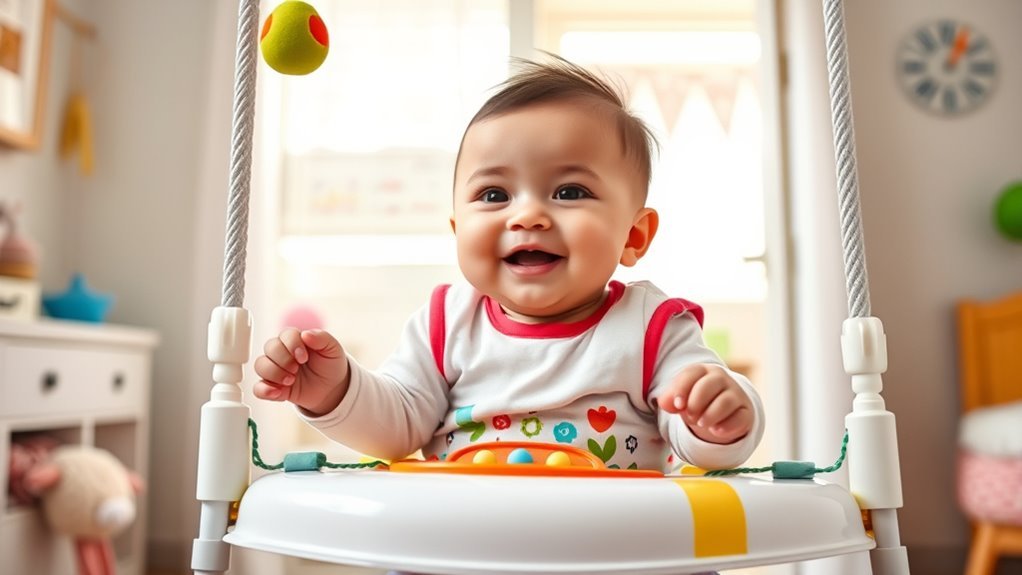
When can your baby start using a jumper? Typically, babies are ready around 4 to 6 months, once they demonstrate good head control and motor skills. You’ll notice readiness when your baby can lift their head independently, show interest in standing, and have enough back strength.
Before introducing a baby jumper, always check with your pediatrician to confirm your little one’s development aligns with safety tips. Limit jumper sessions to 10 to 15 minutes to avoid developmental delays, and never exceed 20 minutes a day.
Most jumpers accommodate babies weighing 25 to 30 lbs or until they start walking. Watching for these signs of readiness helps you support your baby’s growth safely and enjoyably.
How to Use a Baby Jumper Safely?
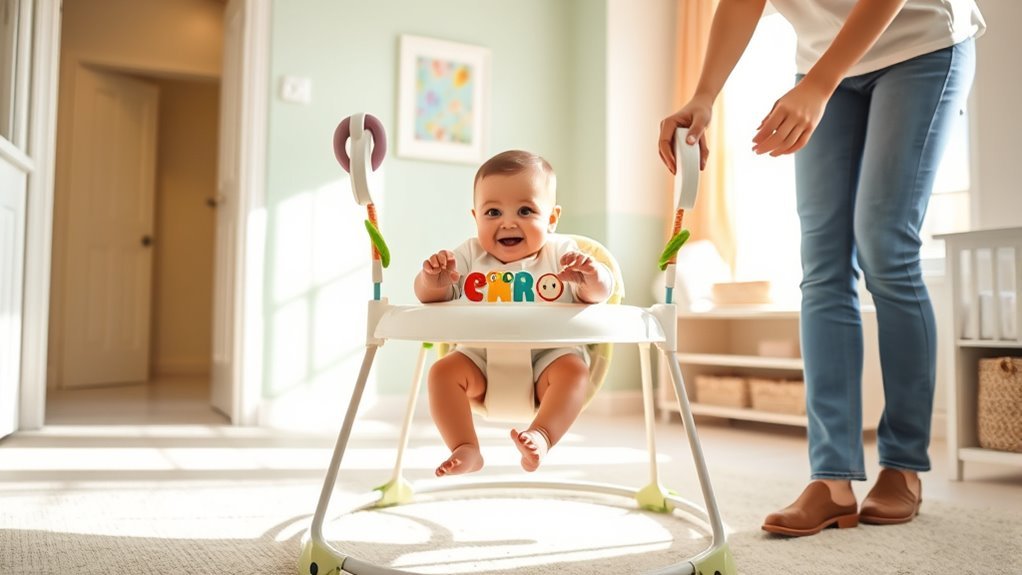
Before you let your baby jump for fun, make certain they can hold their head up steadily and have good control. Experts recommend supervising the baby closely and limiting sessions to 10 to 15 minutes to support healthy motor development.
Always adjust the jumper so your infant’s feet touch the floor, encouraging natural movement and preventing flat-footed positions. Check the baby jumper regularly for safety and wear.
Here’s a quick guide:
| Action | Reason | Recommendation |
|---|---|---|
| Hold their head | Guarantees neck strength | 4 to 6 months old |
| Supervise the baby | Prevent accidents | Always |
| Touch the floor | Promotes motor development | Feet flat on surface |
| Session length | Avoid fatigue | 10 to 15 minutes max |
Follow these steps to keep your infant safe and happy in their jumper. It’s all about making sure they have fun while staying secure!
Frequently Asked Questions
Can a 3 Month Old Use a Jumper?
Yes, your 3-month-old can use a jumper if they can lift their head and have some back strength. But, you should check with your pediatrician first to be sure.
Always supervise when your little one is in the jumper. This helps guarantee safety and prevents overuse.
How Do I Know When My Baby Is Ready for a Jumper?
You’ll know your baby’s ready for a jumper when they hold their head up steadily and can sit with minimal support.
They’ll also start showing interest in their surroundings, which is a good sign.
But, it’s always best to check with your pediatrician first.
They can make sure it’s safe and the right time for your baby’s development.
What Do Pediatricians Say About Baby Jumpers?
Pediatricians say you should only use baby jumpers for short periods, around 10-15 minutes. Make sure your baby has good head control before using one.
Always supervise your little one while they’re in the jumper. And remember, jumpers should never replace essential floor time for natural movement and development.
At What Age Should You Stop Using a Baby Jumper?
You should stop using a baby jumper around 6 to 12 months, when your baby pulls up, walks, or weighs 25-30 pounds.
Try to limit use to 15-20 minutes daily. And keep an eye out for any climbing attempts to stay safe.
Conclusion
You can start using a baby jumper once your little one can hold their head up steadily and shows interest in bouncing. Always check the jumper’s weight and age limits, secure it properly, and never leave your baby unattended.
Encourage gentle play, monitor their comfort, and take breaks often. By using the jumper safely, supporting your baby’s development, and staying attentive, you’ll create a fun and secure environment for your child to explore and grow.
Remember, a baby jumper is a great tool when used correctly. It helps strengthen your baby’s legs and coordination while keeping them entertained. Just keep safety in mind—make sure your baby is ready to use the jumper, always supervise playtime, and follow the manufacturer’s guidelines. This way, your baby can enjoy bouncing safely and happily as they continue to develop new skills.