How Can You Safely Use Baby Wipes on Dogs?
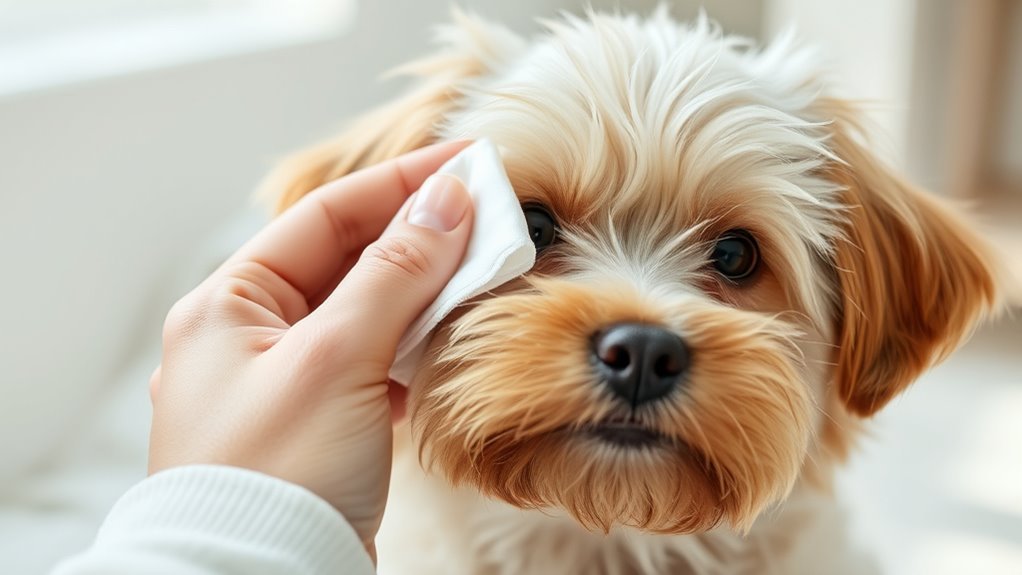
You can safely use baby wipes on your dog only occasionally, but it’s important to choose unscented and alcohol-free ones to avoid irritation.
These types of wipes are gentler on your dog’s sensitive skin and help prevent any discomfort.
Be sure to avoid using wipes on sensitive areas like the face and paws.
Also, never use them on broken or irritated skin, as this can cause more harm than good.
Use wipes sparingly to prevent disrupting your dog’s natural skin pH.
If possible, always rinse the cleaned spots with water afterward to keep your dog’s skin healthy.
For safer grooming options, consider alternatives like dog-specific wipes or gentle baths.
And it’s always a good idea to consult your vet for tailored advice—there’s plenty more to learn about keeping your dog clean and comfortable!
Key Takeaways
- Use baby wipes sparingly and only in emergencies. This helps avoid skin irritation or pH disruption.
- Choose unscented, alcohol-free wipes to minimize the risk of any adverse reactions.
- Avoid wiping sensitive areas like your dog’s face, paws, and any broken skin. These spots are more delicate and can easily get irritated.
- After wiping, rinse the cleaned area with water to get rid of any leftover residue from the wipes.
- And hey, it’s always a good idea to check with your vet. They can give you tips and guidance tailored just for your dog’s skin needs.
When Can You Use Baby Wipes on Dogs?
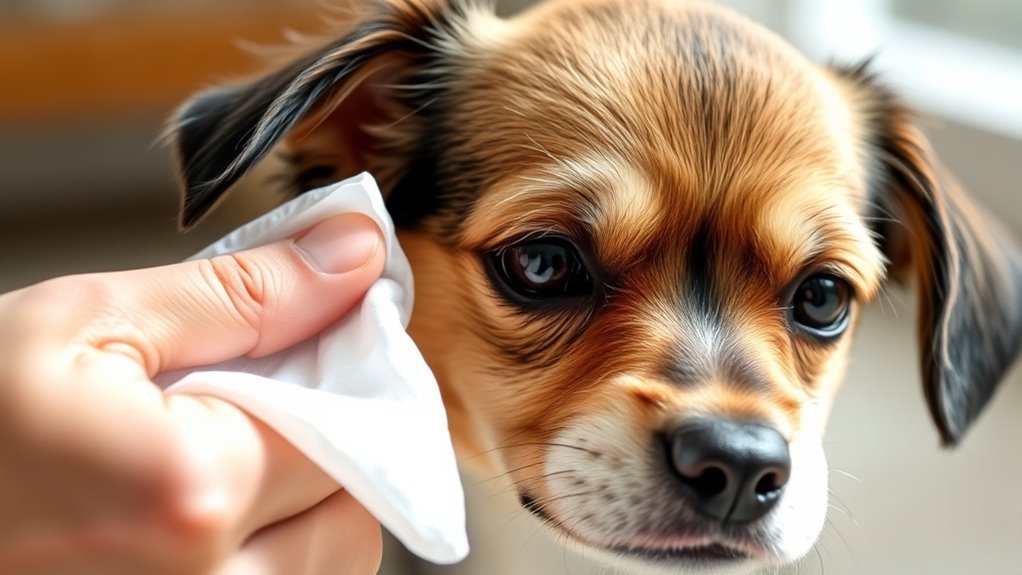
When can you safely use baby wipes on your dog? You should use baby wipes sparingly, mainly in emergencies when pet-specific wipes aren’t available.
Choose unscented, alcohol-free baby wipes to keep your dog safe and reduce the risk of irritation. Avoid using them on sensitive areas like your dog’s face, paws, or any broken skin, as these spots are more prone to adverse reactions.
While using baby wipes once or twice won’t usually cause harm, repeated use can disrupt your dog’s skin pH, leading to long-term problems. After cleaning your dog with baby wipes, always rinse the area with water to remove any residue.
Safe Ways to Clean Your Dog Without Baby Wipes
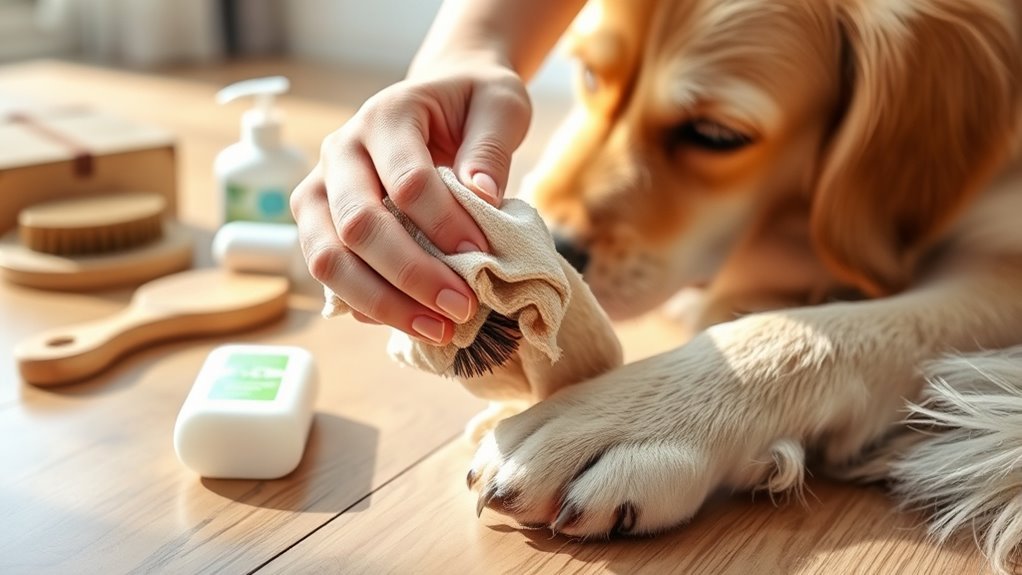
Although baby wipes might seem convenient, you should opt for pet-specific wipes or damp hand towels to clean your dog safely. Baby wipes may contain ingredients that irritate dogs’ skin, especially in sensitive areas.
Here are safe alternatives to keep your dog clean without risking discomfort: Use unscented, alcohol-free pet wipes designed for dogs’ skin pH to gently remove dirt during regular grooming. Clean paws and faces with damp hand towels soaked in cool boiled water to avoid irritation in sensitive areas.
Also, it’s a good idea to consult your veterinarian for recommendations on cleaning wipes and grooming products tailored to your dog’s skin sensitivities. That way, you can be sure you’re using the safest options for your furry friend.
Frequently Asked Questions
Are There Any Baby Wipes Safe for Dogs?
There aren’t really baby wipes specifically safe for dogs. You should stick to pet-specific wipes designed for their skin.
If you must use baby wipes, choose unscented, alcohol-free ones and use them sparingly to avoid irritation. It’s always better to be cautious when it comes to your furry friend’s sensitive skin.
What Can I Use Instead of Dog Wipes?
You can use pet-specific wet wipes, a damp microfiber cloth, or cotton wool with cooled boiled water.
Reusable bamboo wipes with plain water work well, too. These options keep your dog’s skin safe and clean without harsh chemicals.
They’re simple and gentle, making them great alternatives if you’re out of dog wipes or want something more natural.
Is It Okay to Clean Your Dog’s Paws With Baby Wipes After a Walk?
You can clean your dog’s paws with baby wipes occasionally, but 70% of dogs experience skin irritation from unsuitable products.
So, choose unscented, alcohol-free wipes and avoid sensitive areas to keep your pup safe and comfy.
It’s always better to be cautious, right? Just make sure the wipes you pick are gentle enough for your furry friend’s skin.
Can You Use Huggies Natural Care Wipes on Dogs?
You shouldn’t use Huggies Natural Care Wipes on your dog regularly because their ingredients and pH can irritate your dog’s skin.
Instead, choose pet-specific wipes designed to keep your dog safe and comfortable. They’re made with your furry friend’s needs in mind, so they’re a much better option.
Conclusion
Using baby wipes on your dog can be like giving them a gentle hug—a quick, caring touch that keeps them fresh and comfortable. Just make sure the wipes are fragrance-free and safe for pets. Avoid using them on sensitive areas like their eyes and ears.
When you choose wisely, these wipes become more than just cleaning tools; they symbolize your attentive love. They help you nurture your furry friend’s health and happiness every day. Using baby wipes safely on dogs means you’re providing a gentle, effective way to keep your pet clean between baths. So, pick pet-safe, fragrance-free wipes and always be gentle. This simple routine can make a big difference in your dog’s comfort and well-being.





6 Comments