What Do Baby Snakes Eat in the Wild?
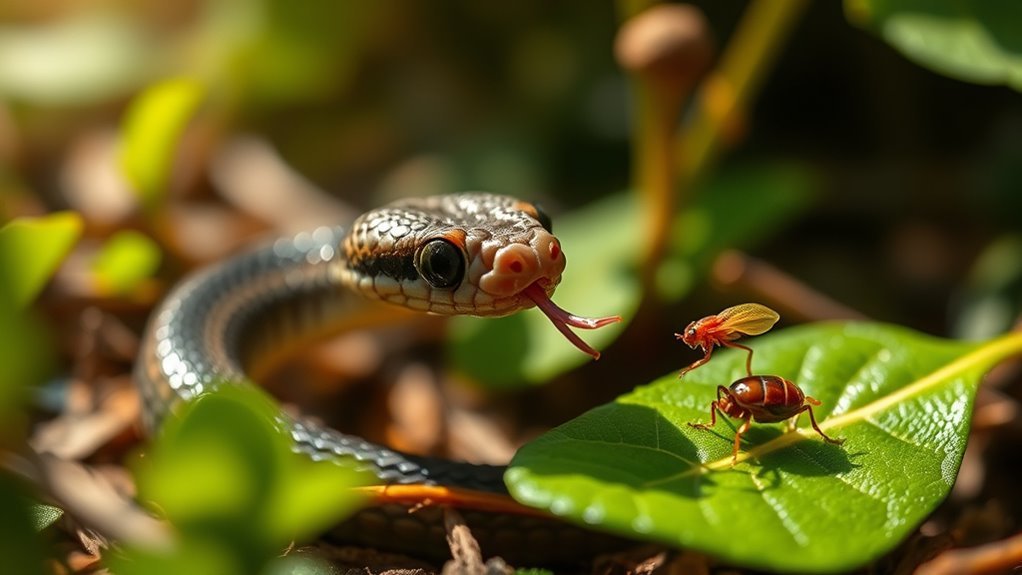
You’ll find baby snakes eating a variety of prey depending on their species and habitat. In the wild, their diet can be quite diverse, ranging from insects to small animals.
Understanding what baby snakes eat helps us appreciate how they survive and grow in different environments.
They start by feeding on insects like crickets and worms, while some target small amphibians, birds, or even fish in aquatic areas.
Their hunting relies on camouflage, patience, and quick strikes to catch lizards, rodents, or eggs. Mastering these skills early is crucial for their growth and survival.
Keep exploring, and you’ll discover the unique ways these snakes thrive in the wild. It’s fascinating to see how adaptable they are from such a young age!
Key Takeaways
– Baby snakes primarily eat small prey such as insects, worms, and tiny amphibians based on their species and environment.
It really depends on where they live and what kind of snake they are.
– Garter snake hatchlings often consume small amphibians, while rat snakes target small birds and eggs.
So, their meals can be quite different even among baby snakes.
– Rattlesnake hatchlings feed on small rodents, using specialized mouths to strike and swallow prey whole.
They’re pretty skilled hunters right from the start.
– Aquatic baby snakes commonly eat small fish, whereas terrestrial species hunt small mammals like mice.
Their diet changes depending on whether they live in water or on land.
– Early hunting skills, including camouflage and chemical cue detection, are vital for baby snakes’ survival and growth.
These skills help them stay alive and thrive in the wild.
Baby Snake Diet: Common Prey in the Wild
Baby snakes eat a variety of prey depending on their species and environment. In their early growth phase, many baby snakes rely on insects like crickets and worms as essential food sources.
Species such as garter snakes target small amphibians, while rat snakes often focus on small birds and eggs within their habitat. You’ll find that baby snakes adapt their prey based on where they live—those in aquatic areas may eat fish, while others hunt small rodents like mice.
For instance, rattlesnake hatchlings strike and swallow small rodents whole, thanks to their specialized mouths. Understanding these varied food sources helps you appreciate how baby snakes thrive and grow by selecting prey suited to their species and environment.
Baby Snake Hunting Techniques for Food Capture
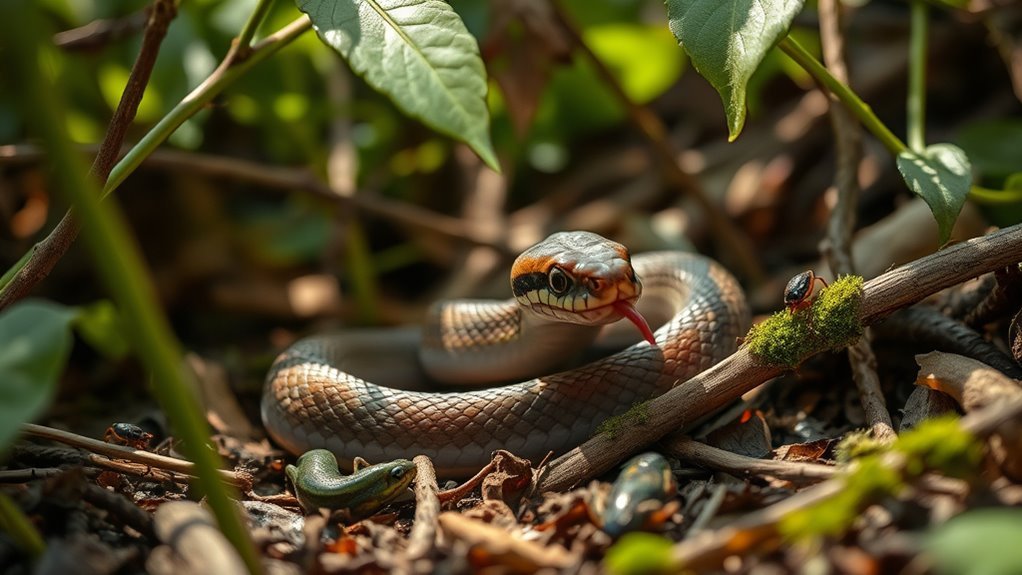
Young snakes don’t just eat a variety of prey—they also use clever hunting techniques to catch their food. As a baby wild snake, you rely heavily on camouflage to blend into your environment, waiting patiently to capture prey like small lizards and small mice.
Your hunting techniques include tongue flicking, which helps you detect chemical cues and locate food based on your food preferences. You might even mimic worm movements with your tongue to lure prey closer.
Despite your size, your agile movements allow you to quickly strike and secure your meal. These strategies vary depending on your species and habitat, but mastering these skills early guarantees you can successfully hunt and survive in the wild.
Frequently Asked Questions
What to Do When You Find a Baby Snake in Your Yard?
When you find a baby snake in your yard, stay calm and don’t touch it. Try to figure out if it’s venomous or not.
Give it plenty of space to escape on its own. If it looks injured or in danger, don’t hesitate to call wildlife experts for help.
When You See a Baby Snake, Is the Mother Nearby?
When you spot a baby snake, chances are the mother’s nearby, just out of sight or hunting.
She sticks close to protect her young, so don’t be surprised if she shows up again soon.
What Time of Year Are Baby Snakes Born?
Baby snakes are usually born in late spring to early summer, but some species, like rattlesnakes, hatch from August to October.
You’ll notice this timing helps them find plenty of food and stay warm for survival.
It’s kind of nature’s way of giving them a head start. They need all the help they can get to grow strong and healthy.
What Attracts Baby Snakes to Your House?
You’re inviting tiny, slithery guests when your home offers cozy sunbaths, secret entrances, and a buffet of rodents or insects.
Gardens, water spots, and warm patios make your place an irresistible hideaway for baby snakes. They love the comfort and easy food source!
Conclusion
Now that you know what baby snakes eat in the wild, it’s fascinating to realize that some species can consume prey nearly twice their size! This incredible ability helps them survive early on when food is scarce.
By understanding their diet and hunting techniques, you can better appreciate how these tiny predators adapt and thrive. Next time you spot a baby snake, remember it’s a skilled hunter already mastering the art of survival.
Baby snakes have amazing survival skills, especially when it comes to finding food in the wild. Their diet and hunting methods show just how well they adapt to their environment. So, whether it’s catching insects, small rodents, or amphibians, baby snakes are truly impressive little predators. Recognizing what baby snakes eat helps us appreciate their role in nature and the wild ecosystems they inhabit.