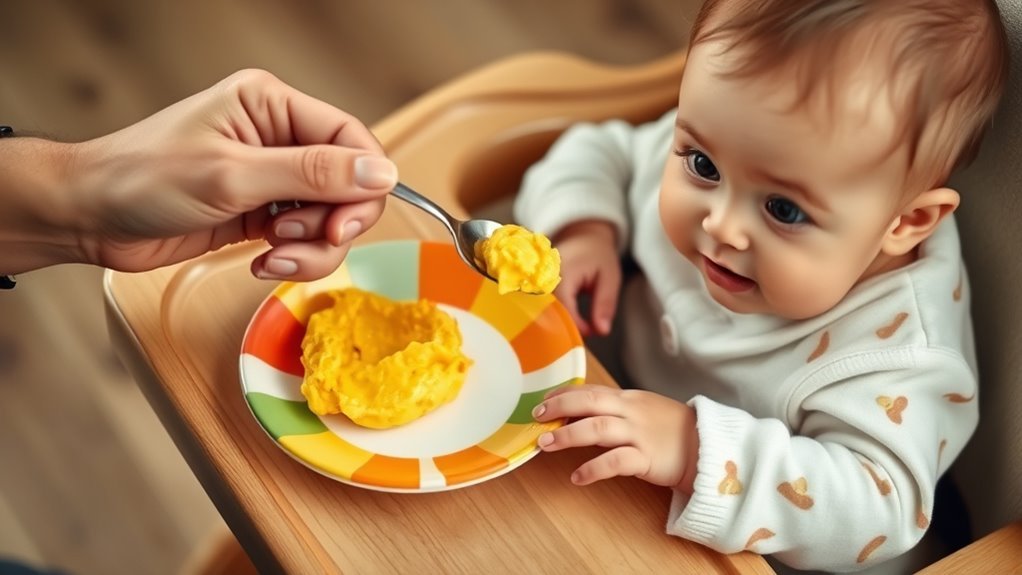
When to Introduce Eggs to Baby: Step-by-Step Guide
You should introduce eggs to your baby around six months, which is usually when they can sit with support and show interest in solids.
Introducing eggs at this stage is great because they provide important nutrients like protein and choline that support your baby’s growth and brain development.
Start with well-cooked egg yolk, mashed and mixed with breast milk or formula to make it easier for your little one to swallow.
Gradually increase the amount over several days while keeping an eye out for any allergy signs like rashes, swelling, or vomiting.
Only try egg whites after your baby has tolerated yolks well.
And if you have any concerns or notice any reactions, don’t hesitate to consult your pediatrician.
Here’s what else you need to know about allergies and safe feeding.
Key Takeaways
– Introduce well-cooked egg yolk around six months when baby can sit with support and shows interest in solids.
Start with a small amount of mashed yolk mixed with breast milk or formula for easy swallowing.
– Gradually increase yolk quantity over several days while keeping an eye out for any allergic reactions.
Take it slow and steady to make sure your little one is doing well.
– Only introduce egg whites after confirming tolerance to the yolk.
And if you have any doubts, don’t hesitate to consult your pediatrician.
– Stop feeding eggs and seek emergency help if severe allergy symptoms like swelling or breathing issues occur.
Your baby’s safety always comes first!
When and How to Introduce Eggs to Your Baby

Before introducing eggs to your baby, make certain they’re around six months old, can sit up with support, and show interest in solid foods. Start by offering well-cooked egg yolk, mashed and mixed with breast milk or formula to make it easier for your baby to swallow.
Gradually increase the amount of yolk over several days while you carefully monitor for any signs of allergy. Only once your baby has tolerated the yolk without issues should you introduce egg whites.
Keep a close eye on your baby during this process and consult your pediatrician if you have any concerns, especially if there’s a family history of allergies. Introducing eggs thoughtfully helps guarantee your baby’s shift to solid foods is safe and comfortable.
How to Spot and Manage Egg Allergic Reactions
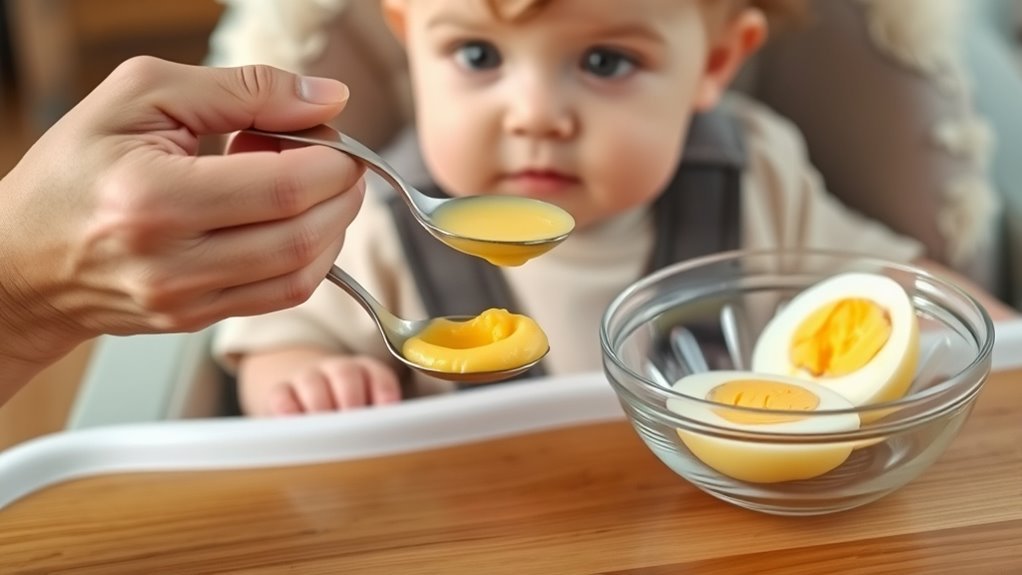
When you introduce eggs to your baby, watch closely for any signs of allergic reactions such as hives, swelling, vomiting, or trouble breathing, especially within the first few hours. Egg allergy symptoms can range from mild reactions like skin rashes to severe reactions involving breathing difficulties.
Always keep an eye on symptoms carefully and jot down any reactions. This will really help your pediatrician understand what’s going on. If you notice severe reactions, stop feeding eggs right away and get emergency medical help.
Keep track of symptoms and inform your pediatrician; seek emergency help immediately if severe reactions occur.
Early introduction of eggs might lower the risk of food allergies, but staying alert is super important.
Here’s what to do:
- Monitor symptoms closely for any allergic reactions
- Document reactions and consult your pediatrician promptly
- Act fast and get emergency medical assistance for severe reactions
Frequently Asked Questions
How Do I Introduce Eggs to My Baby for the First Time?
Start by offering a small amount of well-cooked egg yolk mixed with breast milk or formula. Watch your baby closely for any allergic reactions.
If they tolerate it well, you can gradually increase the servings. Just take it slow and keep an eye on how they respond.
Can I Give My 4 Month Old Baby Eggs?
You generally shouldn’t give your 4-month-old eggs yet. Most babies start solids around 6 months, and eggs can be allergenic.
Wait until your baby shows readiness, then introduce cooked yolk carefully while monitoring reactions. It’s always best to take it slow and watch for any signs of allergy.
When Should Eggs Be Introduced to an Infant?
You might think eggs are off-limits early, but you can introduce them around six months. Start with cooked yolks, watch for reactions, and consult your pediatrician if allergies run in your family or symptoms appear.
It’s pretty common to wonder about the right time to give eggs. Just remember, introducing them slowly and carefully is the way to go.
Can My 5 Month Old Try Scrambled Eggs?
You shouldn’t introduce scrambled eggs to your 5-month-old just yet.
Wait until they’re around 6 months old and show readiness signs, like sitting up and showing interest in food, before starting eggs safely.
It’s all about making sure they’re ready to handle new textures and foods.
Conclusion
Introducing eggs to your baby is like opening a new chapter in their culinary adventure. With patience and care, you’ll watch them savor each bite, exploring flavors and textures.
Keep a close eye for any allergic reactions—your vigilance is their safety net. Remember, every baby is unique, so trust your instincts and move at your little one’s pace.
This new journey will nourish both body and bond, turning mealtime into moments of joy and discovery. Introducing eggs to baby can be a wonderful step in their diet, offering essential nutrients and protein that support growth and development.
By following a step-by-step guide, you can make the process smooth and enjoyable. So, take your time, stay observant, and enjoy watching your baby explore new tastes and textures while building a healthy eating habit.




One Comment