How to Understand What Size 80 Means in Baby Clothes
Size 80 in baby clothes mainly refers to your baby’s height, around 80 cm. This size usually fits infants aged 9 to 12 months. It also considers weight, typically between 9 to 12 kg.
But remember, every baby grows differently, so measuring height first helps a lot. You’ll want stretchy, comfortable fabrics and to avoid clothes that are too tight or loose.
If you want to make sure your baby’s clothes fit just right as they grow, keep learning these handy tips. Understanding what size 80 means can make dressing your little one easier and more fun!
Key Takeaways
- Size 80 in baby clothes fits infants around 9 to 12 months old, approximately 80 cm in height. It generally corresponds to babies weighing between 9 to 12 kg for a proper fit.
- Height is the primary measurement to determine if size 80 is suitable for the baby. Size 80 follows European sizing and roughly matches U.S. 12 months and U.K. 9 to 12 months sizes.
- Always check brand-specific sizing charts and consider growth patterns before purchasing size 80 clothes. It’s a good idea to keep an eye on how your baby’s growing since sizes can vary a bit between brands.
What Size 80 Means: Height, Age, and Weight Explained
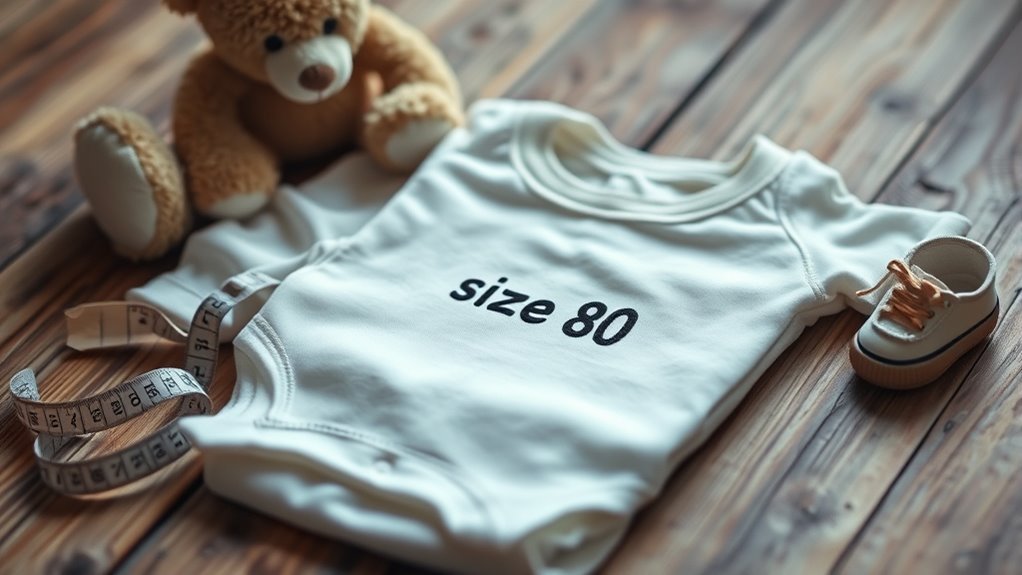
Size 80 in baby clothes typically fits infants around 9 to 12 months old who measure about 80 cm (31.5 inches) tall and weigh between 9 to 12 kg (19.8–26.4 lbs). Understanding size 80 means focusing on height, age, and weight to guarantee the best fit.
This size follows European sizing standards and corresponds roughly to U.S. 12 months and U.K. 9 to 12 months. When choosing baby clothes, you should consider your baby’s measurements carefully, as growth rates vary widely.
Some babies might fit size 80 earlier or later than the typical age range. Since baby clothing sizes are designed to accommodate average growth patterns, using both height and weight helps you pick clothes that fit comfortably and allow for movement.
That way, you avoid garments that are too tight or too loose. It’s all about making sure your little one stays comfy and happy!
Tips for Choosing and Fitting Size 80 Clothes for Your Baby
When choosing clothes labeled 80 for your baby, start by measuring their height accurately, since this size is based primarily on that metric. Size 80 baby clothes fit infants around 80 cm tall, weighing 9 to 12 kg, per European sizing standards.
To guarantee the best fit and comfort, keep these tips in mind:
- Check your baby’s growth rate—if they’re near the top height or weight limit, consider sizing up for extra room and ease of movement.
- Always consult sizing charts from specific brands, since fit can vary considerably despite the size 80 label.
- Opt for stretchy fabrics, which accommodate active babies and improve comfort as they crawl or walk.
Frequently Asked Questions
What Size Is an 80 Baby?
Size 80 baby clothes fit infants around 9 to 12 months old, typically about 80 cm tall and weighing 9 to 12 kg.
You’ll find this size suits active toddlers starting to walk, matching US 12-month sizing. It’s pretty handy when you’re shopping and want to find the right fit quickly.
Is Size 90 a 2T?
Yes, size 90 is 2T. You’re dressing a toddler who’s growing, moving, and exploring.
You’ll find that size 90 fits children around 2 to 3 years old, matching their height and weight perfectly.
What Is Size 80 in Baby Clothes on Amazon?
Size 80 in baby clothes on Amazon fits babies around 9 to 12 months old, typically 80 cm tall and weighing 9 to 12 kg.
Keep in mind, sizing can vary quite a bit between brands. So, it’s always a good idea to check each brand’s size chart before buying.
What Is 80 in Shein Baby Clothes?
Size 80 in Shein baby clothes fits babies around 9 to 12 months old, about 80 cm tall.
You’ll want to check their size chart and consider your baby’s growth for the best fit and comfort.
It’s always good to keep in mind that babies grow at different rates, so sizing up might be a smart move sometimes!
Conclusion
When you dress your little one in size 80, imagine wrapping them in a perfect hug that fits just right—comfort tailored to their growing height, age, and weight. Choosing clothes that match their size means you’re not just picking fabric; you’re embracing their milestones and daily adventures.
Trust your instincts, and let each outfit be a gentle reminder of how quickly they’re blossoming. Size 80 in baby clothes is all about that cozy, well-fitted step at a time.
Understanding what size 80 means helps you pick the best clothes for your baby’s comfort and growth. It’s more than just a number—it’s about keeping them snug and happy as they explore the world. So, when you see size 80, think of it as the perfect fit for your baby’s next big chapter.




5 Comments