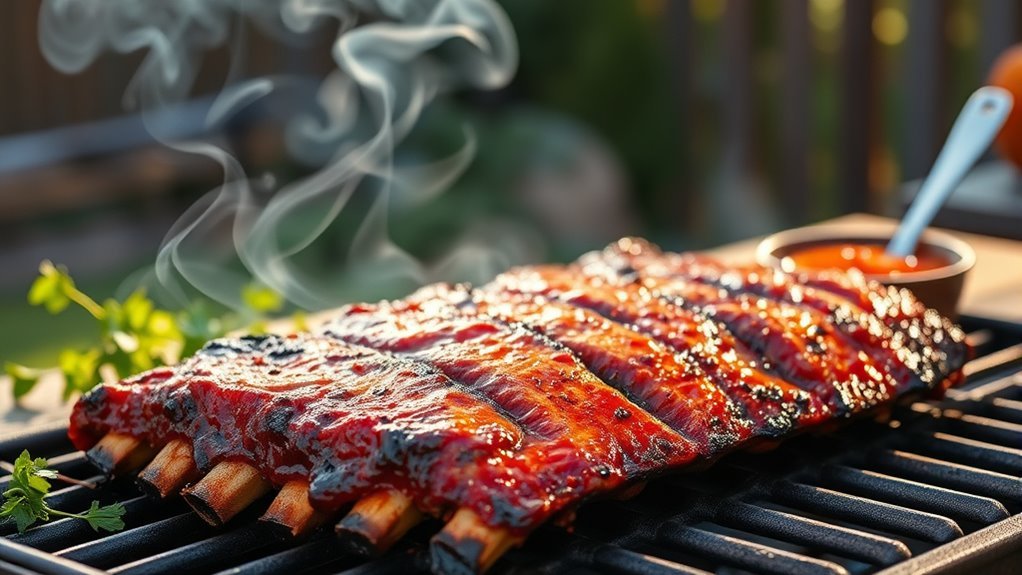
How to Cook Baby Back Ribs on the Grill in 5 Easy Steps
Start by removing the membrane and trimming excess fat from your baby back ribs for better flavor and tenderness. This simple prep step makes a big difference in how the ribs turn out.
Next, apply a mustard or olive oil binder, then coat both sides with your favorite dry rub. Letting the ribs marinate for at least an hour helps those flavors really sink in.
Preheat your grill to 250°F and set it up for indirect cooking.
Wrapping the ribs in foil locks in moisture and allows them to cook slowly and evenly without drying out.
Finally, unwrap the ribs, sear them with barbecue sauce to get that perfect caramelized finish, and let them rest before serving.
Keep going to discover the full expert process and tips for grilling baby back ribs like a pro!
Key Takeaways
- Remove the silver membrane and trim excess fat for better flavor and even cooking. This step really helps your ribs absorb all those delicious seasonings.
- Apply a dry rub with mustard or olive oil binder, then marinate ribs in the fridge for at least 1 hour. Letting them sit allows the flavors to really sink in.
- Preheat the grill to 250°F and set up indirect heat by turning on burners on one side only. This way, your ribs cook slowly and evenly without burning.
- Wrap ribs tightly in foil with brown sugar inside, then cook over indirect heat for 1 to 1.5 hours. The foil keeps them juicy and tender.
- Unwrap, sear ribs over direct heat while brushing with barbecue sauce, then rest for 10 minutes before serving. That final sear adds a tasty caramelized finish!
Remove the Membrane and Trim Baby Back Ribs for Better Flavor
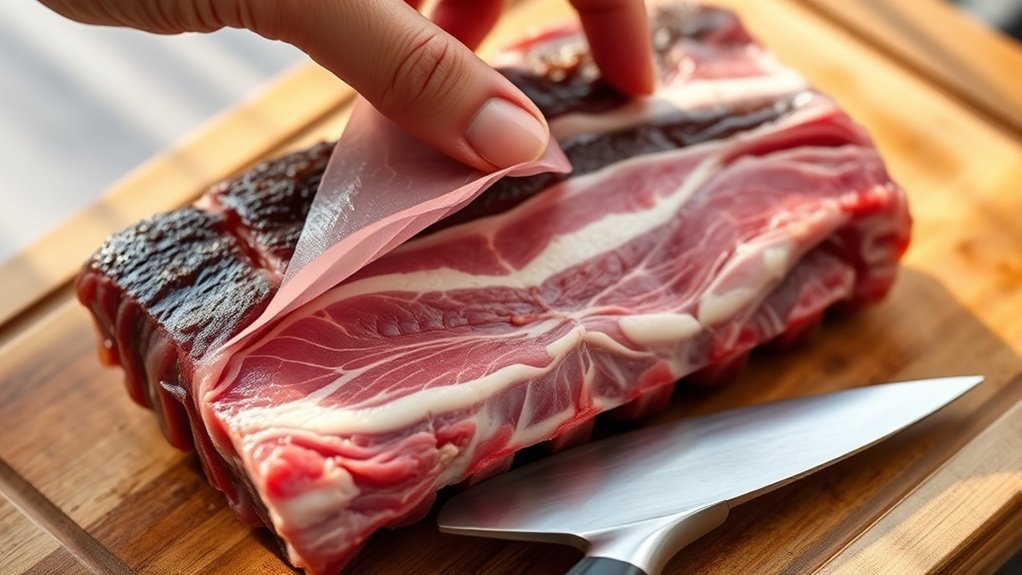
Start by removing the silver membrane from the bone side of your baby back ribs to boost flavor and tenderness. That membrane blocks smoke penetration and causes a chewy texture, so you’ll want to remove the membrane completely.
Use a paper towel for a better grip to pull it off easily without leaving bits behind. Next, trim any excess fat from the ribs to avoid flare-ups on the grill and keep your ribs juicy.
If the ribs have a thinner end, cut it off so they fit better on your grill and cook evenly. Removing the membrane and trimming your baby back ribs guarantees better seasoning absorption, promotes even cooking, and enhances the overall flavor, making your grilled ribs more delicious every time.
Apply a Dry Rub to Baby Back Ribs and Marinate for 1 Hour
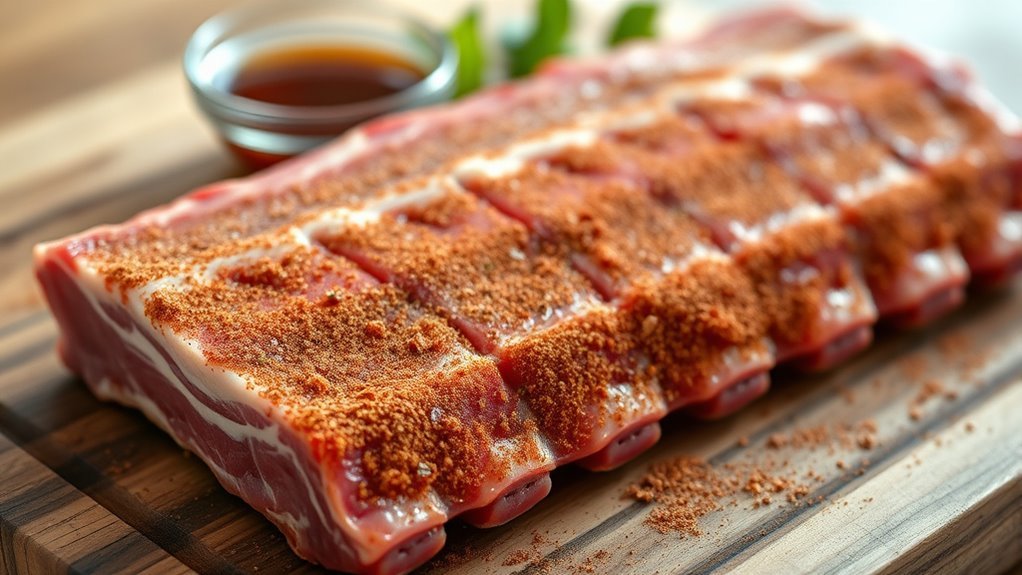
Once you’ve removed the membrane and trimmed your baby back ribs, it’s time to enhance their flavor by applying a dry rub. Start by spreading a thin layer of mustard or olive oil as a binder to help the dry rub stick evenly.
Generously coat both sides of the ribs with your chosen dry rub—think garlic powder, paprika, onion powder, and chili powder—for a balanced flavor. After seasoning, place the ribs in the refrigerator to marinate for at least 1 hour.
This marination step allows the flavors to penetrate deeply, improving the overall taste during grilling. Before you start the cooking process, take the ribs out and let them sit at room temperature for about 30 minutes to guarantee even cooking on the grill.
Preheat Your Grill to 250°F for Indirect Cooking
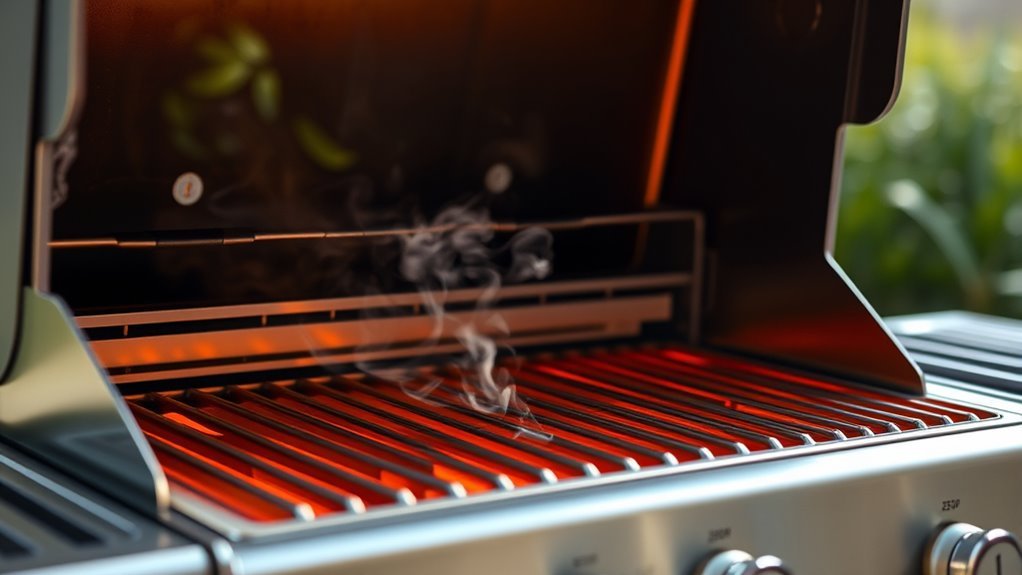
To achieve tender and flavorful baby back ribs, you’ll want to preheat your grill to a steady 250°F using indirect heat. This slow and even cooking method locks in moisture and enhances flavor.
Here’s how to set up your grill for indirect cooking:
- Preheat your grill to 250°F, using a reliable thermometer to maintain consistent temperature.
- Arrange the heat sources on one side of the grill to create two zones—direct and indirect heat.
- On a gas grill, turn on burners only on one side, leaving the other off to avoid flare-ups.
- Let the grill preheat for 15-20 minutes to confirm even heat distribution before placing ribs on the cooler side.
This approach assures tender ribs cooked evenly without burning. It’s a simple trick that really makes a difference!
Wrap Baby Back Ribs in Foil and Cook to Lock in Moisture
Wrap your baby back ribs tightly in heavy-duty aluminum foil to lock in moisture and create a steaming environment that keeps the meat tender and juicy. Before you wrap, sprinkle brown sugar inside the foil for a touch of sweetness that enhances flavor and moisture.
Once sealed, place the foil-wrapped baby back ribs on the grill over indirect heat. Cook them slowly for 1 to 1.5 hours, allowing the ribs to become tender without drying out.
This method traps steam, making the meat incredibly flavorful and moist. The foil also helps concentrate the flavors you’ve added.
Unwrap, Sear, and Rest Baby Back Ribs for a Perfect Finish
After cooking the baby back ribs in foil, you’ll want to unwrap them carefully and place them directly on a preheated grill. This final step is key to achieving a caramelized exterior and a flavorful glaze.
1. Unwrap the ribs from foil to expose them to direct heat.
2. Sear the ribs for about 5 minutes per side, brushing with barbecue sauce while grilling.
Make sure the internal temperature reaches at least 190°F for ideal tenderness. This ensures the ribs are perfectly cooked and super tender.
3. Remove the ribs and let them rest for at least 10 minutes to retain moisture. Trust me, resting makes all the difference!
Frequently Asked Questions
How Long Does It Take to Grill Baby Back Ribs on a Grill?
It takes about 1 to 1.5 hours to grill baby back ribs on a gas grill. You’ll want to flip them every 15 minutes.
Also, brush them with sauce during the last 20-30 minutes for great flavor. This helps the ribs get nice and tasty.
How Do I Grill Baby Back Ribs Quickly?
You speed things up by grilling ribs at 350°F using indirect heat, flipping every 15 minutes. Wrap wood chips in foil for smoke, glaze with BBQ sauce near the end, and aim for 190°F internal temperature.
It’s a simple way to get tender ribs without waiting all day. Just keep an eye on the heat and don’t rush the process too much!
Should I Cook Ribs in Foil on a Gas Grill?
Yes, you should cook ribs in foil on a gas grill; it locks in moisture, speeds cooking, and lets flavors meld like a symphony.
Then finish over direct heat for that perfect char and caramelized glaze.
What’s the Best Way to Cook Baby Back Ribs on a Gas Grill?
You’ll want to cook baby back ribs low and slow using indirect heat at 300°F.
First, remove the membrane and season the ribs well.
Grill them for about 1.5 to 2 hours.
After that, finish with sauce over direct heat to get that perfect caramelization.
It’s all about patience and letting the ribs cook gently so they come out tender and flavorful!
Conclusion
Don’t worry if you’ve never grilled ribs before—this simple method makes it easy. By removing the membrane, applying a flavorful rub, and cooking low and slow, you’ll get tender, juicy ribs every time.
Wrapping them in foil locks in moisture, so they won’t dry out. Finally, searing adds that perfect caramelized finish.
Imagine pulling off the grill ribs so tender they fall off the bone, bursting with smoky, savory goodness. With these easy steps, grilling baby back ribs becomes a fun and rewarding experience. Whether it’s your first time or you’re looking to perfect your technique, cooking ribs on the grill low and slow ensures amazing flavor and tender meat every time. Grilling baby back ribs is within your reach—get ready to impress your family and friends with mouthwatering, juicy ribs straight from your grill!