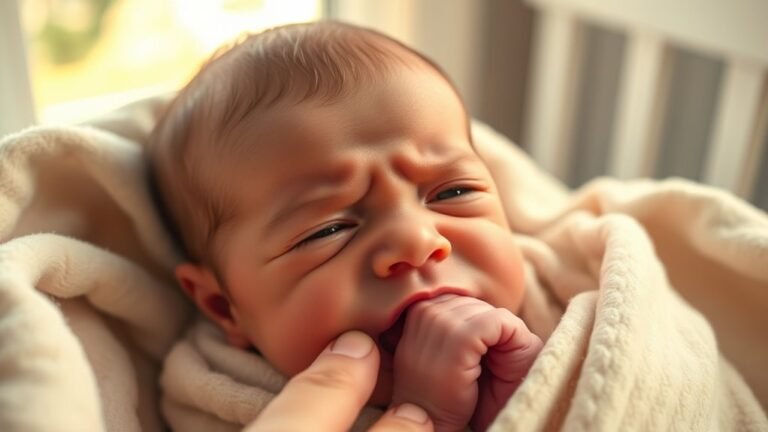
What Does 2T Mean in Baby Clothes
When you see 2T in baby clothes, it means the size fits active toddlers aged 2 to 3 years. These clothes have a slimmer, more tailored fit that supports potty training and growing independence.
2T is a popular toddler clothing size that helps parents find outfits designed for little ones who are on the move.
Unlike 24 months, 2T styles resemble “big kid” designs with practical features like narrower waists and easier dressing. This makes getting dressed simpler for both toddlers and parents.
If you want to understand how 2T differs from infant sizes and why it makes shopping simpler, there’s more useful info ahead.
Key Takeaways
– 2T indicates clothing sized for toddlers aged 2 to 3 years, typically 35 to 36.5 inches tall and weighing 29 to 31 pounds.
It has a slimmer diaper area designed for toddlers transitioning to underwear and potty training.
– 2T clothes feature “big kid” styles like pockets and collars, differing from infant 24-month playful designs.
Unlike 24-month sizes with snap closures for diapers, 2T favors separates such as tees and leggings for ease of dressing.
– Choosing 2T helps parents find well-fitting, comfortable clothes suited for active toddlers gaining independence.
What Age and Size Does 2T Clothing Fit?
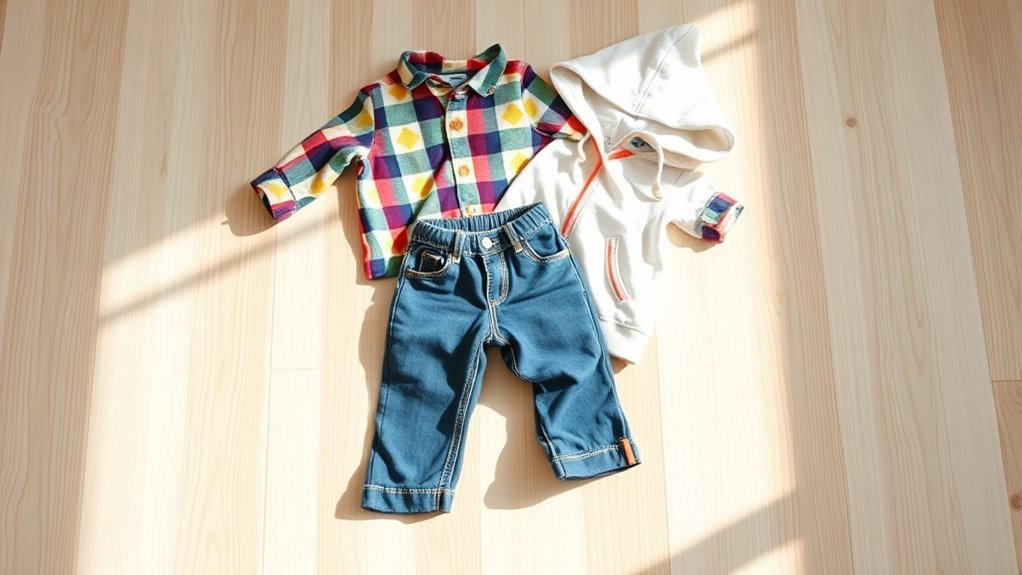
2T clothing fits toddlers aged 2 to 3 years who are about 35 to 36.5 inches tall and weigh between 29 and 31 pounds. This size is ideal for active toddlers within that age range, reflecting their growth in height and weight.
Since many toddlers in 2T are potty trained or nearly so, the diaper area is slimmer compared to earlier sizes, offering a better fit. When you check a sizing chart, you’ll notice 2T clothing often has a narrower waist to support this shift.
Plus, 2T designs promote independence by reducing snap closures, making it easier for toddlers to dress themselves. Choosing the right 2T clothing guarantees your child stays comfortable and confident as they move through this important stage.
How 2T Clothing Differs From 24 Months: Fit, Style, and Diaper Needs
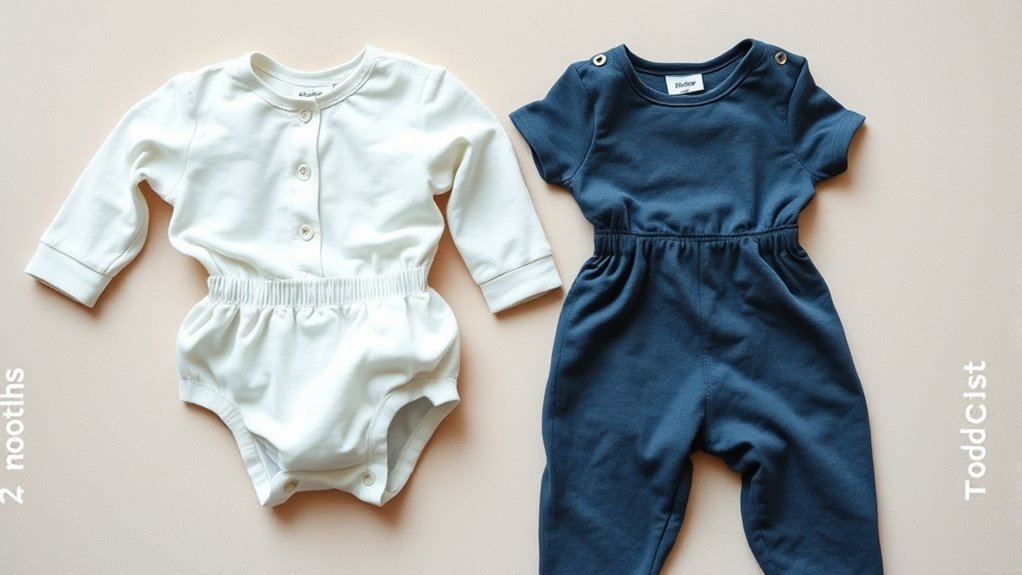
When choosing clothes for your little one, you’ll notice some key differences between 24 months and 2T sizes that go beyond just the numbers. Understanding these differences helps improve your shopping experience and guarantees the best fit and style for your toddler.
24 months clothing fits infants with roomier bottoms for diaper needs, while 2T suits active children who wear underwear. The 2T size offers a slimmer fit designed for toddlers aged 2 to 3 years.
Snap closures are common in 24 months for easy diaper changes. On the other hand, 2T favors separates like tees and leggings, which are easier for toddlers to manage.
2T clothing styles look more “big kid”-like with pockets and collars. Meanwhile, 24 months tends to feature playful designs, matching infant clothing sizes and needs.
This distinction helps you pick clothing that fits your child’s growth stage perfectly. It just makes shopping a little simpler and a lot more fun!
Frequently Asked Questions
Are 2T and 24 Months the Same?
No, 2T and 24 months aren’t the same. You’ll find 2T fits toddlers who are taller and slimmer, while 24 months suits babies needing diaper-friendly clothes with a roomier fit around the hips.
Basically, 2T is for toddlers who are starting to move around more and need clothes that fit their growing bodies better. On the other hand, 24 months is designed for younger babies who still wear diapers and need that extra space to stay comfy.
What Does 2T and 3T Mean in Baby Clothes?
Wondering what 2T and 3T mean in baby clothes? They’re toddler sizes—2T fits kids around two years old, while 3T suits three-year-olds.
You’ll notice 3T clothes are slightly bigger to match your growing child’s size. It’s all about giving your little one room to move and grow comfortably!
How Long Do Babies Stay in 2T Clothes?
You’ll usually keep your toddler in 2T clothes for about 6 to 12 months, depending on their growth.
Active kids might outgrow it faster, so watch their height and weight to know when to size up.
It really varies from child to child, so just keep an eye on how they’re fitting into their clothes.
Is 12 Months the Same as 1t?
While 12 months and 1T might seem like close neighbors, they’re not quite the same.
You’ll find 12 months fits infants snugly, but 1T dresses toddlers ready to explore with more room to move comfortably.
Conclusion
When choosing clothes for your toddler, knowing that 2T typically fits kids around 2 years old, weighing 24-28 pounds, helps you pick the right size. Unlike 24-month clothes, 2T offers more room for movement and usually fits toddlers still wearing diapers.
Notably, about 60% of toddlers in this age group still use diapers, so 2T clothing’s extra space really comes in handy for comfort and style as your little one grows and explores.
So, when you see 2T in baby clothes, remember it means “toddler-sized” for around age two, designed to fit toddlers who are active and often still in diapers. This makes 2T a practical and comfortable choice for your little one’s wardrobe as they develop and stay on the move.