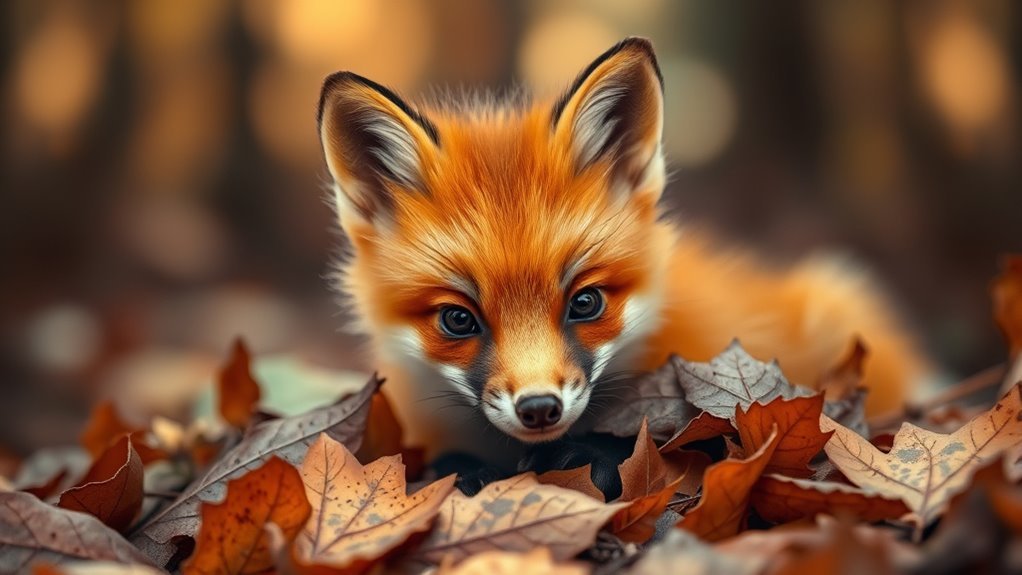
What Is a Baby Fox Called?
If you’re wondering what a baby fox is called, you’ll hear different names like “kit,” “cub,” or “pup.” It really depends on who you ask and where you are. These terms are all used to describe young foxes, but some are more popular in certain places.
For example, British sources often say “cubs,” while Americans tend to use “pups.”
Wildlife experts and rehabilitators usually prefer “kits,” especially when talking about red foxes.
These little foxes start off blind and helpless but grow quickly. As they play, they learn important skills that help them survive.
Keep exploring, and you’ll find out how these tiny kits turn into skilled, independent hunters.
Key Takeaways
- A baby fox is commonly called a “kit,” “cub,” or “pup.”
- The British Mammal Society and BBC prefer the term “cub.”
- The National Wildlife Federation in the US typically uses “pup.”
- Wildlife rehabilitators often call baby red foxes “kits.”
- All terms reflect the early life stages of young foxes.
So, depending on who you ask, you might hear any of these names used for a baby fox!
What Are Baby Foxes Called and Why?
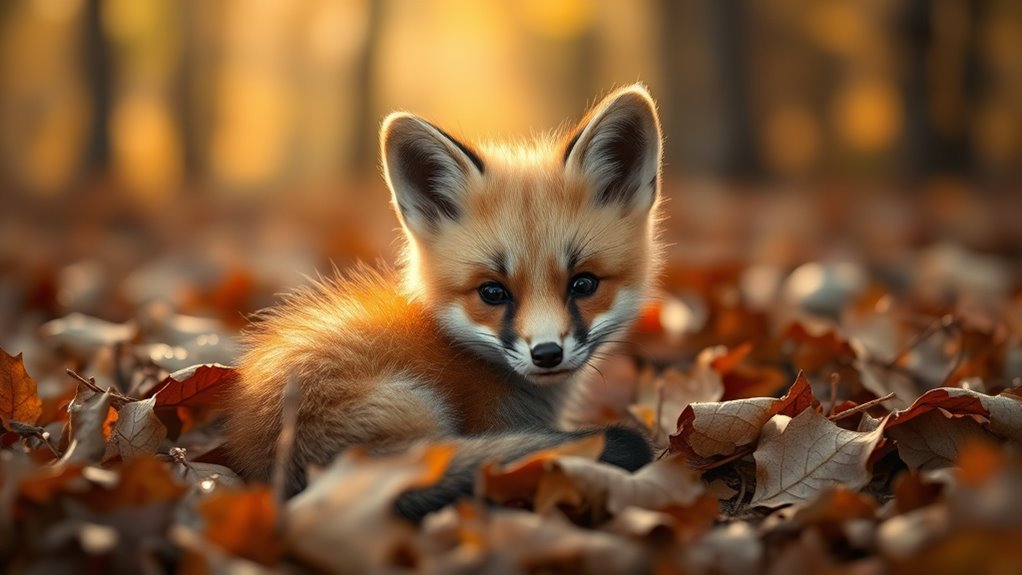
When you hear about baby foxes, you’ll often see them called “kits,” though “cubs” and “pups” are also common depending on where you are or who you ask. For example, the British Mammal Society and BBC prefer “cubs,” while the National Wildlife Federation in the US says “pups.”
Wildlife rehabilitators often use “kits,” especially when working with red fox litters. These terms highlight baby foxes’ early life stages—kits are born blind and toothless, relying entirely on their parents.
Wildlife rehabilitators call them kits, emphasizing their blind, toothless, and fully dependent early life stage.
Their eyes usually open around two weeks old, marking a key development phase. The word “kit” suits their curious, playful nature and dependence on adult foxes during these vulnerable weeks.
Regardless of the term, each name reflects the fascinating early life of these wild animals.
How Baby Foxes Grow and Why It’s Interesting
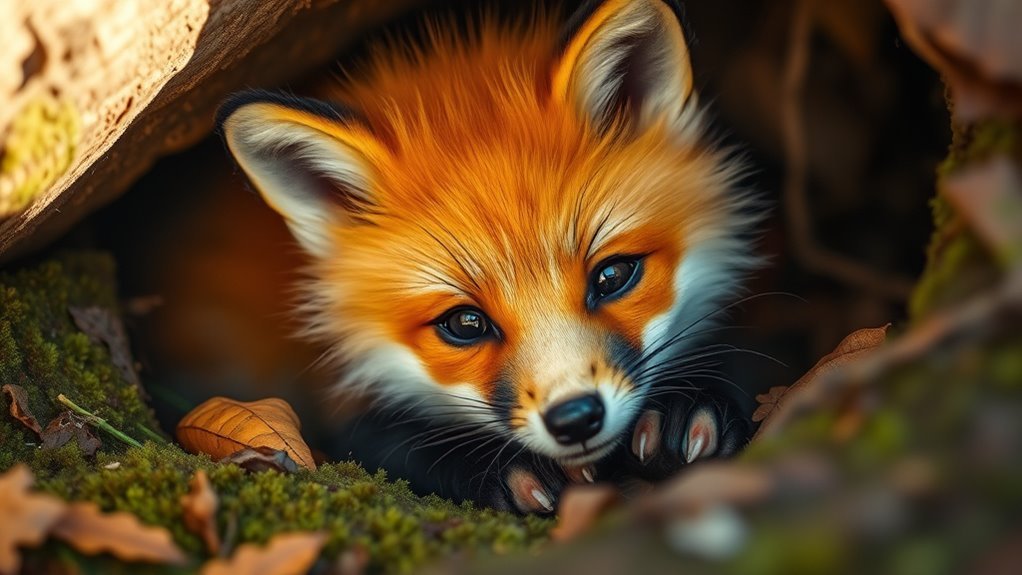
Although baby foxes start life completely dependent, they grow quickly and show remarkable changes in just a few weeks. Once foxes (Vulpes vulpes) give birth, their kits are born blind and toothless.
Within two hours, they start bonding with their mother. By about four weeks, kits begin exploring outside the den. They learn essential survival skills through play with siblings.
Their fur shifts from gray to reddish-brown, and their eye color changes from blue to amber. Weaning happens around 8-10 weeks, but parents keep bringing food until kits are months of age.
| Age | Development Stage |
|---|---|
| Newborn | Blind, toothless, called kits |
| 4 weeks | Start exploring outside den |
| 8-10 weeks | Weaned but still fed by parents |
Frequently Asked Questions
What Is the Proper Name for a Baby Fox?
A baby fox is commonly called a kit, but you might also hear them called cubs or pups, depending on where you are or which organization you follow.
Each term is correct in different contexts. So, it really just depends on the situation or who you’re talking to!
What Baby Is Called a Kit?
A baby fox is called a kit. When you see one, remember kits are born helpless and need their parents’ care.
They start exploring outside the den around four weeks old. You’ll often hear “kit” used for baby foxes.
What Is a Litter of Foxes Called?
You know what they say, “Many hands make light work.”
A litter of foxes is simply called a “litter” or sometimes a “den.” You’ll usually find 3 to 6 pups born together in spring.
Pretty neat, right? Fox families stick together through the early months, making sure those little ones grow strong.
What to Do if a Fox Stares at You?
If a fox stares at you, don’t stare back or make sudden moves. Stay calm, avoid direct eye contact, and slowly back away to show you’re not a threat.
Keep a safe distance for both your safety. It’s best to just stay relaxed and let the fox move on.
Conclusion
Just like a tiny flame flickering in the night, a baby fox—called a kit or cub—holds the promise of wild wonder. As you watch them grow, you’ll see their curious eyes and playful leaps, much like a story unfolding under a twilight sky.
Understanding their names and growth helps you connect with nature’s quiet magic. It’s a reminder that even the smallest creatures carry the spark of life’s grand adventure. When you learn what a baby fox is called, you’re not just naming an animal—you’re stepping closer to the wild world around us.
So next time you spot a little fox kit or cub, remember they represent more than just cuteness. They embody the spirit of growth, curiosity, and the endless wonders of wildlife. Embracing these names deepens our bond with nature’s beauty and the fascinating journey of life.





2 Comments