
What Is Baby Led Weaning and How Does It Work?
Baby-led weaning is a popular method that lets your baby self-feed by offering whole, soft food pieces around six months. This usually starts once they can sit up well and show interest in eating.
Instead of spoon-feeding purees, you guide them to explore different textures and flavors at their own pace.
This approach supports your baby’s motor skills and chewing development. It also encourages healthy eating habits early on while fostering family mealtime bonding.
Plus, it makes mealtimes more interactive and fun for everyone. Just remember to keep them safe with careful food choices and close supervision.
There’s plenty more to discover about its benefits and helpful tips to make the process smoother!
Key Takeaways
- Baby-Led Weaning (BLW) lets babies self-feed whole, manageable food pieces instead of spoon-fed purees. It begins around six months when babies can sit up and show interest in food.
- BLW encourages exploration of textures and flavors at the baby’s own pace. Safety is ensured by offering soft, easy-to-grasp foods and supervising meals closely.
- BLW fosters developmental benefits like fine motor skills and healthy eating habits. It’s a great way to help babies enjoy mealtime and learn to eat independently.
What Is Baby-Led Weaning? When Should You Start?
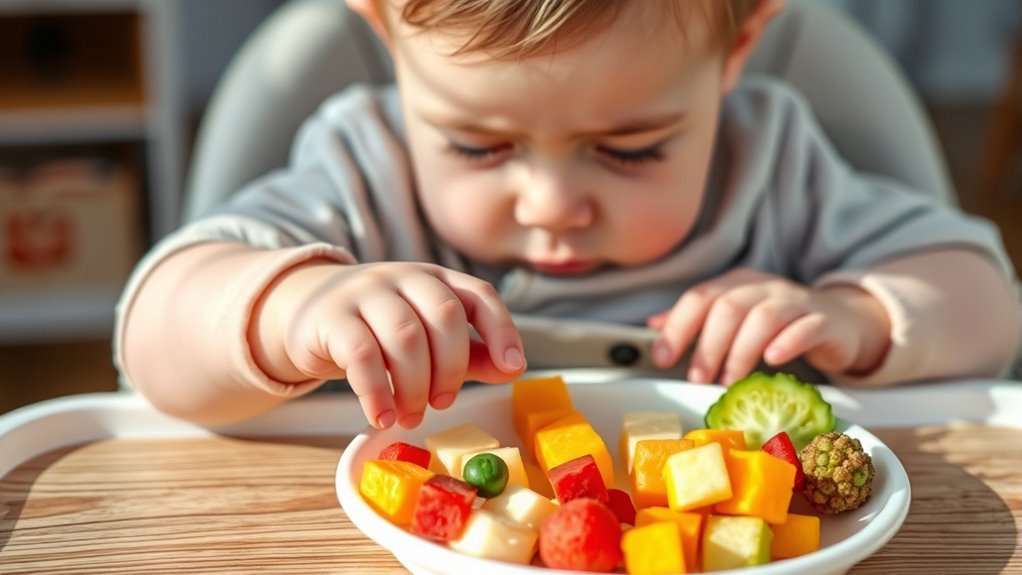
Although traditional weaning often involves spoon-feeding purees, baby-led weaning (BLW) lets your baby self-feed by offering whole, manageable pieces of food.
You should start eating complementary foods around six months of age, once your baby shows signs of readiness like sitting up independently and showing interest in food.
BLW encourages self-feeding, allowing your baby to explore various textures and flavors at their own pace during family mealtime.
BLW lets babies discover new textures and flavors independently during shared family meals.
To keep choking risks low, offer soft, easy-to-grasp whole foods and avoid hard, round, or sticky items.
This method supports your baby’s natural curiosity and development by letting them control how and what they eat.
How Baby-Led Weaning Supports Your Baby’s Growth and Skills
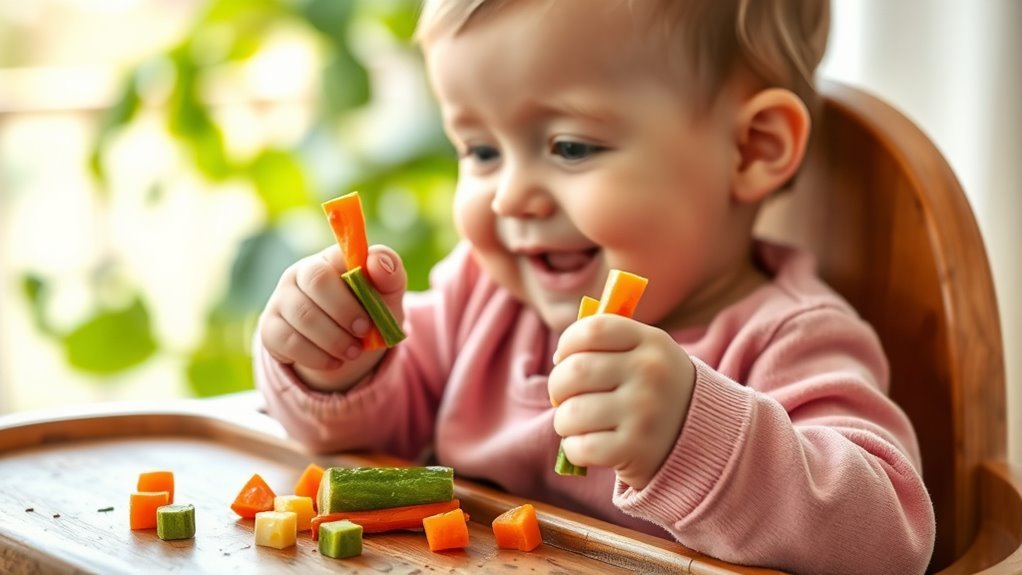
When you let your baby lead mealtime with baby-led weaning, you’re supporting their growth in many important ways. Baby-led weaning promotes self-feeding, helping your baby explore different textures and flavors that encourage healthy eating habits.
As your little one practices picking up finger foods, they develop fine motor skills and oral-motor development, learning to chew and manipulate food confidently. This hands-on approach also helps your baby recognize hunger and fullness cues, fostering better self-regulation.
Sharing family meals boosts social skills and creates positive food experiences, integrating your baby into mealtime routines. By embracing baby-led weaning, you’re nurturing your baby’s growth and skills across multiple areas—physical, social, and nutritional.
You’re really setting the stage for a lifetime of healthy eating and mealtime enjoyment.
Frequently Asked Questions
Why Do Pediatricians Not Recommend Baby-Led Weaning?
Pediatricians don’t recommend baby-led weaning because you might risk choking hazards, inadequate iron or calorie intake, and your baby may not be developmentally ready.
They want to guarantee your baby’s safety and balanced nutrition. So, it’s all about making sure your little one stays safe and gets the right nutrients at the right time.
What Is the Point of Baby-Led Weaning?
The point of baby-led weaning is to help your baby develop independence while eating, improve motor skills, and encourage healthy eating habits.
It also creates a positive mealtime experience that supports self-regulation and family bonding.
Basically, it’s about letting your little one take the lead at meal times while you guide them gently along the way.
What Is the 4 Day Rule for Baby-Led Weaning?
The 4 Day Rule for baby-led weaning is like testing new colors one by one in a painting; you introduce a single new food every 3-5 days to watch for reactions and help your baby explore safely.
It’s a gentle way to see how your baby responds to each new taste and texture. Plus, it makes it easier to spot any allergies or sensitivities.
Is It Ok if I Don’t Do Baby-Led Weaning?
Yes, it’s perfectly okay if you don’t do baby-led weaning.
You can choose spoon-feeding or even a mix of both methods. Just focus on your baby’s readiness and your comfort to guarantee healthy eating habits.
Conclusion
Baby-led weaning lets your little one take the reins, turning mealtime into an exciting adventure. Like a tiny explorer discovering new flavors and textures, your baby learns to feed themselves, building confidence and skills with every bite.
By trusting their instincts and timing, you’re nurturing independence and growth. It’s a joyful journey that’s as nourishing for their spirit as it is for their body.
Embrace this delicious dance of discovery together! Baby-led weaning encourages self-feeding, helps develop motor skills, and promotes a healthy relationship with food. It supports your baby’s natural curiosity and allows them to explore different tastes and textures at their own pace. Ultimately, baby-led weaning is about fostering independence, confidence, and a love for eating that can last a lifetime.





2 Comments