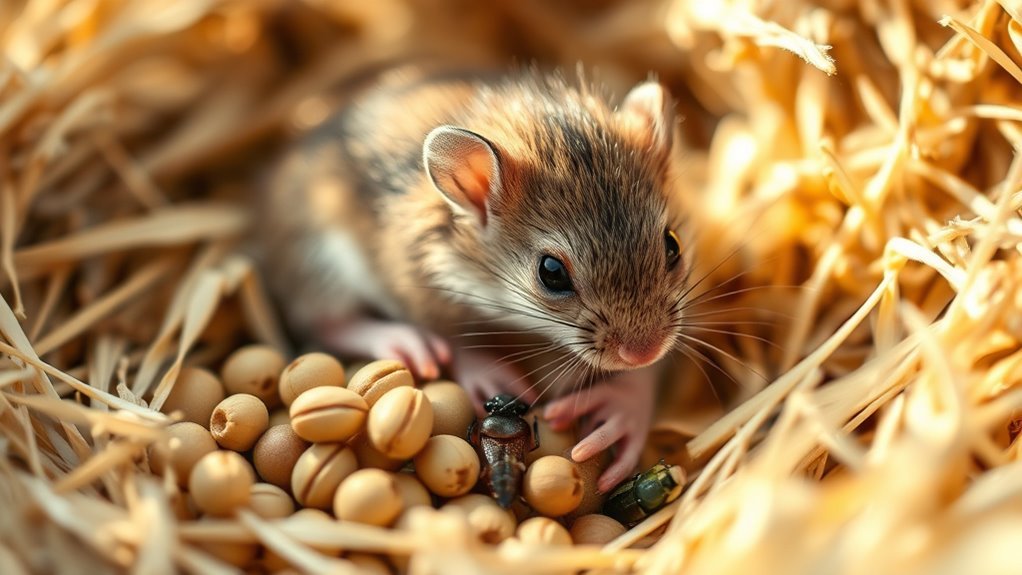
What Do Baby Mice Eat for Growth?
You’ll want to start baby mice on a high-quality milk replacer like Kitten Milk Replacer for proper growth. This is essential because baby mice need the right nutrients to develop strong bones and muscles.
Feeding them the right milk replacer mimics their mother’s milk closely, which supports healthy development.
Around 3 to 4 weeks old, you can gradually introduce moistened rodent pellets. This helps them shift to solid food while still providing essential nutrients.
It’s a good idea to keep fresh water available once they begin eating solids. Also, watch closely for any digestive issues during this transition.
Managing their diet carefully guarantees healthy development. If you keep following, you’ll discover how to wean them smoothly and promote their overall health.
Taking it step by step makes all the difference!
Key Takeaways
- Baby mice initially need high-quality milk replacers like Kitten Milk Replacer or Esbilac for essential nutrients and growth. These milk replacers provide what they need in their early days.
- Begin weaning at 3 to 4 weeks by introducing moistened rodent pellets alongside milk replacer. It helps them get used to solid food slowly.
- Gradually offer a balanced variety of solid foods, including fresh fruits and vegetables, by 4 weeks old. This mix helps them grow strong and healthy.
- Ensure clean, fresh water is always available to maintain proper hydration and support digestion. Water is super important for their overall well-being.
- Monitor for digestive issues and adjust the diet as needed to promote healthy growth and development. Keeping an eye on how they respond ensures they stay happy and healthy.
What Baby Mice Need to Grow Strong
Although baby mice start life relying entirely on milk, you need to provide them with high-quality milk replacers like Kitten Milk Replacer or Esbilac to guarantee they grow strong during their first weeks. These replacers supply essential nutrients significant for proper growth.
As baby mice develop, ensuring a balanced diet is essential. Introducing moistened rodent pellets gradually supplies solid food with the nutrients they need.
Fresh fruits and vegetables can also be added later to provide vitamins and minerals that support overall health. Remember to monitor hydration closely, as clean water becomes important once they shift from milk.
Avoid overfeeding, since it can cause digestive problems and stunt growth. By carefully managing their diet, you help baby mice thrive and develop effectively.
How to Wean Baby Mice From Milk to Solid Food
As baby mice grow, their diet needs to shift from milk to solid food to support their developing bodies. You’ll start weaning your baby mouse around 3 to 4 weeks old by gradually introducing moistened rodent pellets alongside milk replacer. This lets them explore solid food without losing essential nutrients.
By 4 weeks, offer a variety of healthy solid foods, like fresh fruits, vegetables, and high-quality rodent chow. Watch closely for digestive issues such as diarrhea, which can occur during dietary changes.
Ensuring proper hydration is key, so provide fresh water at all times to support digestion and overall health. With careful monitoring, you’ll help your baby mice adapt smoothly from milk to solid food.
Frequently Asked Questions
What Can I Feed a Baby Mouse to Keep It Alive?
You can feed a baby mouse kitten milk replacer or Esbilac, warmed and diluted at first. Feed every 2-3 hours.
As it grows, you can gradually introduce soft foods and pellets. This will help keep it alive and healthy.
How Long Will Baby Mice Live Without Food?
Baby mice can survive without food for about 24 to 48 hours, but you shouldn’t wait that long.
They need frequent feeding every 2-3 hours to avoid dehydration, weakness, and serious health risks.
How Long Does It Take for Baby Mice to Grow Up?
Think of baby mice like tiny rockets—they take about 6 to 8 weeks to fully launch into adulthood.
You’ll see them grow rapidly, almost like watching a seed sprout into a full plant in just weeks.
What Is the Survival Rate of Baby Mice?
You can expect baby mice survival rates around 80-90% if they get proper care and feeding.
But in the wild, it drops below 50% due to predators and environmental dangers. It’s a tough world out there for little mice!
Conclusion
As you watch those tiny baby mice nibble on soft pellets and fresh veggies, imagine their little bodies growing stronger with every bite. Shifting from milk to solid food is like opening a door to a world full of energy and adventure.
You’re not just feeding them—you’re nurturing their journey to becoming lively, curious mice. With patience and care, you’ll see them thrive, scampering with health and happiness in every playful leap.
Feeding baby mice the right foods for growth is essential. Soft pellets and fresh vegetables provide the nutrients they need to develop strong bodies and sharp minds. As they transition from milk, these solid foods help build their energy and stamina for exploring.
By offering a balanced diet, you ensure your baby mice grow healthy and active. Watching them thrive on good nutrition is truly rewarding!