What Do Baby Rattlesnakes Have at Birth?
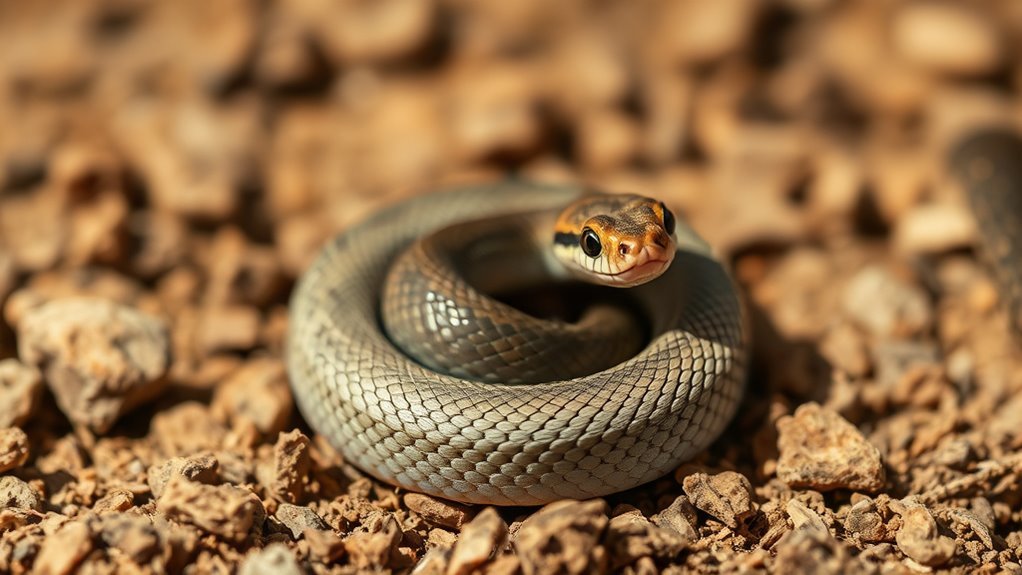
When you’re born as a baby rattlesnake, you have a tiny, silent rattle called a button. Along with that, you come equipped with enough venom to hunt small prey right away. This venom is important for your survival from the very start.
Your bright coloration helps you blend into your surroundings, giving you a natural camouflage. You’re ready to use your instincts to survive in the wild.
At first, you stay close to your mother to learn essential hunting skills. Then, you shed your skin and become more independent as you grow.
Stick around to discover how you grow and thrive out in the wild. It’s fascinating to see how baby rattlesnakes develop their skills over time!
Key Takeaways
- Baby rattlesnakes are 6 to 12 inches long at birth with a small, undeveloped rattle called a “button.” They have bright coloration that helps them blend into their surroundings despite their small size.
- Newborns possess venom potent enough to subdue small prey and defend themselves. They are born fully formed and capable of hunting immediately using natural instincts.
- Baby rattlesnakes stay close to their mothers initially to learn essential survival and hunting skills. It’s pretty cool how they pick up what they need to survive right from the start.
What Baby Rattlesnakes Are Born With
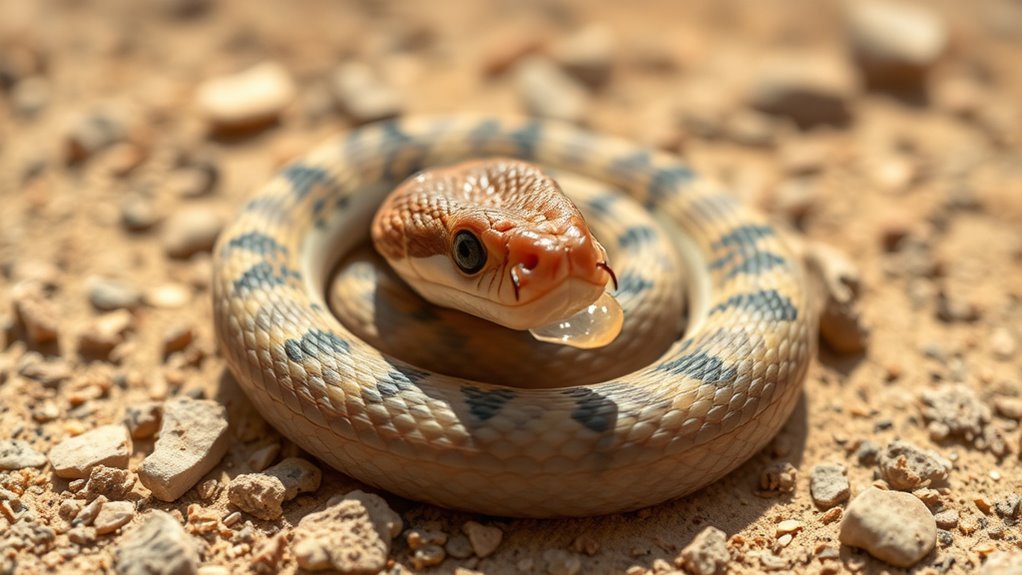
Although baby rattlesnakes are small, measuring just 6 to 12 inches at birth, they come equipped with a tiny, undeveloped rattle called a “button” on their tails. When baby rattlesnakes are born live, this undeveloped rattle is silent since it hasn’t yet formed the segments needed to produce the characteristic rattling sound.
Their coloration often appears brighter than adults, helping them blend into their surroundings despite their size. You should know that even at this young stage, baby rattlesnakes carry enough venom to be dangerous to humans and animals.
Because they can’t rattle yet, they remain silent when threatened, which makes them especially hazardous. This early stage lasts until their first shed, when the rattle begins to develop fully.
How Baby Rattlesnakes Hunt and Grow After Birth
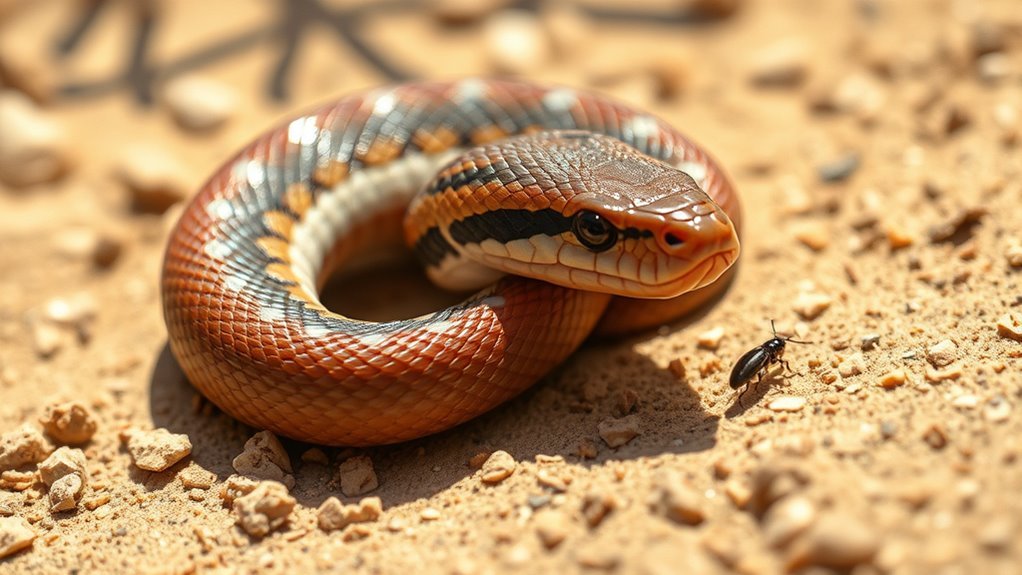
Because baby rattlesnakes are born fully formed, they can hunt right away using their natural instincts. From birth, these tiny snakes—measuring 6 to 12 inches—possess venom potent enough to subdue small rodents and lizards.
They rely heavily on their camouflage to blend into their surroundings, ambushing prey with precision. During the first 1-2 weeks after birth, baby rattlesnakes stay close to their mothers, learning essential hunting techniques and gaining protection.
Once they shed their skin for the first time, they gain independence and start hunting solo. As you observe them grow, you’ll notice how quickly these newborns adapt, using their venom and stealth to thrive in the wild, mastering survival right from the start.
Frequently Asked Questions
If You See a Baby Rattlesnake, Are There More Rattlesnakes Around?
If you see a baby rattlesnake, there are likely more nearby. They’re usually born in groups and tend to stay close together.
How Many Babies Can a Rattlesnake Have at One Time?
Think of rattlesnake babies like a cluster of stars—they can have anywhere from 5 to 25 little ones at once.
You’ll find the number varies by species and the mom’s size and health.
It’s pretty fascinating how nature works, right? Each rattlesnake mama’s got her own unique little crew.
How Can You Tell if It’s a Baby Rattlesnake?
You can tell it’s a baby rattlesnake by its smaller size, brighter coloration, and lack of a full rattle—just a tiny button. They’re usually 6-12 inches long and blend well with their surroundings.
They might be small, but don’t let that fool you. These little guys still have a bite, so it’s best to give them plenty of space.
How Long Do You Have After a Baby Rattlesnake Bite?
You have only minutes after a baby rattlesnake bite to get emergency medical help.
Don’t wait—call 911 or head to a hospital immediately. Quick treatment drastically improves your chances of recovery.
Conclusion
When baby rattlesnakes are born, they’re already equipped with venom and tiny fangs, ready to face the world like little warriors stepping onto a battlefield. You’ll see they don’t wait to grow their famous rattles; instead, they rely on their instincts and skills to hunt and survive from day one.
So, remember, these newborn snakes come prepared, proving that even the smallest fighters can pack a powerful punch right out of the gate. Baby rattlesnakes have venom at birth, making them effective hunters and defenders from the very start.
Their tiny fangs are sharp enough to deliver venom, which helps them catch prey and protect themselves. Even without a fully formed rattle, these little snakes are born ready to thrive in the wild. So next time you think about baby rattlesnakes, just know they come into the world armed with venom and the instincts to use it.