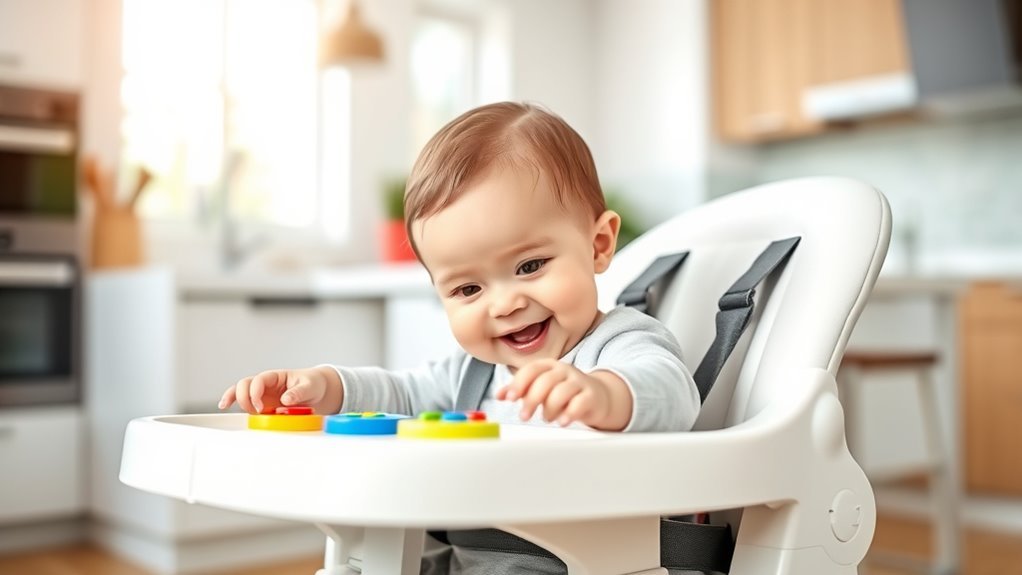
When Can Baby Sit in High Chair?
You can start placing your baby in a high chair once they can sit upright with stable head and neck control, usually around six months.
This is an important milestone because it means your little one is ready to safely enjoy mealtime in a high chair. Look for signs like good posture and the ability to sit with minimal support.
Babies who show interest in food by reaching out or mimicking eating often indicate they’re ready too.
It’s a fun step in their development and helps encourage healthy eating habits. Just make sure the high chair is safe and comfortable to keep your little one secure.
Keep going to discover how to create a safe and cozy feeding environment.
You’ll find tips to make mealtime enjoyable and stress-free for both you and your baby.
Key Takeaways
- Babies can typically sit in a high chair around 6 months when they develop stable neck and head control. The ability to sit upright with good posture and core strength signals readiness for a high chair.
- You might notice your baby showing interest in solids, like reaching for food or mimicking eating. This is often a good sign they’re ready for a high chair.
- If your baby still has wobbly head control or leans excessively, they probably need more time before using a high chair.
- It’s important to make sure your baby can sit independently with minimal support before introducing the high chair. That way, they stay safe and comfortable while eating.
How to Tell If Your Baby Is Ready for a High Chair
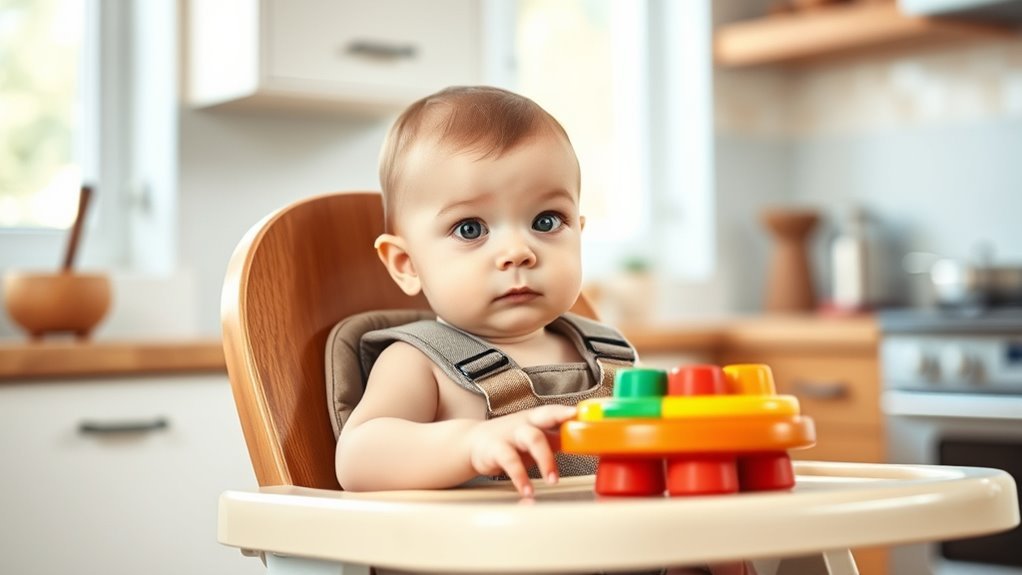
How do you know when your baby is ready to sit in a high chair? Typically, around 6 months, babies develop the ability to sit upright with stable neck and head control. These are key signs of readiness.
You’ll notice your baby can maintain good posture with minimal support and has the core strength to sit independently. If your baby still has a wobbly head or leans excessively, they need more time before using a high chair.
Also, showing interest in eating solids often coincides with readiness. When choosing high chair options, make certain they support your baby’s ability to sit comfortably and maintain good posture.
Keeping Your Baby Safe and Comfortable When Using a High Chair
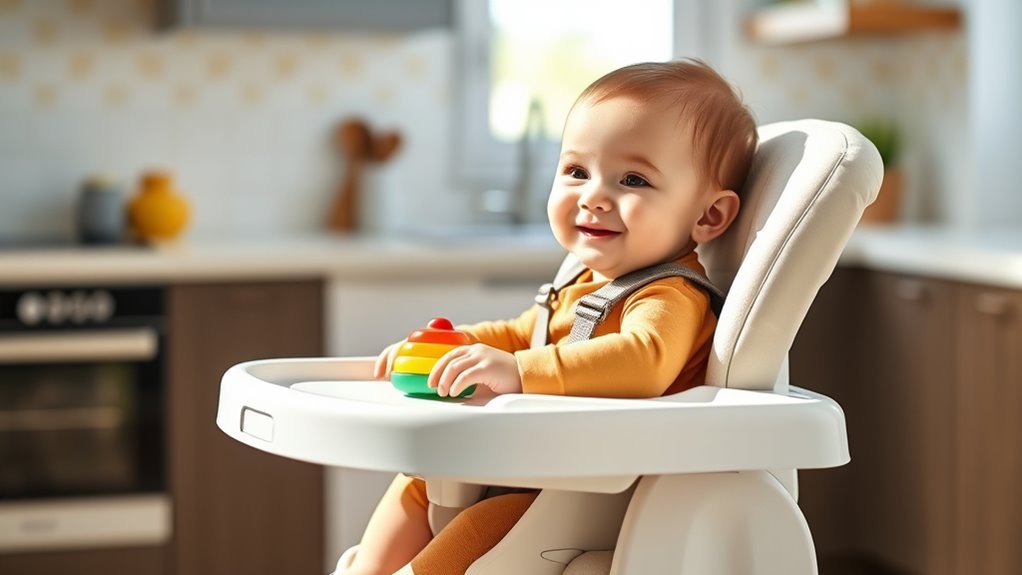
Because your baby is just starting to sit independently, you need to prioritize safety and comfort when using a high chair. Around 6 months, once your baby has a stable head and neck, it’s time to introduce the high chair.
Choose one that’s JPMA certified, with a sturdy base and a secure harness to keep your baby safely seated. Position the chair on a flat surface, away from counters or tables to prevent accidents.
Make sure your baby’s feet rest comfortably on a footrest, and their elbows can lean on the tray for support. Always follow these safety tips, regularly check for wear, and clean the high chair after each use to maintain a hygienic and comfortable feeding space for your baby.
Frequently Asked Questions
Can I Put My 4 Month Old in a Highchair?
You shouldn’t put your 4-month-old in a high chair yet since they can’t sit up independently.
Wait until they have better head and neck control around 6 months to guarantee safety and comfort during feeding.
It’s really about making sure your baby is ready to sit up on their own before using a high chair. That way, feeding time is safe and enjoyable for both of you.
Can a 2 Month Old Go in a High Chair?
No, you shouldn’t put your 2-month-old in a high chair yet. They need neck and head control first, which usually happens around six months.
Instead, keep them cozy in a car seat or carrier. That way, they get safe support until they’re ready for a high chair.
Can I Put My 4 Month Old in a Sitting Chair?
You shouldn’t put your 4-month-old in a sitting chair yet. They likely don’t have the strength or neck control needed.
Instead, focus on tummy time to build muscles and wait until they can sit up independently. It’s all about giving them time to grow stronger at their own pace.
What Is the 90-90-90 Rule for High Chairs?
The 90-90-90 rule means your baby’s hips, knees, and ankles should all form 90-degree angles in the high chair. This keeps them stable, supports safe swallowing, and encourages good posture during mealtime.
It’s a simple way to make sure your little one is comfy and secure while eating. Plus, it helps them sit up straight, which is great for digestion and focus during meals.
Conclusion
You’ll know your baby’s ready for the high chair when they can sit up like a tiny superhero, steady and proud. Imagine them perched like a little captain at the dinner table, commanding their meal with the seriousness of a royal feast.
Keep them snug and secure, like they’re strapped into a spaceship, ready to explore new tastes and textures safely. With your watchful eye, mealtime will be a grand adventure, not a wild ride!
So, when can baby sit in high chair? It’s really when they can sit unassisted and have good head and neck control. This usually happens around 6 months old. Always make sure the high chair is sturdy and has safety straps to keep your little one secure. That way, you can enjoy feeding time knowing your baby is safe, comfortable, and ready to discover all the exciting flavors ahead.