What Is a Baby Zebra Called?
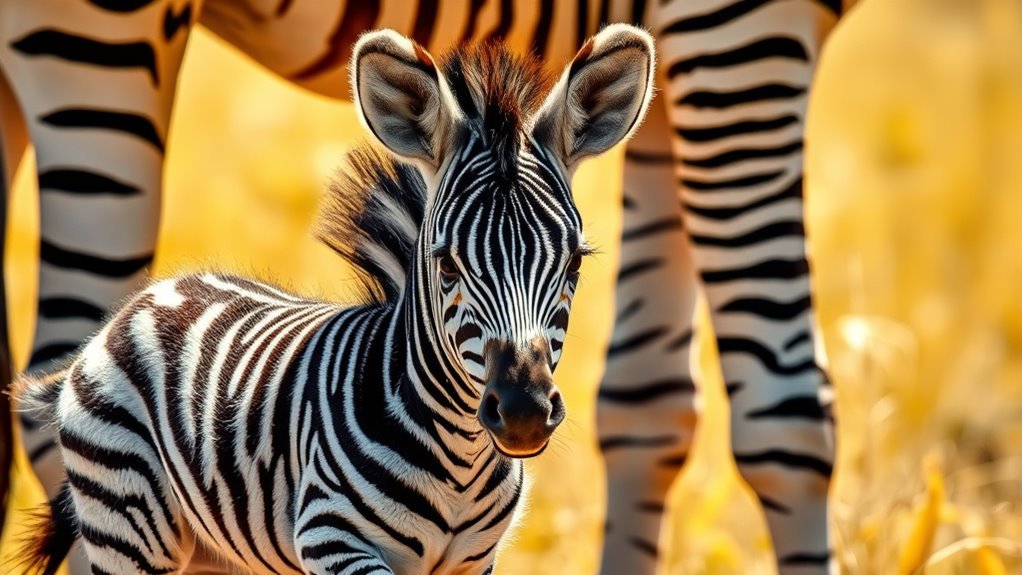
You call a baby zebra a foal, no matter the gender. If it’s male, it’s a colt; if female, it’s a filly.
Baby zebras are born with brown stripes that darken into the classic black and white as they grow.
They stand within minutes and can run very soon after birth, relying on their mother’s milk for energy. Staying close to mom helps keep them safe.
There’s plenty more to discover about how they grow and survive.
Key Takeaways
- A baby zebra is generally called a “foal.” Male baby zebras are known as “colts.”
- Female baby zebras are called “fillies.” The term “foal” applies to young zebras regardless of gender.
- These distinct names help identify the sex of baby zebras within the species. Pretty handy, right?
What Do You Call a Baby Zebra? Gender Names Explained
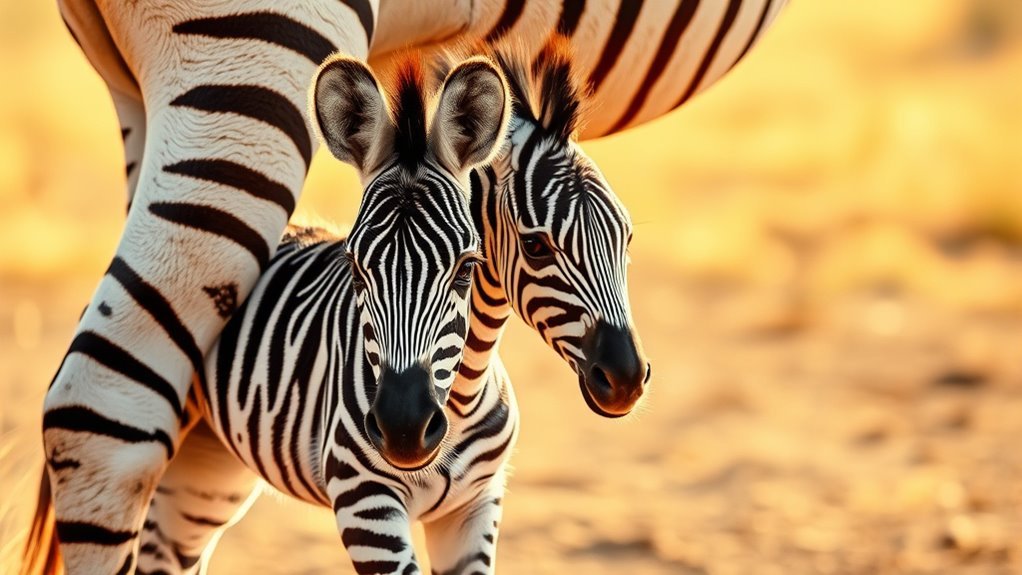
If you’re curious about what to call a baby zebra, the general term is “foal,” which applies to all young zebras regardless of gender. This term stays until the foal reaches about three years old.
When you want gender names explained, male baby zebras are called colts, while female zebras go by fillies. These names help distinguish between the sexes within different zebra species.
A baby zebra is usually born with brown stripes instead of the iconic black and white pattern, which develops as they grow. The gestation period for zebras is roughly 12 to 13 months, and typically, a single foal is born at a time.
Baby zebras start with brown stripes that darken over time after a 12–13 month pregnancy.
Understanding these terms makes it easier to talk about baby zebras accurately. It’s pretty cool how specific the names are, right?
How Baby Zebras Grow and Learn to Survive
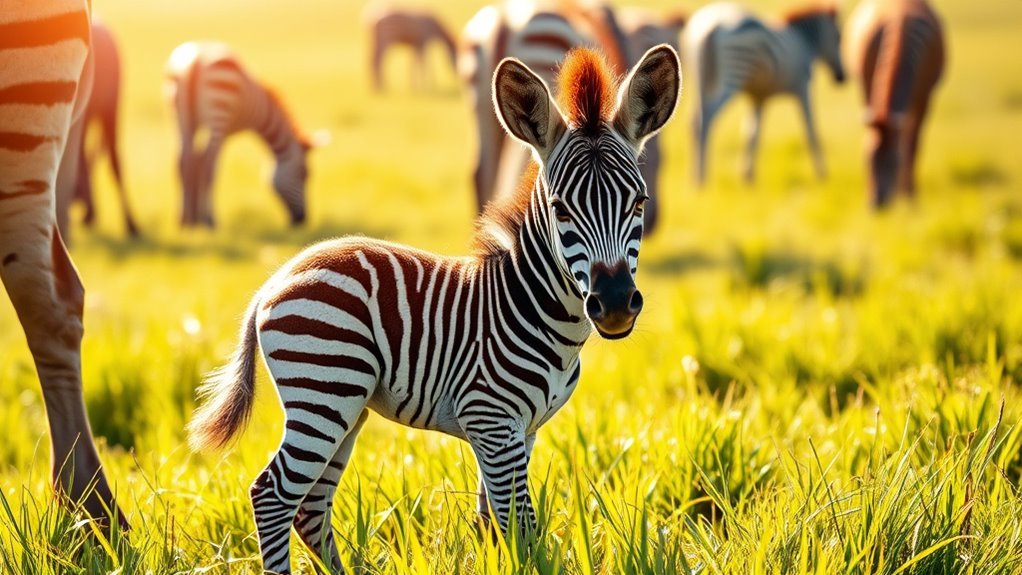
Though they’re born vulnerable, baby zebras, called foals, quickly gain strength and mobility. They stand within 10 to 20 minutes and can run within an hour of birth.
From the start, foals rely on their mother’s milk for nutrition. This milk supports their rapid growth.
Early on, they memorize their mother’s unique stripes. This helps them recognize her within the herd and stay close for protection.
Foals also begin developing social behavior by interacting with their mother and other zebras. Through these interactions, they learn essential survival skills.
Staying near their mother isn’t just about comfort—it’s crucial for avoiding predators.
As you watch a foal navigate its new world, you’ll see how these early bonds and instincts shape its ability to survive and thrive in the wild.
Frequently Asked Questions
What Is a Little Zebra Called?
A little zebra is called a foal. If it’s a male, you’d call it a colt, and if it’s female, it’s a filly.
You’ll notice each foal has unique stripes that help identify them. Pretty cool, right?
What Are Girl Zebras Called?
Think of a graceful dancer in striped silk—that’s a girl zebra.
If she’s under three, she’s called a filly.
Once she’s grown, she’s a mare.
She nurtures her family with care and weaves bonds like threads in a tapestry.
What Is the Zebra Baby?
A zebra baby’s called a foal. You’ll notice it stands quickly after birth and starts running soon.
If it’s male, it’s a colt; if female, a filly. They nurse and graze early on.
Conclusion
Now that you know a baby zebra is called a foal, you might wonder how these striking little creatures manage to survive in the wild. As you watch them grow, you’ll see their stripes become their shield and their quick instincts their best defense.
But here’s the twist—there’s one surprising thing about baby zebras that most people don’t expect. Ready to discover what makes these foals truly extraordinary? Keep watching closely!
Baby zebras, or foals, are not just cute—they have incredible survival skills from the moment they’re born. Their striped coats help them blend into their surroundings, confusing predators and giving them a better chance to stay safe.
Plus, foals are quick learners, following their mothers closely and picking up important behaviors that help them thrive. Understanding what a baby zebra is called and how it lives opens up a whole new appreciation for these amazing animals in the wild.