
What to Do for a Constipated Baby: 3 Quick Relief Tips
You can help your constipated baby by adding fiber-rich foods like pureed prunes or pears. Offering small amounts of water alongside their usual milk can also ease constipation and support digestion.
Try gentle leg exercises, cycling their legs and massaging their tummy to encourage bowel movements. These simple movements can often bring quick relief and make your baby more comfortable.
If constipation lasts over ten days or your baby shows signs of pain or blood in their stool, contact a pediatrician promptly.
Always keep exploring simple tips for easing your baby’s discomfort and ensuring their digestive health.
Key Takeaways
- Offer fiber-rich purees like prunes or pears to soften stool and promote bowel movements. These can really help get things moving smoothly for your little one.
- Ensure adequate hydration with breast milk, formula, and small water amounts if appropriate. Staying hydrated is key to easing constipation.
- Gently cycle baby’s legs and massage their tummy clockwise to stimulate bowel activity. It’s a simple way to encourage their digestive system to wake up.
- Avoid constipating foods like rice cereal and bananas while introducing high-fiber cereals gradually. This can prevent things from getting worse.
- Monitor for signs of severe constipation and contact a pediatrician if symptoms persist beyond two weeks. Better safe than sorry when it comes to your baby’s health.
Add Fiber-Rich Foods and Fluids to Relieve Baby Constipation
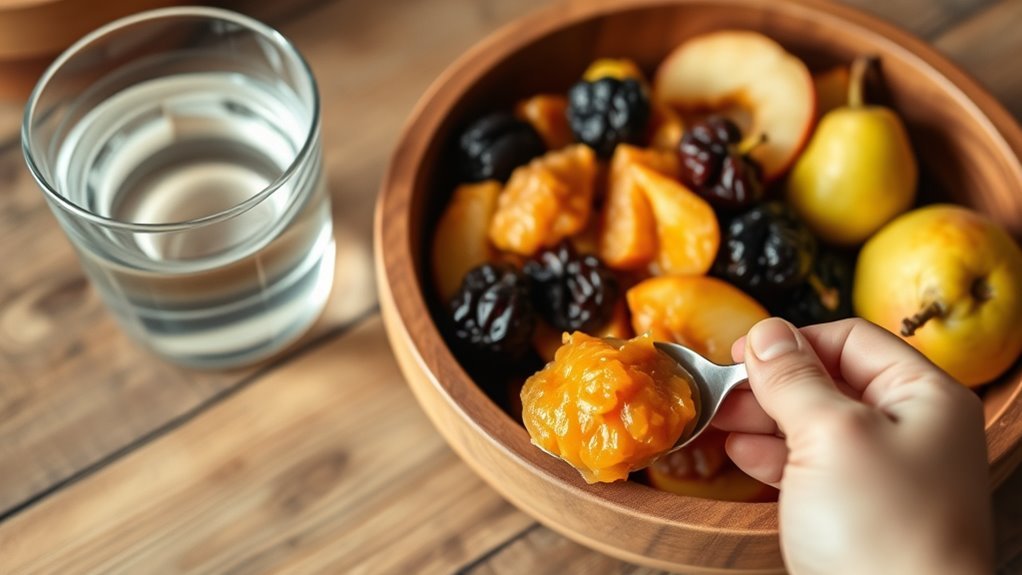
If your baby is constipated, adding fiber-rich foods and fluids can make a big difference. Start by introducing purees like prunes, pears, and peas to your baby’s diet; these fiber-rich options help soften stool and encourage regular bowel movements.
Introducing fiber-rich purees like prunes, pears, and peas can help soften your baby’s stool and promote regularity.
For babies over one month, offer 1-2 ounces of 100% prune juice daily, as the natural sorbitol acts as a gentle laxative. Make sure your baby stays well-hydrated by providing extra fluids alongside formula or breast milk.
You can also gradually add high-fiber cereals such as oatmeal, wheat, or barley. But try to limit constipating solid foods like rice cereal, bananas, and dairy.
Keep an eye out for symptoms of discomfort or infrequent bowel movements. This way, you’ll know if these changes are helping to relieve your baby’s constipation effectively.
Try Gentle Leg Exercises and Tummy Massage for Relief

Try gently moving your baby’s legs in a cycling motion to stimulate bowel activity and encourage regular movements. This simple exercise helps stimulate bowel movement by mimicking natural peristalsis.
Along with moving their legs, a gentle tummy massage can also relieve constipation. Use your fingers to apply a clockwise tummy massage while your baby lies on their back; this promotes relaxation and aids digestion.
Holding your baby’s knees to their chest mimics a squatting position, which can further ease stool passage. Spend about 5-10 minutes combining these gentle leg exercises and a gentle tummy massage for best results.
Always watch for signs of discomfort and stop if your baby seems upset. Pair these techniques with diet changes to effectively relieve constipation and keep your baby comfortable.
Know When to Contact a Pediatrician for Persistent Constipation

While gentle exercises and massages can often ease your baby’s constipation, there are times when professional advice becomes necessary.
If your baby hasn’t had a bowel movement for over 4-5 days or shows signs of irritability, stomach pain, or hard stool, you should consult a pediatrician.
Persistent constipation lasting more than 10-14 days may indicate an underlying medical issue, especially if accompanied by weight loss or refusal to eat.
| Signs to Watch For | When to Consult a Pediatrician |
|---|---|
| No bowel movement > 5 days | Persistent constipation > 10-14 days |
| Blood in stool or color change | Weight loss or refusal to eat |
| Irritability or stomach pain | Vomiting or severe discomfort |
Keeping an eye on your infant’s diet and symptoms really helps you know when it’s time to get medical help for constipation in babies.
Don’t hesitate to reach out to your pediatrician if something feels off.
Frequently Asked Questions
What Is the Fastest Home Remedy for Constipation?
The fastest home remedy is giving your baby 1-2 ounces of 100% prune juice. It contains natural sorbitol, which helps soften stools quickly.
You can also gently massage their tummy. This can stimulate bowel movements and ease any discomfort they might be feeling.
How to Help Baby Push Hard Poop?
You can help your baby push hard poop by gently massaging their tummy clockwise. Holding their knees to their chest can also provide some relief.
Another helpful trick is moving their legs in a cycling motion. You might want to offer prune juice, too—it can really help soften things up.
Giving your baby a warm bath is great for relaxing their muscles. It often makes it easier for them to go.
What Position Helps Baby Poop?
Think of your baby’s body as a winding river—holding their knees to their chest creates the perfect bend to help poop flow smoothly.
You can also sit them up gently to encourage pushing and ease bowel movements. It’s all about finding that comfy position that makes things easier for your little one.
How to Get Rid of Three Day Constipation?
If your baby’s constipated for three days, offer prune or pear juice. Gently massage their tummy, and do leg cycling exercises.
Keep them hydrated, but if it persists, call your pediatrician for advice and safe treatment options.
Conclusion
If you’re worried that these simple steps won’t help your baby, don’t be discouraged—many parents see quick improvement by adding fiber-rich foods and gentle massage.
Remember, you’re not alone, and trying these gentle methods first is safe and effective.
But if constipation persists or your baby seems uncomfortable, don’t hesitate to reach out to your pediatrician.
Taking action early guarantees your little one stays happy and healthy.
You’ve got this!
Constipation in babies can feel stressful, but quick relief is often just a few gentle steps away. By focusing on fiber-rich foods, tummy massages, and staying attentive to your baby’s comfort, you can help ease their discomfort safely. Remember, early intervention is key to keeping your baby happy and healthy. If symptoms linger, consulting a pediatrician ensures you’re doing what’s best for your little one. So, trust these simple tips and know that effective constipation relief for your baby is within reach!






2 Comments