
Will Baby Stay Head Down After 29 Weeks?
You can expect your baby to stay head down after 29 weeks since most babies settle into this position between 30 to 32 weeks. This head-down position is important for a smoother delivery, and many parents wonder if it will last.
While a quarter of babies may still be breech around 28 weeks, the majority turn by 34 weeks and usually stay put.
Factors like extra amniotic fluid or the shape of the uterus can affect whether a baby turns or stays breech. It’s quite common for babies to change positions during this time, so don’t worry if your little one isn’t head down just yet.
If you want to understand why some babies remain breech and what to do next, there’s more helpful information ahead. It’s always good to talk to your healthcare provider about your baby’s position as you get closer to delivery.
Key Takeaways
- Most babies turn head down between 30 to 32 weeks and tend to remain in that position afterward.
- By 29 weeks, many babies are still turning, but the head-down position usually stabilizes in the third trimester.
- Only about 3% to 4% of babies remain breech at delivery, which means most stay head down after 29 weeks.
- Position changes become less common after 29 weeks as the space in the uterus gets tighter and the baby’s movements start to slow down.
- Healthcare providers keep an eye on the baby’s position and might step in if the baby isn’t head down by late pregnancy. This helps make delivery safer for both mom and baby.
When Do Most Babies Turn Head Down During Pregnancy?
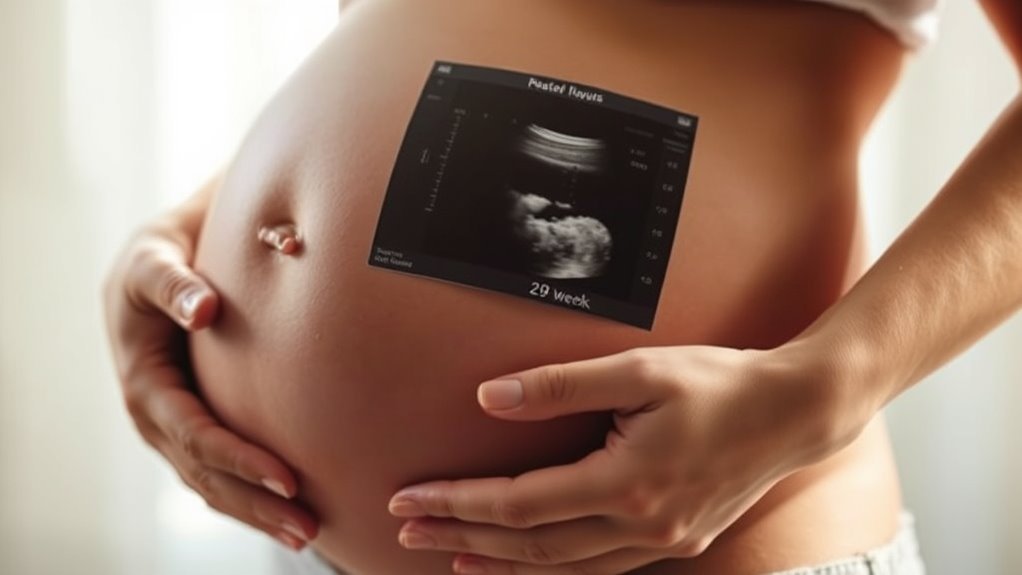
When do most babies turn head down during pregnancy? You’ll find that most babies typically turn to the head-down position between 30 to 32 weeks.
Around 28 weeks, about 25% of babies might still be breech, but as you approach the late third trimester, space in the uterus tightens. Healthcare providers expect the majority to have turned by 34 weeks, aiming for that ideal position to support a vaginal delivery.
Position changes happen more often in the first and second trimesters, so by the third trimester, your baby’s head position usually stabilizes. Only 3% to 4% of babies remain breech at delivery, which means most have turned head down naturally by then.
If the baby hasn’t turned, your healthcare provider will monitor closely. They’ll keep an eye on things and discuss possible options with you if needed.
Why Do Some Babies Stay Breech After 29 Weeks?
Most babies naturally shift into the head-down position as space in the uterus tightens around 30 to 32 weeks. However, some babies stay in a breech position after 29 weeks due to factors like excess amniotic fluid or fetal abnormalities that limit movement.
Unique uterine shapes, such as a bicornuate uterus, can also prevent babies from turning head down. Around 34 weeks gestation, healthcare providers expect most babies to be head down, but if your baby might still be breech, they may suggest an external cephalic version to encourage turning.
The success rate varies, and if the baby remains breech, early labor or a cesarean may be considered. Understanding why some babies don’t turn helps you prepare and discuss options with your healthcare team.
Frequently Asked Questions
Does Head Down Mean Baby Will Come Early?
No, head down doesn’t mean your baby will come early. Labor timing depends more on cervical changes than position.
Keep attending check-ups, and your healthcare provider will monitor everything to guarantee you and baby stay healthy. It’s all about making sure both of you are doing well!
How Long Does a 29 Week Old Baby Stay in NICU?
A 29-week-old baby usually stays in the NICU for about 4 to 10 weeks. You’ll see them get oxygen support, feeding help, and careful monitoring until they’re strong enough to go home safely.
It might feel like a long time, but every day they’re growing and getting stronger. The NICU team is there to make sure they get exactly what they need to thrive.
How Often Should a 29 Week Fetus Move?
You should feel your 29-week fetus move about 10 times every two hours.
If movements slow down or change drastically, don’t hesitate to contact your healthcare provider. It’s always best to check in and make sure everything’s okay with your baby.
Can My Baby Feel Me Rubbing My Belly at 29 Weeks?
Yes, your baby can feel you rubbing your belly at 29 weeks. They respond to gentle touch by moving or kicking.
This helps strengthen your bond and lets you connect with your little one before birth. It’s a special way to communicate even before they’re born!
Conclusion
You might think your baby’s head-down position at 29 weeks means they’ve booked their spot for the grand finale, but babies are little acrobats—they love to flip and spin like tiny gymnasts!
So don’t be shocked if your baby decides to throw a surprise dance move and change position. While many settle head down, some keep you guessing till the very end.
Just remember, your baby’s got moves that could rival a circus performer! It’s totally normal for babies to change positions even after 29 weeks. So, will your baby stay head down after 29 weeks? It’s possible, but not guaranteed. Keep in mind that babies often continue to wiggle and shift until closer to labor. If you’re curious or concerned about your baby’s position, your healthcare provider can offer guidance and check in during your appointments. Staying informed and relaxed is key as your baby prepares for their big entrance!






7 Comments