
7 Tips to Stop My Baby Vomiting After Feeding
To stop your baby from vomiting after feeding, try feeding smaller, more frequent meals. This helps prevent overfeeding, which can often cause discomfort.
Keep your baby upright during and after feeding for at least 30 minutes to help reduce reflux. It really makes a difference.
Make sure to burp your baby regularly to release any trapped air.
Also, keep an eye out for signs of food allergies, like rashes or swelling.
Creating a calm feeding environment is key. Avoid any vigorous activity right after meals to help your baby settle better.
If the vomiting keeps happening, it’s important to know when to seek medical advice.
There are plenty of helpful tips to ease your baby’s discomfort and keep mealtime more enjoyable for both of you.
Key Takeaways
– Feed smaller, more frequent meals every 2-3 hours to avoid overfeeding and reduce vomiting risks.
This helps your baby digest better and feel more comfortable.
– Hold the baby upright during and for 30 minutes after feeding to aid digestion and minimize reflux.
Keeping them upright really makes a difference in preventing spit-ups.
– Use a slow-flow nipple and burp the baby frequently to prevent swallowing air and reduce discomfort.
This can help your little one feel less gassy and unsettled.
– Monitor for food allergies by tracking symptoms and consult a pediatrician if vomiting or reactions persist.
It’s important to know if something specific might be bothering your baby.
– Maintain a calm feeding environment and avoid vigorous activity immediately after feeding to promote digestion.
A peaceful setting helps your baby relax and digest their food properly.
Why Babies Vomit After Feeding
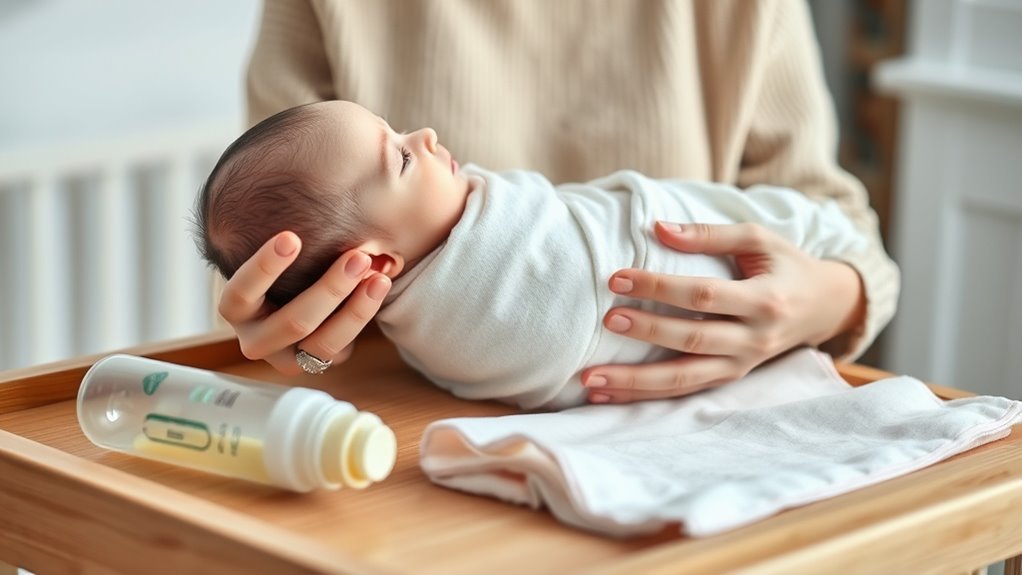
While it’s common for babies to vomit after feeding, understanding the reasons can help you manage it better. One main cause is gastroesophageal reflux, where food flows back from the stomach into the esophagus because your baby’s lower esophageal sphincter isn’t fully developed.
This can lead to discomfort and vomiting after feeding. Overfeeding may also cause vomiting since your baby’s stomach is tiny, roughly the size of a walnut.
Swallowing air during feeding, especially with a shallow latch or fast-flow nipple, can add to gas and trigger vomiting. Food sensitivities might also play a role if your baby reacts to formula ingredients or breast milk proteins.
Knowing these causes can help reduce vomiting after feeding and guide you in finding the right solutions for your baby’s comfort.
Feed Your Baby Smaller, More Frequent Meals

You can help prevent overfeeding by dividing your baby’s portion into smaller, more frequent meals. This way, their tummy won’t get too full and cause vomiting.
Feeding every 2-3 hours gives your baby time to digest comfortably. It also helps them stay satisfied without any discomfort.
Divide Baby’s Portion
Feeding your baby smaller portions every 2-3 hours can greatly reduce vomiting after meals. To divide baby’s portion effectively, focus on offering smaller amounts that match their stomach capacity and hunger cues.
When you feed your baby this way, you help their digestive system manage intake without discomfort.
Keep these tips in mind:
- Divide baby’s portion into manageable sizes to avoid overfilling their tiny stomach.
- Feed your baby smaller amounts more frequently to support better digestion.
- Watch for hunger signals to adjust portion sizes appropriately.
- Gradually increase portion sizes as your baby grows to ease digestion.
Prevent Overfeeding Risks
Because your baby’s stomach is only about the size of a walnut, offering smaller, more frequent meals helps prevent overfeeding and reduces vomiting risks.
Feeding every 2-3 hours lets your baby’s digestive system handle intake without strain. Watch for hunger cues and let your baby self-regulate by turning away when full.
This approach lowers spitting up and discomfort.
| Feeding Tip | Benefit | Frequency |
|---|---|---|
| Small portions | Prevents overfeeding | Every 2-3 hours |
| Burp frequently | Reduces gas buildup | During & after |
| Calm environment | Aids digestion | Each feeding |
Keep Your Baby Upright During and After Feeding
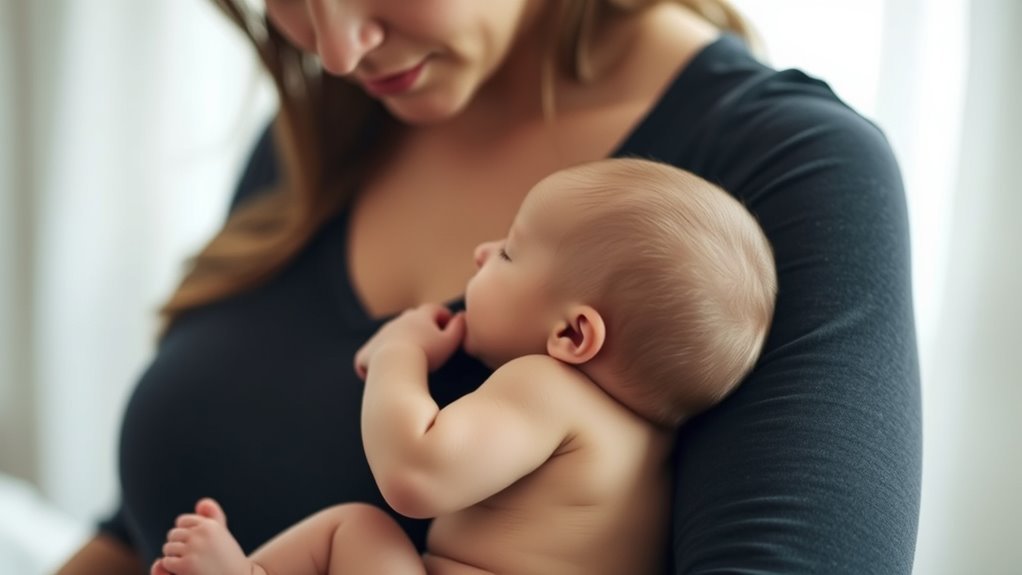
When you keep your baby upright during and after feeding, you help prevent milk from flowing back into the esophagus. This reduces spitting up and vomiting.
Holding your baby in this position supports digestion and helps reduce reflux symptoms. To make the most of this, try these tips:
- Maintain an elevated angle of around 30 degrees during feedings to minimize reflux.
- Keep your baby upright for at least 30 minutes post-feeding to aid digestion.
- Gently rock your baby while upright to soothe them and settle their stomach.
- Burp your baby while holding them upright to release trapped air and prevent discomfort.
Burp Your Baby to Release Trapped Air
You’ll want to burp your baby during and after feedings to release trapped air and reduce vomiting. Try holding them upright against your shoulder or sitting them on your lap while gently patting or rubbing their back.
If your baby gets fussy, it’s a good sign they need a break to burp and ease their stomach. Just take a moment to help them out—it really makes a difference!
Importance Of Burping
Although feeding your baby is a joyful experience, it often causes them to swallow air. This can lead to discomfort and vomiting.
Burping plays an essential role in releasing this trapped air. It helps prevent spitting up and vomiting, especially in breastfed babies.
Here’s why burping is important for your baby:
- It relieves gastric pressure that causes reflux and discomfort.
- Frequent burping during feeding reduces swallowed air buildup.
- Holding your baby upright and gently patting their back helps with effective burping.
- A well-burped baby tends to be calmer and less fussy.
Burping Techniques For Babies
Burping your baby effectively requires knowing a few key techniques to help release trapped air and reduce vomiting. Use different burping techniques like holding your baby upright against your shoulder while gently patting or rubbing their back. This helps release swallowed air that can cause discomfort.
You can also try the seated position on your lap or hold your baby face-down on your forearm, as some babies respond better to certain methods. Aim to burp your baby during and after feeding—every 2-3 ounces for bottle-fed babies or after switching breasts when breastfeeding.
If your baby doesn’t burp after a few minutes, gently resume feeding since some don’t need to burp every time. These steps help minimize air buildup and reduce spit-up of breast milk.
Watch for Food Allergies Causing Vomiting
When your baby vomits consistently after eating certain foods, you should consider the possibility of a food allergy. Food allergies can cause immediate vomiting and other symptoms, so watching for patterns is key.
Common allergens include dairy, eggs, peanuts, and soy. Keeping track of what your baby eats helps you and your pediatrician identify triggers.
Look out for vomiting right after feeding specific foods. Also, watch for hives or skin rashes appearing suddenly.
Swelling of lips, face, or tongue is another warning sign. Difficulty breathing or wheezing can be serious, so don’t ignore these symptoms.
If you notice these signs, seek medical advice promptly. Your doctor may recommend skin prick or blood tests to confirm allergies.
Keeping a detailed food diary provides valuable health information to manage your baby’s condition safely. It’s a simple step that makes a big difference.
Help Your Baby Sleep Better by Adjusting Position
Since your baby’s sleeping position directly affects digestion, adjusting it can greatly reduce vomiting after feeding. Elevating your baby’s sleeping position to about a 30-degree angle helps prevent stomach contents from flowing back up, reducing reflux (GER) and vomiting.
Keeping your baby upright for at least 30 minutes after feeding also promotes better digestion and lessens vomiting risk. Avoid lying your baby flat immediately after feeding, as this can increase air swallowing and stomach pressure, leading to more vomiting.
Use a firm mattress and avoid soft bedding to improve comfort and sleep quality. Regularly adjusting your baby’s sleeping position can help relieve reflux symptoms and make your baby more comfortable, ultimately helping reduce vomiting episodes after feeding.
When to See a Doctor for Persistent Vomiting
If your baby keeps vomiting despite your efforts to manage it at home, you should consult a doctor promptly. Persistent vomiting can lead to dehydration and might signal a serious underlying issue requiring medical attention.
Watch closely for these signs: forceful or projectile vomiting, which could indicate pyloric stenosis. Also, vomiting lasting more than 24 hours, especially if your baby has dark urine or a dry mouth.
Pay attention if your baby refuses to feed or can’t keep down oral rehydration solutions. Vomiting that’s accompanied by bloody stools, weight loss, or excessive irritability is another red flag.
If you notice any of these, don’t delay seeking help. Early medical evaluation guarantees your baby gets the care needed to prevent complications and supports their recovery.
Frequently Asked Questions
How Do I Get My Baby to Stop Throwing up After Every Feeding?
You can stop your baby from vomiting by feeding smaller amounts more often. It also helps to keep them upright during and after feeding.
Be sure to burp them regularly and use proper feeding techniques. These small changes can make a big difference.
If the vomiting continues or gets worse, don’t hesitate to consult your pediatrician. They can help figure out what’s going on and what to do next.
Is It Okay if Baby Vomit After Feeding?
Yes, it’s usually okay if your baby vomits after feeding, especially in the first few months.
Just watch for signs like dehydration or unusual symptoms, and don’t hesitate to contact your pediatrician if you’re concerned.
It’s always better to be safe and check in if something feels off. Your baby’s health is the most important thing!
Should I Keep Feeding My Baby After He Throws Up?
When your baby spits up, imagine a gentle pause like a soft rain calming a storm.
You can keep feeding but offer smaller amounts, watching closely for hunger or signs they need more time to settle.
How Much Vomit Is Normal for a Baby?
You’ll find that small amounts of vomit, like a few mouthfuls, are normal for babies.
If it’s forceful, green, or bloody, or if your baby’s not thriving, you should contact your pediatrician promptly.
Conclusion
So, if your baby’s auditioning for the next big spit-up contest, don’t worry—you’re not alone. Just feed smaller meals, keep them upright like a tiny human skyscraper, and burp like a pro.
Watch out for sneaky allergies and tweak their sleep setup. But hey, if the vomiting turns into a daily drama, maybe it’s time to bring in the experts.
Because even superheroes need a break from the projectile vomit show. Remember, stopping your baby from vomiting after feeding often means small changes like adjusting feeding amounts, posture, and sleep habits. If vomiting persists, consulting a pediatrician can help identify any underlying issues and ensure your little one stays happy and healthy.