
How to Introduce Eggs to Baby in 7 Easy Steps
You can introduce eggs to your baby safely around six months by starting with a small amount of well-cooked, mashed egg mixed with breast milk or formula. This makes it easier for your little one to swallow and digest.
Introducing eggs early can help build their taste preferences and provide essential nutrients like protein and choline.
Offer eggs two to three times a week, gradually increasing portions and textures while watching closely for allergy signs like hives or upset stomach. It’s important to keep an eye out because egg allergies can happen, though they’re usually manageable.
Avoid choking hazards by serving soft, bite-sized pieces as they grow. Keep track of any reactions and have a plan in place just in case.
There’s more to learn about serving eggs creatively and safely as your baby grows, so take it one step at a time.
Key Takeaways
- Introduce well-cooked eggs around 6 months old. Start with just ¼ teaspoon mixed with breast milk or formula.
- Offer eggs two to three times weekly in varied, soft forms like mashed, scrambled, or baked. This helps build tolerance.
- Keep an eye out for allergic reactions such as hives or breathing difficulties. It’s a good idea to keep a food diary for tracking.
- To avoid choking hazards, serve mashed eggs at first. After 9 months, you can offer bite-sized pieces but avoid whole hard-boiled eggs before 12 months.
- Always have an emergency plan ready. If severe symptoms appear, call 911 right away. And be sure to consult a pediatrician if you suspect allergies.
When Can Babies Safely Start Eating Eggs?
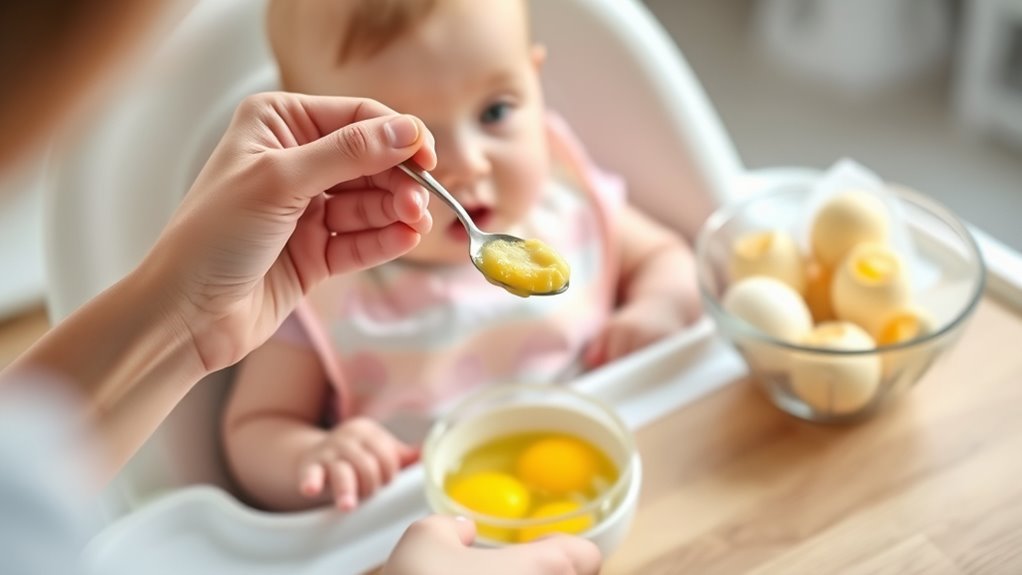
Although you might be enthusiastic to introduce eggs earlier, it’s best to wait until your baby is around 6 months old, when they start solid foods.
At this stage, you can safely introduce eggs by offering a small amount, about ¼ teaspoon, to monitor for any allergy signs since eggs are a common allergen.
Make sure to serve eggs well-cooked to reduce the risk of foodborne illness, especially Salmonella.
Introducing both egg white and yolk together may help lower the chance of developing an egg allergy.
Eggs provide essential nutrients that support your baby’s growth and development.
After a successful introduction, you can regularly offer eggs, ideally twice a week, to encourage acceptance and provide ongoing nutritional benefits.
Preparing Eggs for Your Baby’s First Taste

Once your baby is around 6 months old and ready to try eggs, it’s important to prepare them in a way that’s safe and easy to eat. Eggs should be well-cooked to avoid any risk of Salmonella.
Here’s how to introduce eggs safely:
- Start with ¼ teaspoon of mashed, well-cooked egg mixed with breast milk or formula for smooth preparation.
- Gradually increase to bite-sized pieces of scrambled or hard-boiled egg by 9 months to encourage self-feeding.
- Offer eggs two to three times a week in varied forms like omelets or strips to keep your baby interested.
- Always create a safe eating environment and watch closely for allergic reactions, as egg is a common allergen.
This approach guarantees your baby’s first taste of eggs is both safe and enjoyable.
Introducing Eggs Gradually and Spotting Allergies

Start by offering your baby a tiny amount of well-cooked egg, then slowly increase the serving if they show no signs of allergy. Watch closely for symptoms like hives, stomach upset, or trouble breathing after each feeding.
This careful approach helps you spot any reactions early while building your baby’s tolerance. It’s all about taking it slow and paying attention to how they respond.
Gradual Egg Feeding
When you introduce eggs to your baby around six months, start with a small amount like ¼ teaspoon of fully cooked egg. This way, you can carefully watch for any allergic reactions.
Follow these steps for gradual egg feeding:
First, make sure the egg is well-cooked. Both the yolk and white should be fully cooked to reduce any risks.
Keep a close eye on allergies, especially if your family has a history of them. And if you’re unsure, don’t hesitate to talk to your pediatrician.
Slowly increase the amount of egg you give. Try to offer it about twice a week so your baby can build up tolerance over time.
Always stay alert for any signs of allergies. And remember to keep up safe feeding practices throughout this process.
Introducing eggs gradually helps your baby get used to them safely while you keep an eye out for any problems.
Allergy Signs Monitoring
Although introducing eggs gradually is important, you need to watch closely for allergy signs like hives, digestive upset, or breathing difficulties, especially during the first couple of hours after feeding. Start with a small amount and carefully observe your baby for any allergic reactions.
Monitor your baby closely during the first introduction and keep a food diary to track egg consumption, noting the quantity and preparation method. This record helps you spot patterns or issues.
If your baby has severe eczema or a family history of allergies, consult your pediatrician before introducing eggs, as these factors increase the risk. By staying vigilant and monitoring allergy signs, you can safely introduce eggs and respond quickly if your baby shows any adverse reactions.
What to Do If Your Baby Has an Allergic Reaction
If your baby shows signs like hives, swelling, or trouble breathing after eating eggs, call 911 immediately. These symptoms can be serious and need quick attention.
For milder symptoms such as an upset stomach or itchy lips, contact your pediatrician to discuss next steps. It’s always better to check in and be safe.
Keep a detailed record of what your baby ate and any symptoms. This will help healthcare providers diagnose the allergy accurately.
Recognizing Allergy Symptoms
Since introducing eggs can sometimes trigger allergic reactions, you need to watch for symptoms like hives, an itchy mouth, or stomach upset. These mild allergy symptoms may indicate an egg allergy, one of the common allergens causing food allergies in babies.
Here’s what to do:
- Monitor for mild allergy symptoms closely after feeding eggs.
- Document any reactions, noting timing and severity.
- Consult a pediatrician if you suspect an allergic reaction to discuss testing and future feeding.
- Be aware of severe symptoms like difficulty breathing or swelling, which suggest anaphylaxis and require immediate medical attention.
Always have an emergency plan ready, especially if your baby has a history of food allergies. Recognizing these signs early helps keep your baby safe.
Immediate Response Actions
Act quickly when your baby shows signs of an allergic reaction to eggs, such as hives, swelling, or difficulty breathing. Seek immediate medical attention or call 911, especially if anaphylaxis is suspected.
Use an epinephrine auto-injector if prescribed. For mild reactions like rash or upset stomach, consult your pediatrician promptly.
Always record symptoms and the time they appeared to provide accurate details to your healthcare provider. After any allergic reaction, avoid reintroducing eggs until you’ve spoken with a healthcare provider about safe steps and possible food allergy testing.
Monitoring and documenting your baby’s response helps manage risks and guarantees timely care. Taking these immediate response actions can protect your baby and guide you on safely introducing eggs in the future.
Preventing Choking Hazards When Feeding Eggs
While introducing eggs to your baby, you need to prepare them in forms that match your child’s developmental stage to prevent choking hazards. Here’s how to keep feeding safe:
Start with mashed or scrambled eggs for babies around 6 months. These offer soft textures that are easy to swallow.
For babies 9 months and older who are developmentally ready, cut eggs into small, bite-sized pieces. Mixing egg whites and yolks uniformly creates a consistent texture, which helps reduce choking risk.
Always supervise your baby during feeding so you can quickly respond if they show signs of choking.
Avoid giving hard-boiled eggs whole before 12 months. Their firm texture can pose a choking hazard.
Following these steps guarantees eggs are a safe, nutritious food for your baby.
How to Serve Eggs Creatively to Keep Your Baby Interested
Ensuring your baby eats eggs safely is just the first step; keeping them interested in this nutritious food is equally important. To do this, offer scrambled eggs mixed with breast milk or formula for a creamy texture that’s easy to swallow.
Hard-boiled eggs cut into small pieces encourage self-feeding and exploration. You can also prepare colorful egg muffins with finely chopped veggies, adding visual appeal and boosting nutrient intake.
Mashed eggs blended with purees like avocado or sweet potato introduce new flavors while enhancing nutrition. Omelet strips lightly seasoned with herbs provide variety and stimulate your baby’s taste buds.
How Often and in What Amounts to Feed Eggs to Babies
You can start introducing eggs to your baby around six months old by offering a small amount—about ¼ teaspoon of well-cooked egg—and gradually increase the portion if no allergic reactions appear. When feeding eggs, keep these steps in mind:
Offer eggs regularly, about 2 to 3 times per week, to help build tolerance. Serve the whole egg, including egg white and yolk, as early introduction may help prevent egg allergies.
Monitor your baby’s response closely for any allergic symptoms and consult a pediatrician if needed. You can safely feed up to one egg per day, using a variety in preparation methods to keep your baby interested.
Frequently Asked Questions
How Do I Introduce Eggs to My Baby for the First Time?
Start by offering a small amount of fully cooked egg mixed with a familiar food. Watch closely for any allergic reactions and introduce eggs gradually.
Try varying the cooking methods to keep your baby interested. It helps them get comfortable with the new taste.
How Quickly Does an Egg Allergy Show in Babies?
Think of an egg allergy like a sudden thunderstorm—it usually shows up within minutes to a few hours after your baby eats eggs.
Watch closely for hives, breathing trouble, or tummy issues during this critical window.
It’s important to stay alert because reactions can happen quickly.
If you notice anything unusual, don’t hesitate to reach out to your pediatrician.
Can My 8 Month Old Try Scrambled Eggs?
Yes, your 8-month-old can try scrambled eggs. Just make sure they’re well-cooked and soft. Start with small amounts to see how your baby handles them.
Watch closely for any allergic reactions. It’s a good idea to offer eggs regularly to help your baby get used to them.
Can I Give My 4 Month Old Baby Eggs?
You shouldn’t crack open eggs for your 4-month-old just yet; their tiny digestive system isn’t ready.
Wait until about 6 months to avoid allergy risks, and always check with your pediatrician before starting solids.
Conclusion
Introducing eggs to your baby can feel both exciting and nerve-wracking. While eggs bring essential nutrients and new flavors, they also carry the risk of allergies and choking hazards.
By starting slowly and watching for any reactions, you can help keep your baby safe. Serving eggs creatively makes the experience more fun and enjoyable for both of you.
When you balance caution with curiosity, you’ll confidently nourish your little one. This approach turns mealtime into a safe adventure instead of a source of worry.
Remember, introducing eggs to your baby is all about patience and care. Keep an eye out for allergic reactions, offer small portions, and try different egg preparations. This way, you help your baby enjoy new tastes while staying safe. With these simple steps, you make feeding eggs a joyful and healthy part of your baby’s diet.