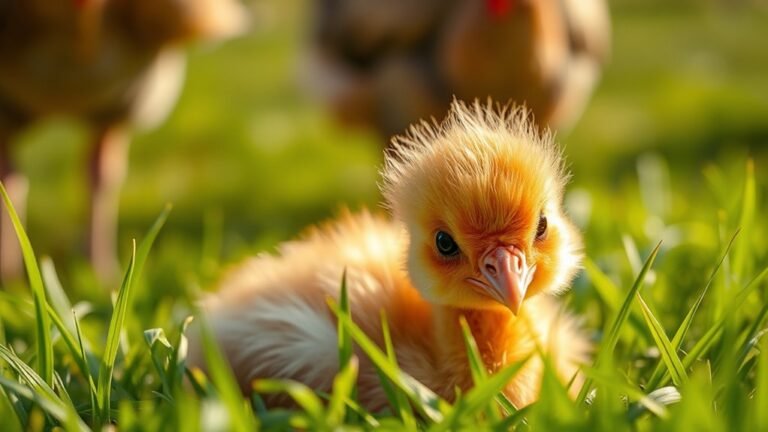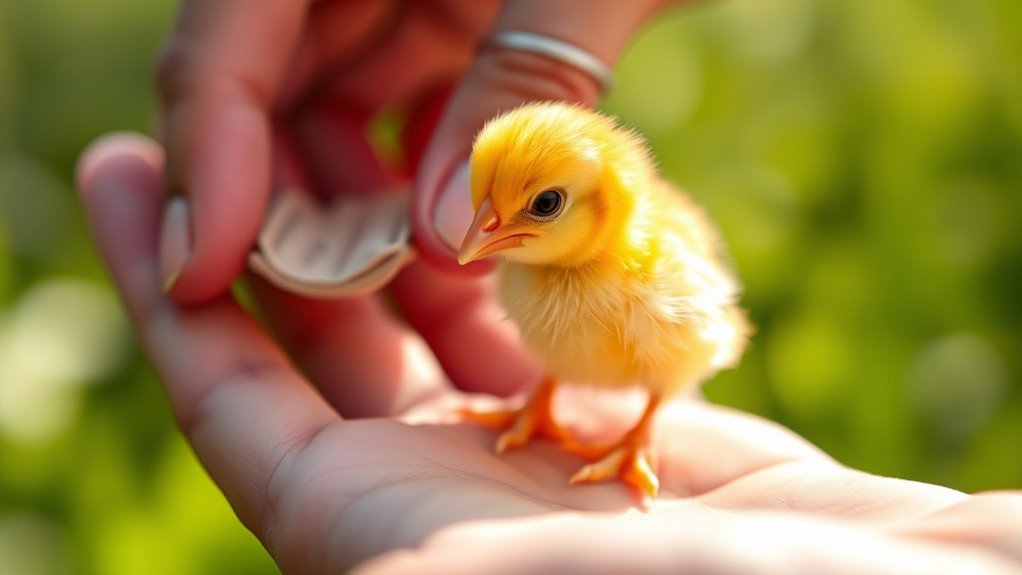
How to Tell If a Baby Chick Is Male or Female Simply
You can tell if a baby chick is male or female by checking its feather shape and comb size in the first weeks.
These simple signs are some of the easiest ways to figure out a chick’s gender early on. Males usually have longer, pointy wing and tail feathers, while females show rounder, softer ones.
Males grow faster with thicker legs and bigger combs that get redder by week 8.
They also act more assertive. Watching these traits closely helps you spot the gender early on.
Keep observing to learn more helpful signs.
Key Takeaways
- Male chicks have longer, pointy wing and tail feathers, while females display rounder, softer feathers.
- Larger, redder combs and more pronounced wattles indicate male chicks by around week 8.
- Males grow faster, with thicker legs and larger feet compared to females.
- Assertive behaviors like strutting and crowing are typical in male chicks as they mature.
- Combining feather shape, comb size, growth, and behavior improves early sex identification accuracy.
How to Sex Chicks by Feather and Comb Development (Weeks 1–8)
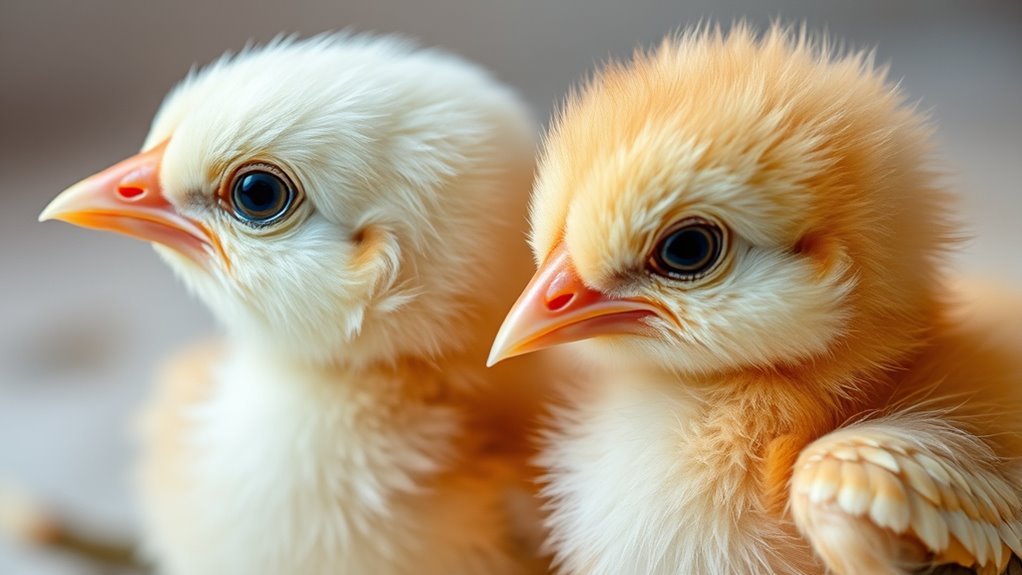
Although it can be tricky at first, you can start telling male and female chicks apart between weeks 1 and 8 by closely observing their feather and comb development. Male chicks usually develop larger, redder combs and wattles, while females have smaller, paler ones.
Feather development offers clues too—male chicks often show longer, pointy wing feathers, especially by weeks 6 to 8, whereas females have rounder, softer wing feathers. As you continue sexing, notice that males tend to grow faster and have thicker legs.
While behavior becomes clearer later, focusing on comb size and wing feather shape during these weeks gives you a reliable start. With practice, this method of sexing chicks becomes a handy way to distinguish male from female early on.
Behavioral and Physical Signs to Identify Chick Gender as They Mature
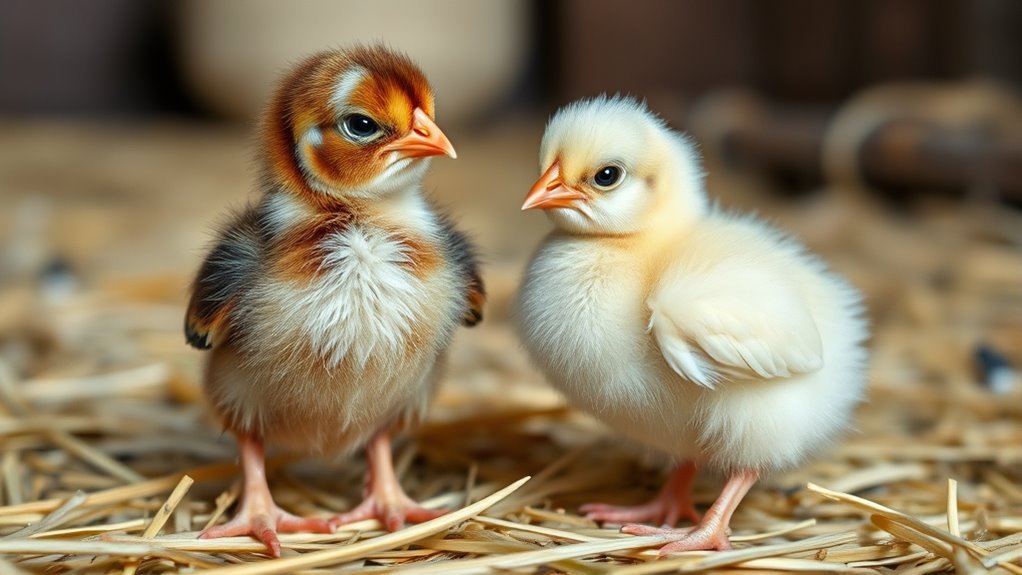
As your chicks grow, you’ll notice clearer differences in their behavior and physical traits that help identify their gender. Male chicks develop larger, redder combs and wattles, while female chicks have smaller, less pronounced ones.
As chicks mature, distinct physical and behavioral traits reveal their gender more clearly.
Their growth patterns also differ; males often grow faster with thicker legs and larger feet. Feather development provides clues too—male chicks show longer, pointy feathers, especially in tail feathers, whereas females have shorter, rounder ones.
Behavioral signs are key in sexing baby chicks: males display assertive behaviors like strutting and crowing, establishing dominance. Females tend to be more docile and nurturing.
Observing these physical traits and behavioral signs together makes identifying your chicks’ gender as they mature much easier. It’s all about paying attention to the little details as they grow!
Frequently Asked Questions
How Old Does a Chick Have to Be to Tell the Gender?
You usually have to wait until your chick is around 6 to 8 weeks old to start seeing physical traits that hint at gender.
By 8 to 10 weeks, these differences become clearer for better identification.
How Can You Tell if a Baby Chick Is Going to Be a Rooster?
You’ll notice a baby chick destined to be a rooster often sports a bigger, redder comb early on.
Coincidentally, their assertive strut and spear-shaped wing feathers also give them away before you even realize it.
At What Age Can Chickens Be Sexed?
You can usually sex chickens between 6 to 8 weeks old when physical differences start showing.
By 8 to 10 weeks, males have bigger combs and wattles, making it easier to tell them apart from females.
It’s pretty handy once those signs show up, right? Just keeps it simple!
How Can I Tell if My Chicken Is a Rooster or Hen?
You’ll spot a rooster by his larger, redder comb and wattles, spear-shaped wing feathers, and assertive strut.
Hens have smaller combs, rounder wings, and calmer behavior.
Watch tail feathers and leg thickness too—they help!
Conclusion
Now that you know how to tell if a baby chick is male or female by watching their feather and comb development, and by noticing their behavior as they grow, you can confidently care for them.
You’ll observe, you’ll compare, and you’ll understand. You’ll learn, you’ll adapt, and you’ll enjoy.
By paying close attention and trusting your instincts, you’ll raise healthy, happy chicks—whether they crow or cluck—right from the very start. Knowing how to tell if a baby chick is male or female helps you provide the right care and environment for each chick.
So, keep watching those feather patterns and comb changes, and notice their unique behaviors. It’s a simple way to tell if a baby chick is male or female, making raising them even more rewarding and fun.