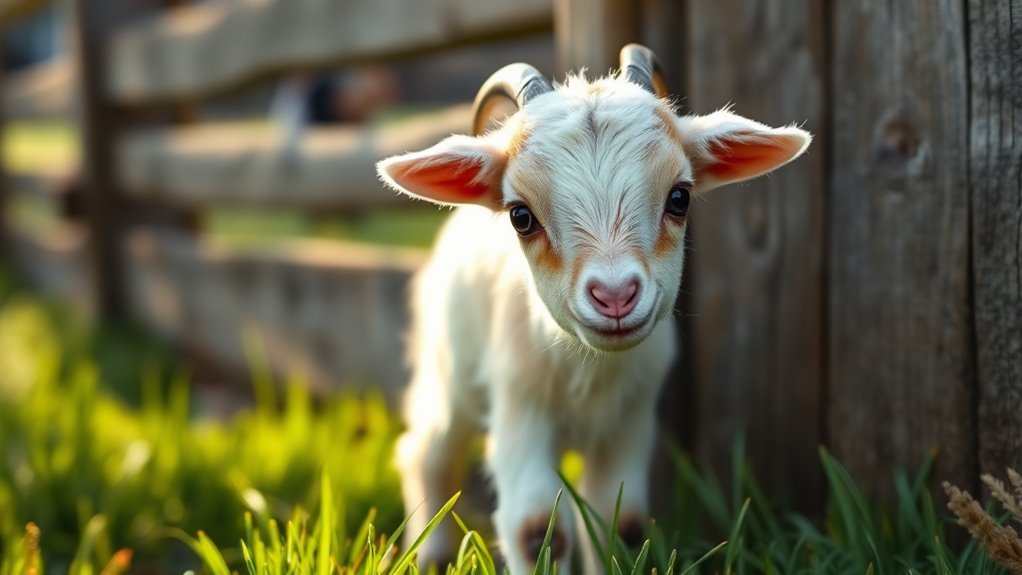
What Is a Baby Goat Called?
A baby goat is called a kid, which is a fun and simple name to remember. Male baby goats are known as bucklings, while the females are called doelings. When a goat gives birth, the process is called kidding.
Kids are social animals that thrive best when they’re part of a herd. They bond closely through nursing and spending time together.
As they grow into yearlings, they start to develop strength, coordination, and important social skills. These skills help them fit in and survive in their herd life.
If you’re curious about how these stages affect their behavior and care, keep exploring their growth journey. Understanding this can make raising or caring for goats a lot easier and more rewarding!
Key Takeaways
- A baby goat is called a kid.
- Male baby goats are known as bucklings.
- Female baby goats are referred to as doelings.
- The process of a goat giving birth is called kidding.
- Identifying the gender of kids helps in their care and observation.
So, knowing these terms can really come in handy if you’re around goats or just curious about them!
What Is a Baby Goat Called?
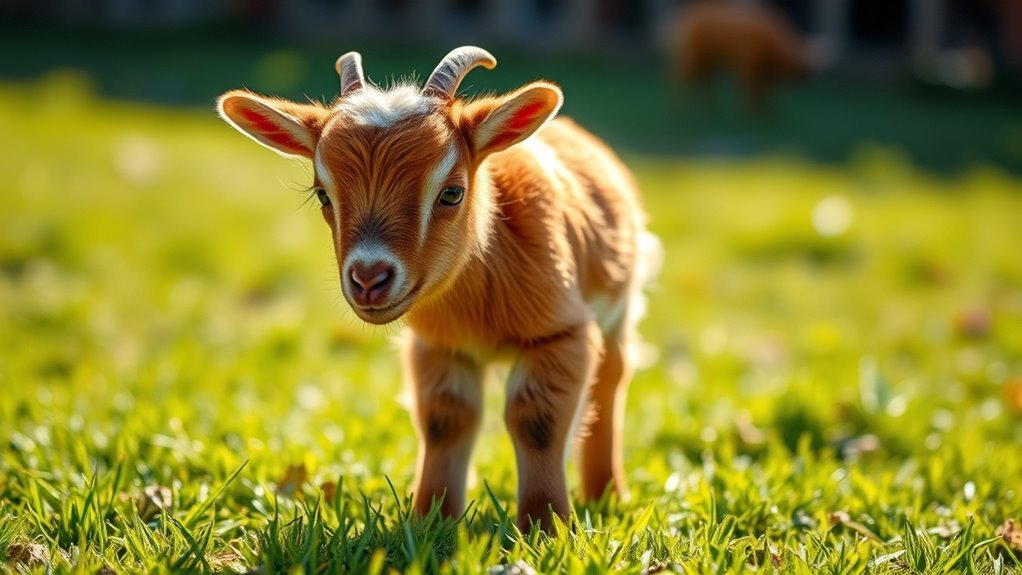
A baby goat is called a kid, and if you want to be more specific, male kids are bucklings while females are doelings. When a goat gives birth, the process is called kidding, and the newborns you see are these kids.
Young female goats are called doelings or does, while young male goats is called bucklings or bucks. You’ll notice that baby goats are called kids regardless of gender, but distinguishing between bucklings and doelings helps when you’re observing or caring for them.
Since kids typically stay with their mothers for several weeks, you’ll see them nursing and bonding closely. Also, because goats are social animals, these kids thrive best when they’re with other goats in a herd, making their early life full of interaction and learning.
How Baby Goats Grow: From Kids to Yearlings
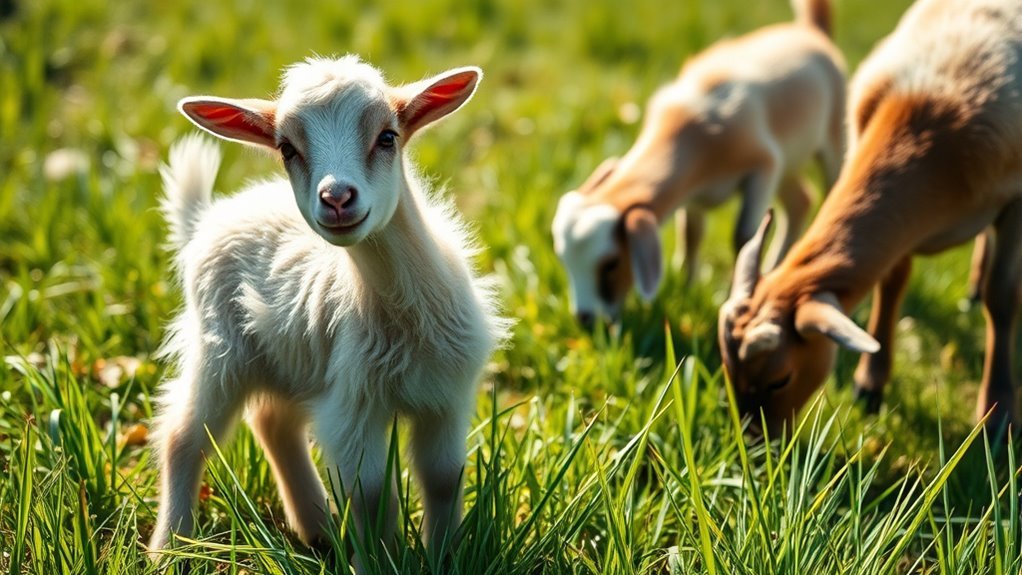
Watching baby goats grow from playful kids into yearlings reveals how quickly they develop both physically and socially. After kidding, the newborns—called kids—include male bucklings and female doelings.
Observing kids grow into yearlings shows their rapid physical and social development from birth.
As you observe them, you’ll notice how these young goats gain strength, coordination, and confidence. By the time they become yearlings, between one and two years old, they’ve matured considerably.
Alongside physical growth, they learn to navigate the herd hierarchy, establishing their social rank within the group. This social development is just as important as their physical changes because it helps maintain order in the herd.
Whether you’re caring for bucklings or doelings, understanding this growth process gives you insight into their behavior and needs as they shift from kids to yearlings.
Frequently Asked Questions
Why Do We Call Human Children Kids?
You call human children “kids” because the word originally meant young goats, symbolizing playfulness and innocence. Over time, people adopted it for children due to similar youthful energy and vulnerability they both share.
It’s kind of funny when you think about it — calling kids “kids” because they remind us of little goats! But it makes sense, right? Both are full of energy and curiosity, which is why the term stuck.
What Is a Litter of Goats Called?
A litter of goats is called a “litter,” just like with many animals. When you’re caring for them, remember litters usually have one to three kids, but sometimes more, depending on the doe’s breed and health.
It’s pretty interesting how the number can vary, right? So, always keep an eye on the doe and be ready to help if needed.
What Animal Faints When Scared?
Imagine a fainting goat freezing mid-jump, stiff as a statue when startled. You’ll find these goats “faint” due to muscle stiffness, not unconsciousness—a quirky defense that leaves them fully aware, just temporarily immobile.
It’s kind of wild, right? They don’t actually lose consciousness; they just lock up for a moment and then snap back to normal. Pretty cool survival trick if you ask me!
What Are Small Goats Called?
Small goats are called kids. You’ll find male kids called bucklings and female kids called doelings.
They’re playful and social, usually born in spring. You can expect them to wean around 8 to 12 weeks old.
Conclusion
Just like a tiny seed grows into a mighty tree, a baby goat—called a kid—starts small but holds endless potential. As you watch a kid leap and play, remember it’s more than a cute creature; it’s a symbol of new beginnings and growth.
So, every kid you see is a reminder that with time and care, something small can become strong and full of life, just like you. Kids, those adorable baby goats, show us how life begins in such a delicate, hopeful way.
They grow, learn, and explore the world around them, just like we do. So next time you see a baby goat, or kid, think about how growth takes patience and love. That little kid isn’t just an animal—it’s a beautiful example of how new life starts and blossoms.