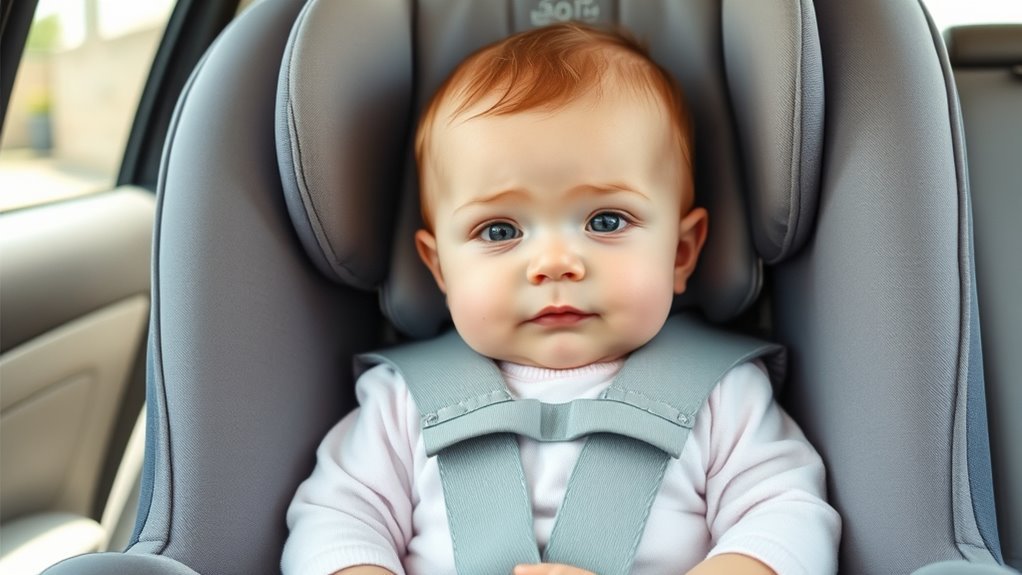
How Much Should a Baby Weigh to Face Forward in a Car Seat?
You should keep your baby rear-facing in a car seat until they weigh at least 40 pounds or reach the maximum weight limit set by your car seat’s manufacturer.
Keeping your baby rear-facing is one of the safest choices because it protects their head, neck, and spine much better. Babies have bigger heads compared to their bodies, so this position helps reduce the risk of injury in a crash.
Most convertible car seats allow rear-facing up to 50 pounds or more, which means you can keep your little one facing backward for longer and boost their safety.
If you’re wondering when to switch your baby to face forward in a car seat, there’s more to consider—like their height, age, and specific car seat guidelines.
So, it’s always a good idea to check those details before making the change.
Key Takeaways
- Babies should remain rear-facing until they reach the car seat’s maximum rear-facing weight, often around 40 to 50 pounds.
- The minimum forward-facing weight typically starts at about 22 pounds but can vary depending on the car seat model.
- Always check the specific car seat manual for exact weight and height limits before switching to forward-facing.
- Experts recommend extended rear-facing because it’s safer until your child exceeds the seat’s rear-facing limits.
- Besides weight, consider your baby’s height and age when deciding the right time to go forward-facing.
Why Staying Rear-Facing Is Safer for Your Baby

Although it might seem easier to switch your baby to a forward-facing seat early, keeping them rear-facing is much safer. A rear-facing car seat reduces the risk of serious injury by up to 75% because it supports your child’s head, neck, and spine during a crash.
Babies have proportionally larger heads, making them more vulnerable, so extended rear-facing is essential for car seat safety. The American Academy of Pediatrics recommends you keep your child rear-facing until they reach the car seat’s maximum weight or height limits.
Modern convertible car seats allow extended rear-facing, often accommodating up to 50 pounds or more. So, prioritizing your child’s safety means following these guidelines instead of switching too soon.
This way, you ensure you protect their delicate head and neck as long as possible. It’s really worth the extra time and effort!
Weight Limits That Tell You When to Turn Forward
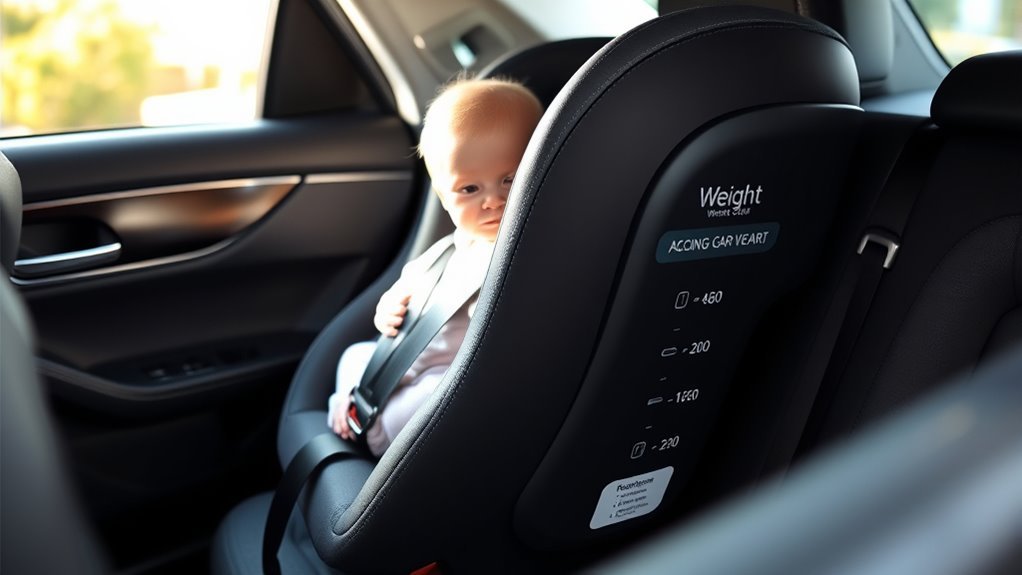
Most convertible car seats let you turn your child forward once they hit a weight between 40 and 65 pounds, depending on the model. The American Academy of Pediatrics recommends you keep your child rear-facing until they exceed the maximum weight limit set by the car seat manufacturer.
Remember, weight limits alone aren’t enough; consider your child’s height and weight limits before switching to a forward-facing car seat. Always consult the manual of your convertible seat to follow specific guidelines.
- Weight limits vary by car seat model
- Rear-facing is safest until maximum weight limit
- Minimum forward-facing weight often starts around 22 pounds
- Height and age matter alongside weight
- Consult the manual for exact limits and instructions
Frequently Asked Questions
Can a 22 Pound Baby Face Forward in a Car Seat?
You can make your baby face forward at 22 pounds if your car seat allows it, but it’s safer to keep them rear-facing until they reach the maximum height or weight limits specified by the manufacturer.
Keeping your baby rear-facing longer provides better protection for their head, neck, and spine. So, even if they hit 22 pounds, it’s worth checking those limits before switching directions.
Can My 1 Year Old Go in a Front Facing Car Seat?
You usually shouldn’t put your 1-year-old in a forward-facing seat unless they’ve outgrown the rear-facing limits.
Check your car seat’s height and weight guidelines, and follow local laws to keep your child as safe as possible.
It’s always best to keep them rear-facing for as long as the seat allows.
That way, you’re giving your little one the best protection on the road.
What Age and Weight to Switch to a Forward Facing Car Seat?
You should switch to a forward-facing car seat when your child is at least 2 years old and has reached the car seat’s rear-facing weight or height limit.
That limit is usually between 30 to 50 pounds.
It’s important to check your specific car seat’s guidelines.
Every seat can be a little different, so make sure you’re following the right rules for your model.
Do You Have to Be 100 Pounds to Sit in the Front Seat?
No, you don’t have to be 100 pounds to sit in the front seat. Instead, focus on age, height, and whether the seat belt fits properly.
These factors help guarantee your safety before moving up there. So, it’s more about how well you fit than just your weight.
Conclusion
Remember, keeping your baby rear-facing as long as possible is like giving them a protective shield against unexpected bumps. You shouldn’t rush to turn them forward—wait until they meet your car seat’s weight limits, usually around 20 to 25 pounds.
By doing this, you’re making sure your little one stays safer on every trip. So, hold tight to those rear-facing days—they’re worth their weight in gold for your baby’s safety.
When it comes to how much a baby should weigh to face forward in a car seat, always check the manufacturer’s guidelines. Most experts agree that staying rear-facing until your baby reaches about 20 to 25 pounds provides the best protection. This weight range ensures the car seat can properly support your child’s head, neck, and spine in case of a crash.
In short, waiting until your baby hits the recommended weight before facing forward is one of the best ways to keep them safe during every drive. Prioritizing rear-facing car seat use helps protect your baby’s delicate body, making your peace of mind on the road that much stronger.






5 Comments