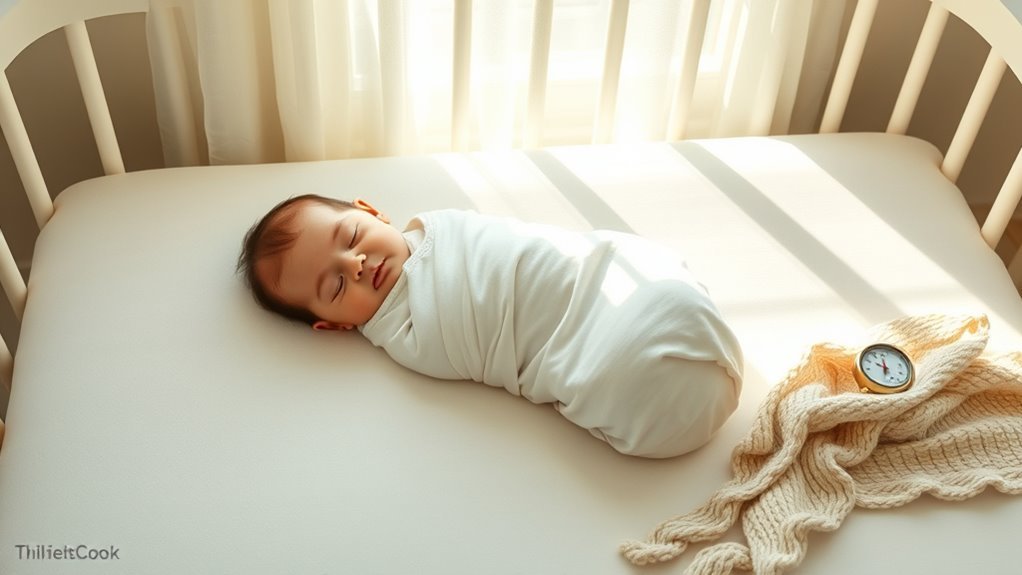
What Should Baby Wear to Sleep – 7 Essential Tips
To help your baby sleep safely and comfortably, it’s important to dress them in breathable fabrics like cotton or bamboo.
These materials regulate temperature and wick moisture, keeping your little one cozy all night long. Choosing the right sleepwear is one of the best ways to ensure your baby stays comfortable while they rest.
Layering their clothing based on the room temperature is key—dress them in one more layer than you’d wear yourself.
This simple trick helps keep your baby warm without overheating. Sleep sacks are also a great option; just make sure to pick one with the right TOG rating. Lower TOG is perfect for warmer rooms, while higher TOG suits cooler environments.
Avoid loose blankets altogether to reduce any risks.
And don’t forget to watch for signs of overheating or cold, adjusting layers as needed. Keep these tips in mind, and you’ll find smart ways to keep your baby cozy and safe all night long.
Key Takeaways
- Dress babies in one more layer than adults, adjusting layers based on room temperature and TOG ratings for safe warmth. It helps keep them cozy without making them too hot.
- Use breathable, natural fabrics like cotton or bamboo to regulate temperature and prevent overheating. These materials are gentle on your baby’s skin, too.
- Select sleep sacks with appropriate TOG ratings: 0.2 for hot, 1.0-2.5 for moderate, and 3.5 for cold temperatures. This way, your baby stays comfy no matter the season.
- Avoid loose blankets to reduce suffocation and SIDS risks; opt for snug, safe-fitting sleep sacks instead. It’s a much safer choice for peaceful sleep.
- Regularly check the baby’s chest or back for signs of overheating or cold to adjust clothing as needed. Trust your instincts—you’ll know if they need more or less.
Why Breathable Fabrics Are Best for Baby Sleepwear
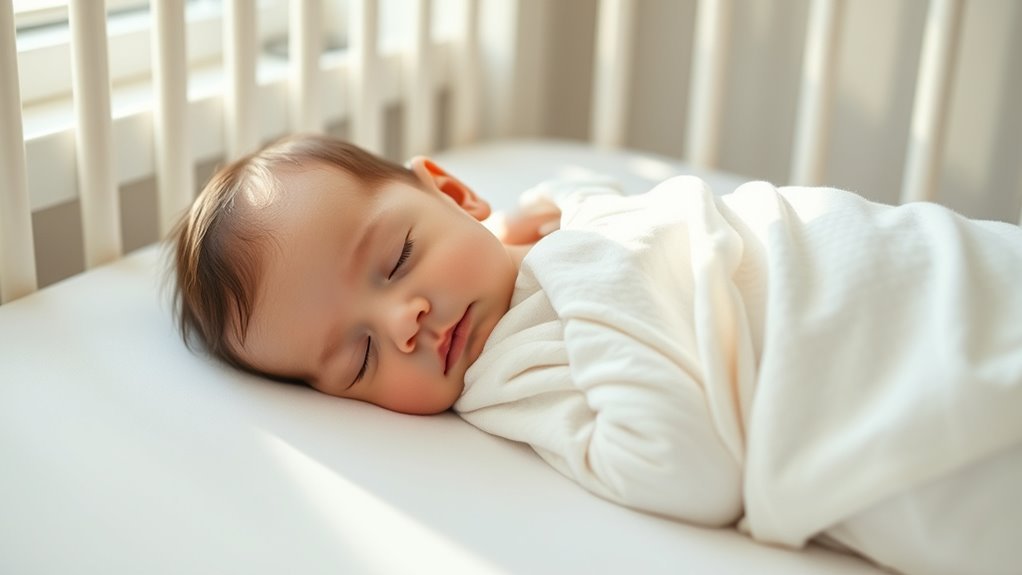
Because babies are especially sensitive to temperature changes, choosing breathable fabrics like cotton and bamboo for their sleepwear is essential. These natural fibers help regulate body temperature by allowing air to circulate freely, reducing the risk of overheating.
When you pick lightweight, moisture-wicking sleepwear, you keep your baby dry and comfortable throughout the night. This creates a comfortable sleep environment, which is key to promoting restful sleep and lowering the chance of SIDS.
Breathable fabrics prevent excessive layering, which can trap heat and increase temperature fluctuations. By opting for sleepwear made from these materials, you guarantee your baby stays cozy without overheating, supporting their safety and well-being as they sleep.
Prioritizing breathable, natural fibers is a smart way to protect your little one. It’s a simple choice that makes a big difference for your baby’s comfort and safety.
Choosing Baby Sleepwear by Room Temperature for Safe Sleep
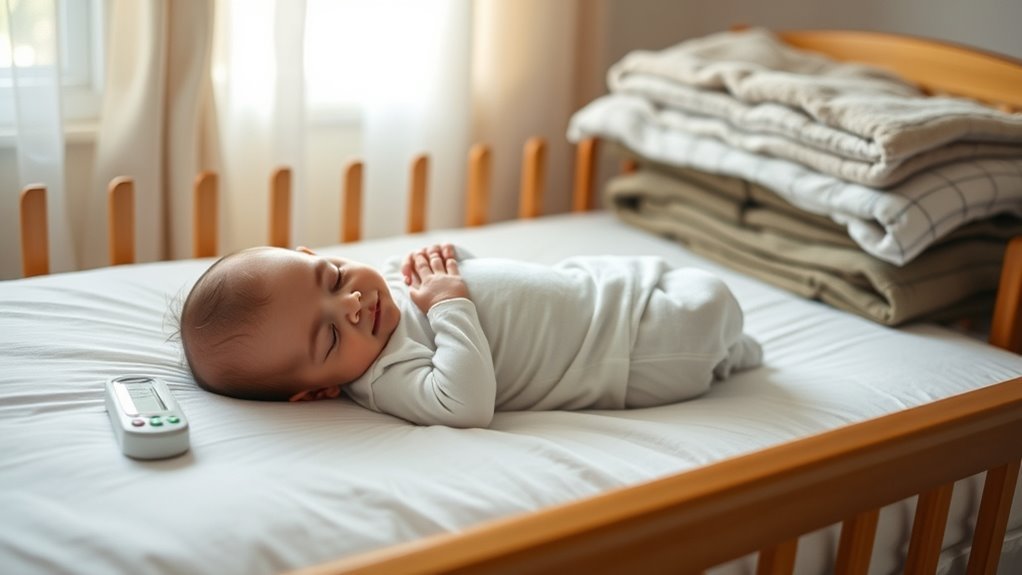
To keep your baby safe and comfortable while sleeping, matching their sleepwear to the room temperature is key. The American Academy of Pediatrics suggests dressing your baby in one more layer than you’d wear.
Here are safety tips to guide you:
- For room temperatures 16-20°C (61-68°F), use a baby grow plus a lightweight sleep sack to avoid overheating.
- Above 20°C (75°F), opt for light layers like short-sleeved bodysuits or just a diaper to prevent excess warmth.
- Below 16°C (61°F), dress your baby in warmer sleepwear with higher TOG rating sleep sacks for proper layering.
Always check for signs of overheating by feeling your baby’s chest or back, not hands or feet. This helps guarantee safe, cozy sleep.
Using TOG Ratings to Pick the Right Sleep Sack
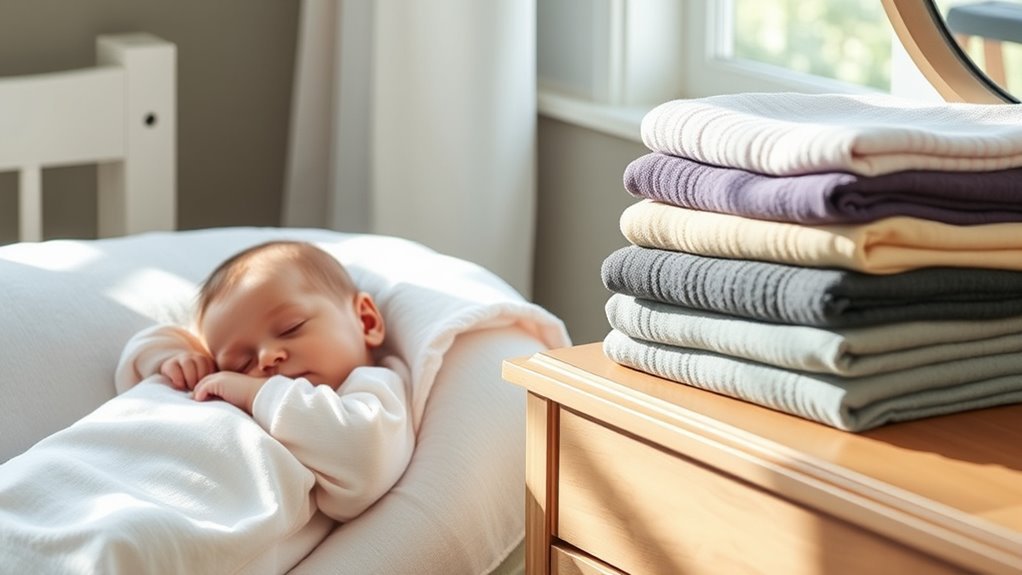
You’ll want to use TOG ratings to pick the right sleep sack based on your baby’s room temperature. Lower TOG ratings work best for warmer rooms, while higher ratings provide extra warmth in cooler conditions.
Matching the TOG to the season helps keep your baby comfortable and safe all night. It’s an easy way to make sure they’re neither too hot nor too cold while they sleep.
Understanding TOG Ratings
When choosing a sleep sack for your baby, understanding TOG ratings can make all the difference in keeping them comfortable and safe. TOG measures thermal insulation, which tells you how warm the sleep sack will keep your baby during sleep.
Picking the right TOG rating helps prevent overheating and keeps your little one safe.
Here’s what you need to know:
Lower TOG values (like 0.2) are great for warmer room temperatures. They help keep your baby cool and comfy.
On the other hand, higher TOG ratings (up to 3.5) provide extra warmth when it’s colder.
If your room temperature is between 20-24°C, go for a sleep sack with a TOG of 1.0 to 2.5. This range balances comfort and safety nicely.
Always check the manufacturer’s TOG guide before dressing your baby. That way, you promote safe, comfortable sleep every night.
Matching TOG To Temperature
Although choosing the right sleep sack might seem straightforward, matching the TOG rating to your room’s temperature is crucial for your baby’s comfort and safety. TOG ratings measure warmth, so picking sleep sacks that suit the room temperature prevents overheating or chills.
Use a lightweight layer for warm rooms and add an additional layer when it’s cooler. Always check the temperature guide on the product for safe sleep practices.
| Room Temperature (°F) | TOG Rating | Sleepwear Recommendation |
|---|---|---|
| Above 75 | 0.5 – 1.0 | Lightweight layer sleep sack |
| 68 – 75 | 1.0 – 2.5 | Standard sleep sack |
| 61 – 68 | 2.5 – 3.5 | Thicker sleep sack |
| Below 61 | Consult guide | Additional sleepwear layers |
Matching TOG ratings guarantees your baby stays cozy without overheating.
Choosing Seasonal Sleep Sacks
Because your baby’s comfort depends heavily on temperature, choosing seasonal sleep sacks using TOG ratings helps you pick the right level of warmth. You want to guarantee your baby stays comfortable without overheating by matching the TOG rating to your room temperature.
Opt for breathable materials like organic cotton to support temperature regulation and airflow.
Here’s how to choose the right sleep sack for each season:
- Use 0.2 TOG sleep sacks for hot weather (above 75°F) to keep your baby cool.
- Pick 1.0 to 2.5 TOG for moderate temperatures (68-75°F) for comfortable layering.
- Select 3.5 TOG sleep sacks for colder rooms (below 61°F) to provide extra warmth.
Layering with seasonal sleep sacks guarantees safety and comfort all year round. It’s a simple way to make sure your baby sleeps soundly no matter the season!
Safe Layering Tips for Dressing Baby on Cooler Nights
When dressing your baby for cooler nights, start with a breathable base layer and add a 2.5 TOG sleep sack for safe warmth. Choose soft, safe fabrics that help regulate temperature without causing overheating.
Always check your baby’s chest or back to make sure they’re comfortably warm throughout the night. It’s a good way to keep an eye on their comfort without waking them up too much.
Optimal Clothing Layers
If your baby will sleep in a room cooler than 20°C, start by dressing them in a snug-fitting cotton long-sleeved bodysuit. This provides warmth without adding bulk. This base layer is essential for ideal clothing layers.
Then, add one more layer, like a 1.5 TOG sleep sack, to keep your baby cozy while preventing overheating. Avoid loose blankets, as they can cause suffocation and trap heat.
To dress your baby safely and comfortably:
- Choose breathable clothing layers suitable for the room temperature.
- Use a sleep sack over the base layer instead of loose blankets.
- Regularly check your baby’s chest or back to verify they’re warm enough.
Safe Sleepwear Fabrics
Although cooler nights call for extra warmth, you’ll want to choose sleepwear made from breathable fabrics like cotton or bamboo. These materials help regulate your baby’s temperature and prevent overheating.
They’re ideal for safe sleepwear because they balance warmth with airflow. To keep your baby cozy without risking overheating, dress them in snug-fitting layers—usually one more than you’d wear.
For added warmth, use a sleep sack with a TOG rating of 2.5. This provides insulation while maintaining a safe sleep environment.
Remember, cold hands and feet don’t accurately reflect your baby’s core temperature. So, always check their chest or back.
Following these essential tips guarantees your baby stays warm and comfortable on cooler nights without compromising safety.
Monitoring Baby Warmth
Dressing your baby in one more layer than you find comfortable helps maintain their warmth on cooler nights without causing overheating. When you dress your baby, focus on safe layering using lightweight layers, like a cotton bodysuit with a 2.5 TOG sleep sack. This is especially helpful when the room temperature is between 61-68°F.
To guarantee ideal warmth, follow these tips for monitoring:
- Regularly check your baby’s chest or back, not hands or feet, to accurately gauge their warmth.
- Adjust the clothing as needed—remove layers if your baby feels hot or add a lightweight blanket if they seem cold.
- Remember, overheating increases the risk of SIDS, so avoid heavy blankets and watch for signs of discomfort.
Stay attentive and adjust layers to keep your baby cozy and safe all night.
How to Dress Newborns and Older Babies for Comfortable Sleep
When preparing your baby for sleep, choosing the right clothing is key to keeping them comfortable and safe. For newborns, opt for soft, breathable cotton sleepwear with long sleeves that fit snugly. Avoid loose blankets to guarantee safe sleep.
At room temperatures between 16-20°C (61-68°F), dressing your baby in a long-sleeved bodysuit paired with a 2.5 TOG sleep sack helps regulate body temperature effectively. As your baby grows, switch to sleepwear that allows movement, like footed pajamas or sleep sacks.
Follow sleep guidance by adding an extra layer compared to what an adult would wear to maintain ideal warmth. Always monitor your baby’s chest or back warmth, focusing on dressing that supports comfortable baby sleep without risking overheating or discomfort.
How to Spot When Your Baby Is Too Hot or Cold During Sleep
If you want to guarantee your baby stays comfortable throughout the night, you need to recognize the signs that they’re too hot or too cold. Babies should wear one layer more than an adult would find comfortable, adjusting based on room temperatures.
To monitor your baby’s temperature effectively, feel your baby’s chest or back for signs of overheating like hot or sweaty skin, flushed cheeks, or rapid breathing. Those are good clues to watch for.
Check your baby’s chest or back for signs like sweaty skin or flushed cheeks to spot overheating early.
Also, look for frequent waking and cool skin as signs your baby feels cold. Just a heads up—hands and feet aren’t reliable indicators of their temperature.
Use lightweight fabrics for your baby’s clothes and bedding. If your baby feels too warm, remove a layer right away to prevent overheating.
Make it a habit to regularly check your baby’s temperature. That way, you’ll keep them cozy and safe throughout their sleep.
Why Sleep Sacks Are Safer Than Loose Blankets for Babies
Although loose blankets might seem convenient, sleep sacks provide a much safer way to keep your baby warm at night. They reduce the risk of sudden infant death syndrome by maintaining a consistent body temperature without the dangers of loose bedding.
Their snug fit prevents overheating and airway obstruction while allowing safe movement of arms and legs. Plus, pediatric experts recommend sleep sacks to create a safer sleep environment by eliminating entanglement hazards posed by loose blankets.
| Sleep Sacks | Loose Blankets |
|---|---|
| Snug fit prevents overheating | Can cause overheating |
| Secure arms and legs | Risk of entanglement |
| Maintain stable body temperature | Unpredictable coverage |
| Recommended by pediatric experts | Potential suffocation risk |
| Reduce risk of SIDS | Increase risk of SIDS |
Frequently Asked Questions
What Are the 7 Safe Sleep 7 Guidelines for Babies?
You should always place your baby alone on their back and use a firm crib mattress. Avoid loose bedding to keep things safe.
Dress them lightly so they don’t get too hot, and always make sure there’s no overheating. It’s super important to choose products that meet safety standards.
Also, keep their sleep area clear of any toys or extra items. Following these steps helps you stick to the 7 safe sleep guidelines.
What Should a Baby Wear to Sleep at 70 Degrees?
You don’t want your baby freezing like an ice cube! At 70°F, dress them in a cotton bodysuit and cozy footed pajamas.
Then, add a lightweight sleep sack for just the right amount of warmth. Check their chest to make sure they’re comfortably warm and safe.
What Is the 5-3-3 Rule for Babies?
The 5-3-3 rule means dressing your baby in five layers for sleep, three for active play, and three for outings.
It helps you keep them comfy and safe by adjusting layers based on temperature and activity.
This way, your little one stays cozy without overheating or getting too cold.
It’s a simple guide that makes choosing outfits easier for different times of the day.
What Should a Baby Wear to Sleep at Night?
Like Goldilocks, you want your baby’s sleepwear “just right.”
Dress them in breathable cotton pajamas plus a sleep sack suited to room temperature.
This ensures warmth without overheating for a safe, cozy night’s rest.
Conclusion
When dressing your baby for sleep, you’ll want to focus on breathable fabrics and appropriate layering based on room temperature. Using TOG-rated sleep sacks keeps your little one cozy without overheating—think of it as the digital age’s answer to a trusty old-fashioned nightshirt.
Always watch for signs your baby’s too hot or cold, and avoid loose blankets to keep sleep safe. These simple steps can make a big difference in how comfortably your baby sleeps.
With these tips, you’ll help your baby sleep soundly and comfortably every night. Choosing the right sleepwear, like breathable fabrics and TOG-rated sleep sacks, ensures your baby stays safe and cozy. Remember, the goal is to keep your little one comfortable without overheating or getting too cold. Staying attentive to your baby’s temperature and avoiding loose blankets are key to safe sleep. Following these essential tips will help create the perfect sleep environment for your baby, making bedtime peaceful and secure for both of you.





2 Comments