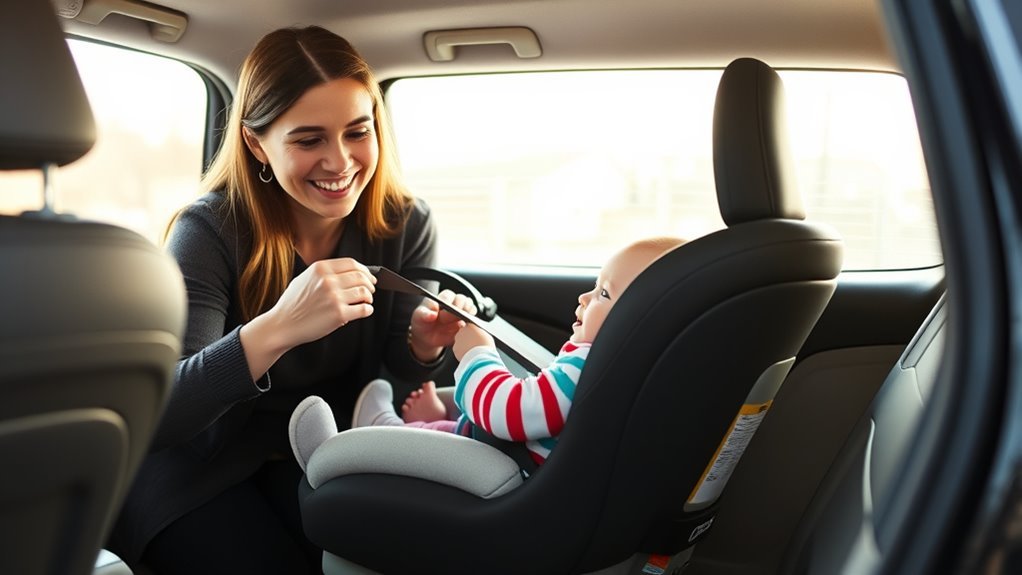
When Can a Baby Face Forward in a Car Seat How-To Guide
You should keep your baby rear-facing until they reach the car seat’s maximum weight or height limits, which is usually around age two or about 40 pounds.
This rear-facing position offers better protection for their head, neck, and spine during a car ride. It’s the safest way to travel with your little one in the early years.
Before switching to a forward-facing seat, make sure to check your car seat manual for specific weight and height limits.
Also, verify that the seat is properly installed using either the seat belt or the LATCH system.
Don’t forget to adjust the harness straps to fit snugly and secure the top tether for extra safety.
Keep reading to find out how to prepare and install the forward-facing seat correctly.
Key Takeaways
- Keep the baby rear-facing until they reach the car seat’s maximum weight or height. This is usually around age 2 or even older.
- The American Academy of Pediatrics recommends rear-facing because it offers the best protection for your baby’s head and neck during crashes.
- You can switch to forward-facing once your child meets the car seat’s weight limit, which is often about 40 pounds, and the height limit, around 40 inches.
- Always follow the car seat manual carefully when installing. Use either the vehicle seat belt or the LATCH system, and don’t forget to secure the top tether strap.
- It’s important to regularly check that the harness fits well and the installation is stable. Also, make sure the chest clip is positioned right at armpit level to keep your child safe.
When Should You Switch Your Baby to a Forward-Facing Car Seat?

Although it might be tempting to turn your baby forward-facing as they grow, you should keep them rear-facing until they reach the car seat’s maximum weight or height limit. This is usually around age 2 or older.
The American Academy of Pediatrics emphasizes that rear-facing car seats offer superior protection for your child’s head and neck during a crash. Most convertible seats allow extended rear-facing up to 40-50 pounds or until your child outgrows the height limit.
When your child’s head reaches the top of the seat shell or they exceed the weight limits, it’s time to think about the shift. Always consult the seat instruction manual and guarantee proper installation before switching to forward-facing.
Prioritizing car seat safety means waiting for these milestones before making any changes. It’s definitely worth the wait to keep your little one safe!
How to Prepare and Install a Forward-Facing Car Seat
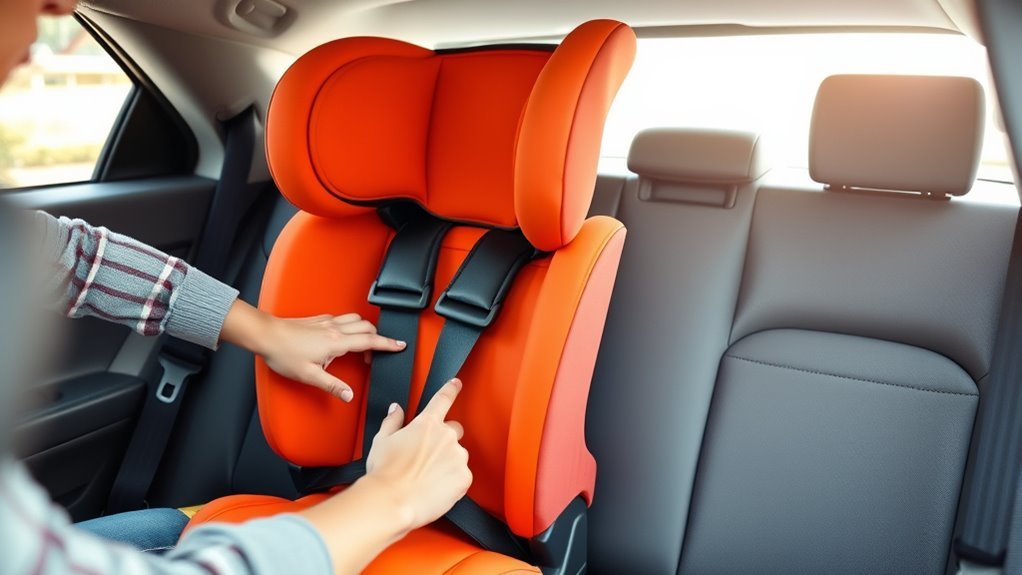
Once your child reaches the rear-facing seat’s weight or height limits, usually around 40 pounds or 40 inches, it’s time to prepare for the forward-facing car seat. First, check the car seat manufacturer’s guidelines to confirm the max weight or height limits.
Transition to forward-facing seats once your child exceeds rear-facing weight or height limits, typically 40 pounds or 40 inches.
When you install your car seat, use either the vehicle’s seat belt or the LATCH system. Make sure the seat moves less than an inch at the belt path.
Adjust the harness straps so they sit at or above your child’s shoulders. Also, position the chest clip at armpit level.
Don’t forget to secure the top tether strap to reduce forward movement during a crash. And finally, regularly check the installation and harness adjustments to keep the seat secure and correctly positioned as your child grows beyond riding rear-facing.
Frequently Asked Questions
Can a 22 Pound Baby Face Forward in a Car Seat?
No, you shouldn’t face your 22-pound baby forward yet.
It’s best to wait until they meet both the weight and height limits for rear-facing seats. Usually, that’s around 30 to 40 pounds.
Keeping them rear-facing as long as possible is the safest way to protect them during car rides.
When Can I Move My Baby to a Forward Facing Car Seat?
You absolutely can’t rush this—move your baby to a forward-facing car seat only after they outgrow rear-facing limits, usually past 30-35 pounds or 2 years old.
Keep them rear-facing longer for maximum safety, no shortcuts!
Can I Turn My 2.5 Year Old Forward Facing?
Yes, you can turn your 2.5-year-old forward-facing if they’ve outgrown the rear-facing seat’s height or weight limits.
Just make sure to use a properly installed forward-facing seat with a 5-point harness for safety.
It’s all about keeping them secure while giving them a bit more room to grow.
Can a 3 Month Old Face Forward in a Car Seat?
Sure, you can face your 3-month-old forward—if you want to ignore expert safety advice.
But seriously, keep them rear-facing to protect their fragile neck and spine.
It’s safer until they’re at least 2 years old.
Conclusion
Switching your baby to a forward-facing car seat is a big step, but it’s one you’ll handle with confidence. Remember, safety comes first—always check your car seat’s height and weight limits before making the move.
Installing it correctly is like laying a strong foundation; it keeps your little one secure on every ride. Trust your instincts, follow the guidelines, and enjoy the journey ahead with peace of mind and a happy, safe passenger.
When thinking about when a baby can face forward in a car seat, patience and careful attention to the manufacturer’s recommendations are key. Keeping your child rear-facing as long as possible maximizes safety. Once your baby meets the height and weight limits, you can switch to a forward-facing seat securely.
In the end, knowing when to transition your baby to a forward-facing car seat ensures their protection. Always prioritize proper installation and follow safety guidelines to keep your little one safe on every trip. With the right steps, you’ll feel confident and ready for all the adventures ahead.






One Comment