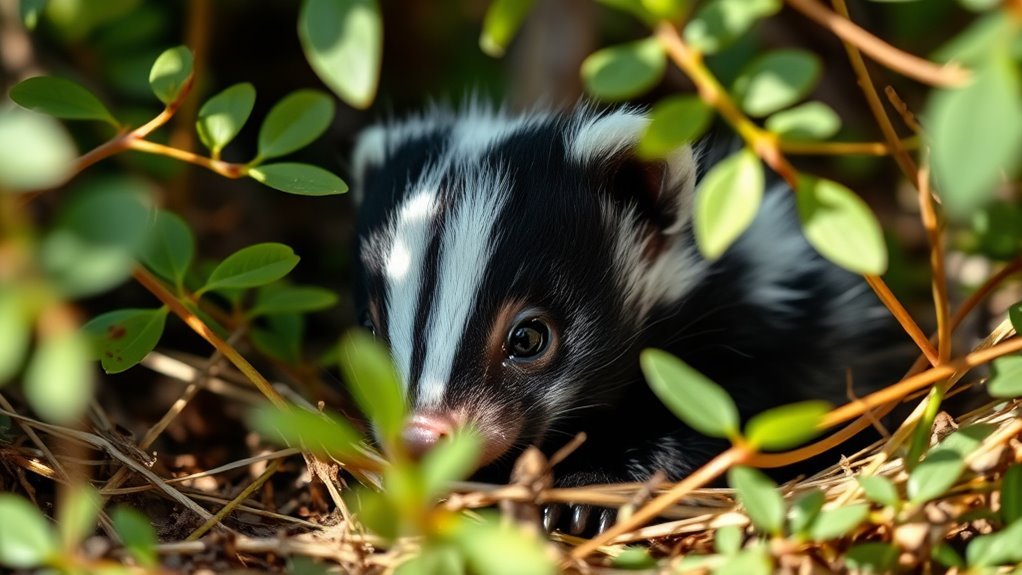
At What Age Do Baby Skunks Start to Spray?
You’ll find that baby skunks don’t start spraying until they’re about 3 to 4 weeks old, which is when their scent glands begin developing. This is a key stage in their growth because the ability to spray is crucial for their defense.
Their spray ability improves as they mature, becoming fully functional by 8 weeks. Early sprays are weaker and less controlled, so they might not be as effective at first.
Before they spray, baby skunks often give warning signs like stomping or raising their tails.
Understanding these behaviors helps you respect their space and avoid surprises.
There’s more to discover about how they communicate before they spray, so keep an eye out for those signals!
Key Takeaways
- Baby skunks are born without the ability to spray. Their scent glands start developing when they’re about 3 to 4 weeks old.
- As the kits grow, their spraying ability improves bit by bit over several weeks.
- By the time they’re around 8 weeks old, baby skunks can spray just like adults.
- Keep in mind, their early spray attempts aren’t as controlled or as strong as fully grown skunks.
When Do Baby Skunks Develop the Ability to Spray?
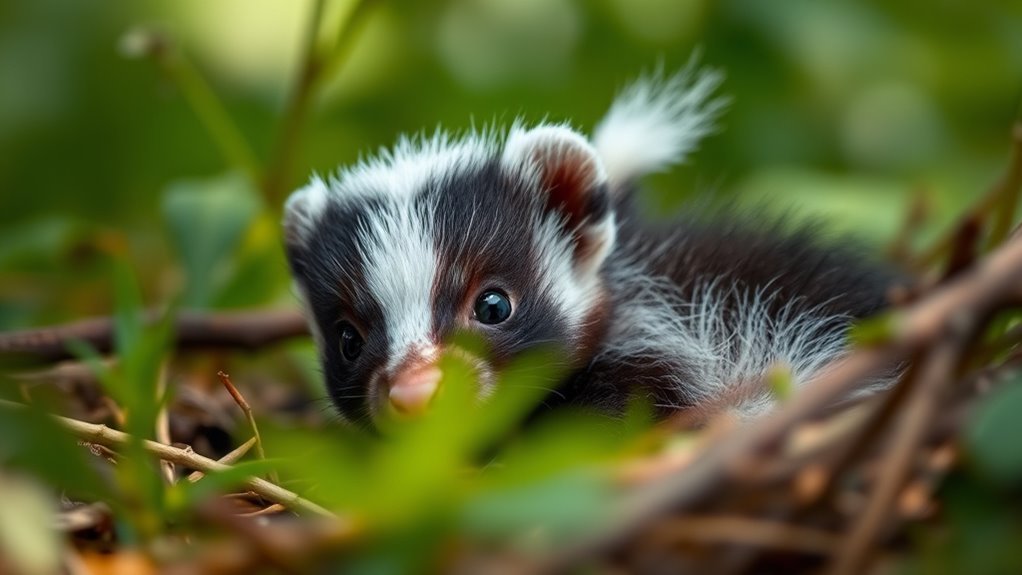
Although baby skunks are born without the ability to spray, they start developing this defense mechanism around three to four weeks old. At this stage, young kits begin to develop the scent glands necessary for spraying.
By tracking this timeline, you’ll understand that their ability to spray improves as they mature, becoming fully functional by about eight weeks of age. Early on, their spraying is less controlled and less potent, so it’s not their most reliable defense.
Knowing when baby skunks gain this ability helps you manage any encounter more effectively, especially if you live near their habitats. Recognizing this development phase guarantees you respect their space while they grow into their full defense mechanism.
How Baby Skunks Warn You Before They Start Spraying
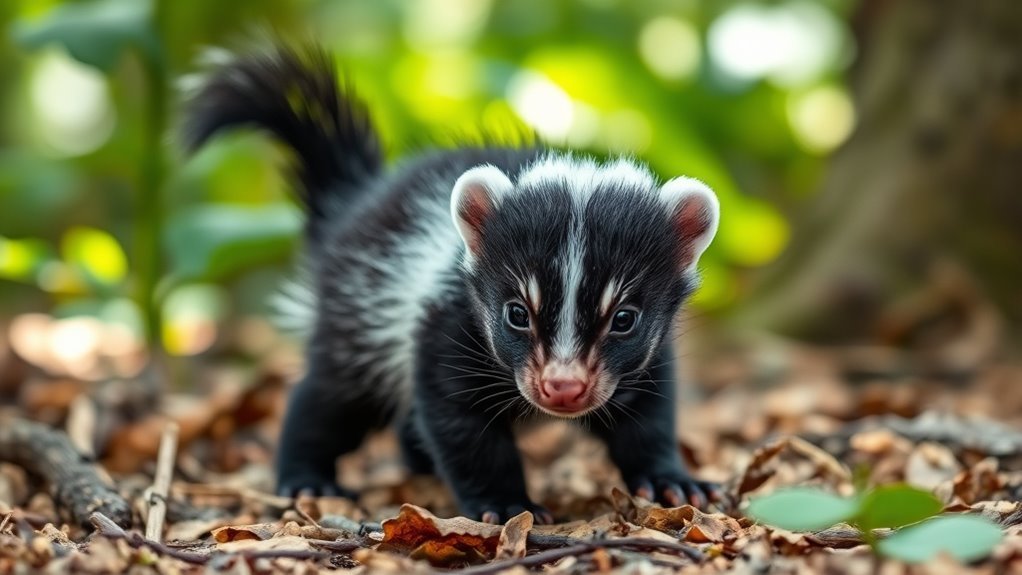
Many baby skunks give clear signs before they spray, helping you recognize their discomfort early. Kits usually show conservative warning behaviors to avoid confrontation.
For example, they might stomp their feet or raise their tail when they feel threatened. These signals are their way of saying, “Back off!” before they actually spray.
Here’s a quick guide to baby skunks’ warning behaviors:
| Warning Behavior | Description | What It Means |
|---|---|---|
| Stomping their feet | Rapid foot tapping | Feeling threatened |
| Raising their tail | Tail lifted high | Visual warning |
| Short forward charge | Quick approach movement | Pre-spray alert |
Frequently Asked Questions
How Can I Tell How Old a Baby Skunk Is?
You can tell a baby skunk’s age by checking its fur and mobility. If it’s hairless and helpless, it’s under 3 weeks.
If it’s fully furred and active, it’s likely over 6 weeks old. Pretty easy to spot the difference, right?
Can Baby Skunks Spray Right Away?
You won’t catch baby skunks releasing their signature aroma right away; they need a few weeks to find their “voice.”
How to Keep a Baby Skunk From Spraying?
To keep a baby skunk from spraying, you should keep things calm and avoid sudden movements or loud noises.
Try to cover it gently with a towel, which can help it feel more secure.
Also, provide a quiet, warm space away from pets and children to reduce stress.
Keeping the environment peaceful really makes a difference for the little guy.
What Smell Do Skunks Hate the Most?
When it comes to skunks, the smell of ammonia really takes the cake.
If you want to keep them at bay, don’t put all your eggs in one basket—combine citrus, vinegar, and essential oils for best results.
Conclusion
By the time baby skunks are around two months old, they start to develop the ability to spray. Before that, they’ll give you plenty of warning signs, like stomping their feet or raising their tails, so you have time to back off.
Just like an old rotary phone ringing before you pick up, these signals help you avoid a smelly surprise. So, pay attention—you’ll know when it’s time to keep your distance.
Understanding at what age baby skunks start to spray is important if you ever come across one. Around two months is when their spraying ability kicks in, but until then, their warning behaviors are your best clue. By watching for signs like tail-raising and foot-stomping, you can prevent an unwanted spray and keep things smelling fresh. So, whether you’re curious or cautious, knowing when baby skunks start to spray helps you respect their space and avoid that infamous skunk spray!