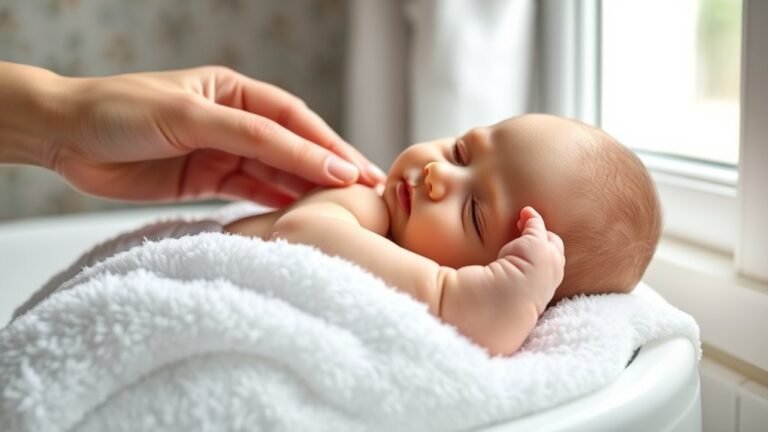
When Should You Stop Swaddling Your Baby and How
You should stop swaddling your baby once they start showing signs of rolling, pushing up during tummy time, or escaping the swaddle—usually between two to six months.
This is an important milestone because swaddling too long can restrict their movement and increase safety risks.
To make the transition easier, gradually shift by leaving one arm out or using a sleep sack to allow more movement, while keeping their legs snug.
Keep an eye out for fussiness or changes in sleep patterns as clues that your baby is ready for this change.
Taking these steps supports your baby’s development and promotes safer sleep habits.
Keep exploring for tips on easing this change smoothly so both you and your little one can get through it comfortably.
Key Takeaways
- Stop swaddling when your baby shows signs of rolling, pushing up, or escaping the swaddle. This usually happens between 2 to 6 months.
- Keep in mind, continuing to swaddle after your baby starts rolling can increase the risk of overheating. It might also slow down their motor skill development a bit.
- Try transitioning by using the “one arm out” method or sleep sacks. These help your baby get used to moving their arms while still keeping their legs snug.
- Pay attention to fussiness, your baby lifting their body during tummy time, or wanting to move their arms more. These are good signs they’re ready to stop swaddling.
- It really helps to have a consistent, calming bedtime routine. Dim the lights and do some soothing activities to make the transition easier for your little one.
When to Stop Swaddling Your Baby
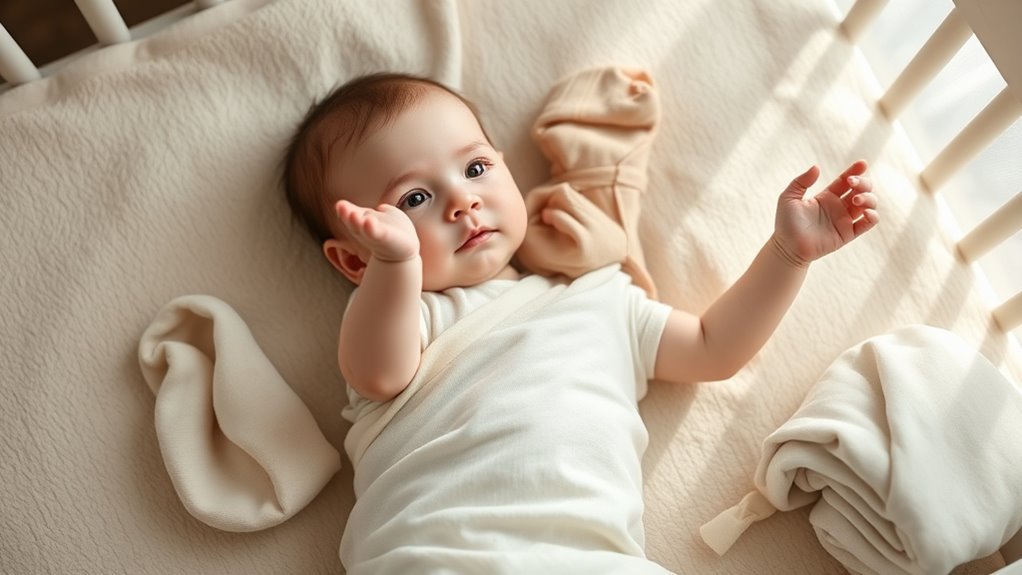
When should you stop swaddling your baby? The American Academy of Pediatrics recommends stopping swaddling as soon as you notice signs of rolling, usually between 2 to 6 months. These signs include your baby pushing up during tummy time, decreased startle reflex, or escaping the swaddle.
Continuing to swaddle after this can hinder motor skill development and increase risks like overheating. To guarantee safe sleep, start to shift your baby gradually. You can try the one arm out technique or switch to a sleep sack, which encourages swaddle-free sleep and lets your baby’s arms move freely.
Watching for these cues helps you know when to stop swaddling, keeping your baby’s sleep safe and comfortable. It’s all about making sure your little one is safe and cozy as they grow.
How to Transition Your Baby to Sleeping Without a Swaddle
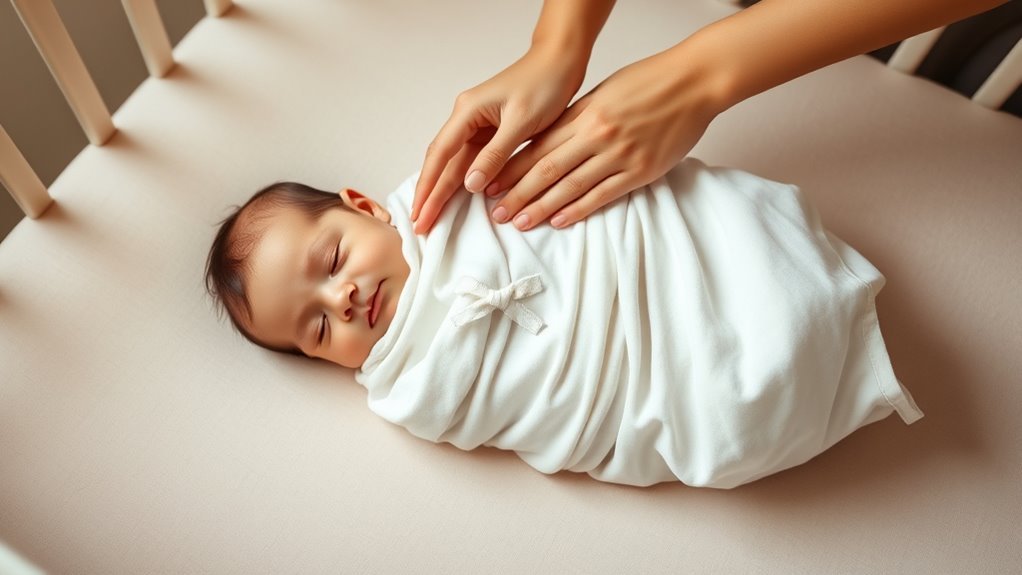
Although stopping swaddling can feel challenging, you can make the change smoother by gradually allowing your baby’s arms to move freely. Start with the “one arm out” method to ease your baby into the adjustment while still providing some swaddling comfort.
If your baby becomes fussy or resists, try using sleep sacks designed for arms-out movement that keep their legs snug. Watch for signs your baby is ready to stop swaddling, like fussiness when swaddled or lifting their body during tummy time.
Establish a calming bedtime routine with activities such as bathing and dimming the lights to help your baby feel secure. Remember, the adjustment usually takes 2-3 nights, so stay patient and attentive to your baby’s comfort and sleep needs.
Frequently Asked Questions
At What Age Should You Quit Swaddling a Baby?
You should quit swaddling your baby around 2 to 6 months, usually by 3 to 4 months when they start rolling.
Stop as soon as rolling begins to keep your baby safe and support their development. It’s all about making sure they’re comfortable and secure as they grow.
What Is the 5-3-3 Rule for Babies?
The 5-3-3 rule means you swaddle your baby for 5 hours, let them sleep for 3 hours, then keep them awake for 3 hours.
It helps balance sleep and awake time for healthy development.
Pretty simple, right? It’s all about finding the right rhythm for your little one.
When Should I Let My Baby Sleep Unswaddled?
You should let your baby sleep unswaddled once they start rolling over, usually between 2 to 6 months.
Start by swaddling with one arm out to help them adjust safely and comfortably. It makes the transition easier for both of you.
Why Is Swaddling Unsafe After 8 Weeks?
Swaddling after 8 weeks? That’s like wrapping a tiger in a blanket! Your baby starts rolling, and swaddling then can trap them, risking suffocation, overheating, and stifling their motor skills—so it’s time to stop.
Conclusion
You’ll know it’s time to stop swaddling when your baby starts showing signs of rolling over—think of it like trading out your baby’s cozy, old-fashioned cradle for a sleek, modern crib.
To make the shift smoother, try loosening the swaddle gradually or using a sleep sack. This way, your little one can still feel snug without being fully wrapped up.
Remember, every baby is different, so trust your instincts. Keep your baby safe and comfy as they grow out of their swaddle days.
Stopping swaddling at the right time is important for your baby’s safety and comfort. When your baby begins to roll over, it’s a clear sign to transition away from swaddling. Gradually loosening the swaddle or switching to a sleep sack helps them adjust comfortably. Always watch for your baby’s cues and prioritize safe sleep practices. This approach ensures your baby stays cozy and secure while developing new sleeping habits.