
7 Factors That Determine How Much a Baby Cow Costs
You’ll find that a baby cow’s cost depends on breed quality and genetics, with premium breeds and traits driving prices higher.
Age and weaning success also matter—older, healthier calves fetch better rates.
Weight, size, and feeding practices impact value, especially if calves are organic-fed or grass-fed.
Market demand peaks seasonally, particularly in summer, and sale methods or location can shift prices considerably.
Keep going to uncover all the key factors that shape calf pricing. Understanding these can help you make smarter decisions whether you’re buying or selling baby cows.
Key Takeaways
- Breed quality, genetics, and desirable traits significantly impact a baby cow’s market price and potential premiums. These factors can really make a difference when buyers are choosing which calves to invest in.
- Age, weaning success, and health status influence calf value, with healthier, weaned calves fetching higher prices. It just makes sense—buyers want animals that are strong and ready to grow.
- Calf weight, size, and feeding methods, such as organic or grass-fed, affect pricing. Generally, heavier calves tend to cost more since they offer more value.
- Market demand, seasonal trends, and auction location drive price fluctuations. Prices often go up during peak sales times, like early summer, when more buyers are active.
- Sale methods and lot size impact pricing, too. Larger groups and direct sales often result in better prices, giving sellers a bit of an edge.
How Breed Quality and Genetics Influence Calf Prices

Although many factors affect calf prices, breed quality and genetics play an essential role in determining their market value. When you focus on breed quality, calves like English x Continental crossbreeds often command a price advantage of about $3.20 per hundredweight.
Genetic traits also influence growth rates and adaptability, boosting both health and productivity, which raises their selling price. You’ll find that calves from premium or rare breeds usually fetch higher prices due to consumer preferences and perceived quality.
Desirable traits like muscle and frame scores can create significant price differences—higher scores often mean discounts. Plus, effective health management, including genetic verification and preconditioning, can add a premium of around $4.63 per hundredweight, rewarding you for well-managed, healthy calves.
How Age and Weaning Success Affect Calf Value

Beyond breed quality and genetics, the age of a calf and its weaning success play a major role in determining its market value. Younger calves usually sell for less, while calves closer to weaning age attract higher prices because buyers prefer a weaned calf that’s healthier and ready for the next growth phase.
Successful weaning, typically between 6 to 8 months, signals strong management practices that guarantee consistent growth and resilience. Calves weaned at the right age with uniform size and good health often command premiums of about $4.63 per cwt.
Timing also matters—selling during peak months like June or July can boost value. By focusing on age and effective management practices, you can maximize your calf’s market price and appeal to buyers seeking reliable, well-prepared animals.
How Calf Weight and Size Impact Market Price
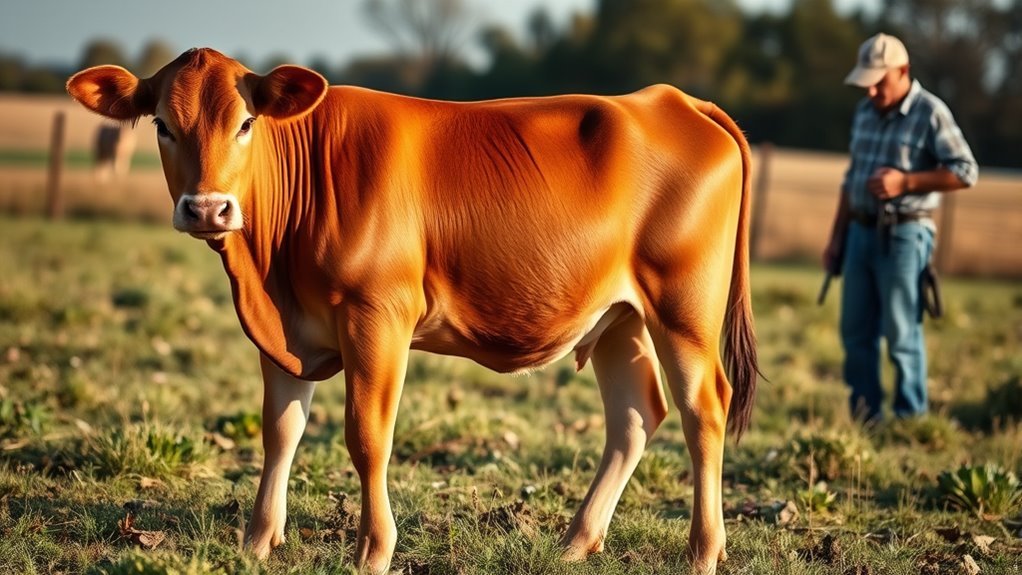
You’ll notice that a calf’s weight plays a big role in its market price, with heavier calves usually bringing in more money. Size also matters since well-built calves often fetch a better value because buyers see them as healthier investments.
Generally, calves around 500 pounds hit the sweet spot for ideal pricing. That’s where you get the best balance between weight and value. Makes sense, right?
Weight’s Role In Pricing
Three key factors determine how calf weight and size impact their market price: the actual weight, the health condition, and the timing of sale. When you focus on calf survival and guarantee calves reach a desirable weight—usually above 500 pounds—you’ll see better prices per hundredweight.
Healthier calves with prime body condition also attract higher bids because they promise better production per cow in the long run. Timing your sale during peak periods, like June and July, can boost the cost per cow, as buyers are more competitive then.
Size Correlation To Value
Calf weight and size play an essential role in determining market price, as heavier, well-built calves typically fetch higher bids. When you’re selling beef cattle, larger calves often command better prices per calf because they promise greater meat yield.
Calves weighing over 600 pounds, especially during peak seasons, can greatly boost the price received compared to lighter ones. Uniformity in size within a group also impacts costs—you’ll see better market value when calves are similarly sized, making your lot more attractive to buyers.
Typically, calves between 400 and 600 pounds see a price premium of $8 to $10 per hundredweight. So, focusing on size and weight can directly influence the costs you incur and the price received when marketing your baby cows.
Optimal Market Weight
Although size plays a key role, hitting the ideal market weight between 500 and 600 pounds is what really boosts the price you get for your calves. Calves within this range typically command higher prices because buyers value the best market weight for better meat quality and yield.
You’ll notice that a 600-pound calf can sell for $20 to $30 more per cwt than lighter calves, which directly impacts your revenue. Managing the production costs and costs associated with reaching this weight is essential for your cow-calf operation’s profitability.
Additionally, well-conditioned calves at this weight can receive premiums of around $4.63 per cwt. Timing sales during peak months like June and July when calves hit this weight further enhances your market price.
How Health and Vaccinations Affect Calf Prices
When you invest in healthy, well-vaccinated calves, you’ll often see higher prices because buyers recognize their reduced risk and better potential. Proper health management and vaccinations directly impact calf prices.
Investing in healthy, vaccinated calves leads to higher prices due to reduced risk and greater potential.
Calves with clean health records can command premiums up to $46 per hundredweight compared to unhealthy ones. Preconditioned calves receiving programs like Vac-34 or Vac-45 typically fetch about $4.63 more per hundredweight.
These health costs are outweighed by the increased selling price and demand, making vaccinated calves safer investments.
Conversely, calves with poor health records face discounts ranging from $10 to $46 per hundredweight. So, incorporating vaccinations and thorough health management not only protects your calves but also greatly boosts their market value and appeal.
How Feeding Practices Can Raise Calf Prices
You’ll notice that calves raised on grass or organic feed often sell for higher prices because buyers value their quality and ethical treatment. Feeding practices not only impact growth but also influence consumer demand for responsibly raised livestock.
Understanding these factors can help you maximize the value of your calves. It’s all about knowing what buyers want and making sure your feeding methods align with that.
Grass-Fed Quality Benefits
Because grass-fed calves offer a richer flavor and healthier fat profile, they often fetch higher prices in the market. You’ll find that grass-fed quality improves the calf’s overall health and weight gain, directly influencing costs.
Buyers appreciate the ethical treatment and superior forage quality, which adds value. Plus, grass-fed calves contain more omega-3 and CLA, attracting health-conscious consumers willing to pay a premium.
| Benefit | Impact on Calf Costs |
|---|---|
| Richer Flavor | Increases Market Value |
| Healthier Fat Profile | Commands Higher Prices |
| Ethical Raising | Boosts Consumer Demand |
Choosing grass-fed calves means investing in quality that justifies higher costs through better taste, health benefits, and ethical appeal. It’s a choice that really pays off.
Organic Rearing Influence
Although organic rearing demands more effort and higher costs, it can markedly raise calf prices due to growing consumer demand for ethically raised, high-quality meat. When you choose organic rearing, you invest in better feed costs and health management, both essential for increasing value.
Here’s how this works:
- Organic feed costs are higher as you provide premium grains and supplements, enhancing calf growth and meat quality.
- Health management programs involving vaccinations and veterinary care guarantee calves stay robust and appealing to buyers.
- Market demand rewards organic calves with premiums—often around $4.63/cwt—reflecting their perceived superior quality and sustainability.
Ethical Treatment Impact
When you prioritize ethical feeding practices, such as providing high-quality feed and ample pasture access, you directly boost your calves’ health and market value. Ethical treatment improves production by promoting better growth rates and healthier calves, which buyers value.
While expanding your herd size to accommodate these practices might increase opportunity cost, the premium prices for grass-fed or organically raised calves often outweigh this. Calves raised with care pass health inspections more easily, making them more attractive to welfare-conscious buyers.
How Market Demand and Seasons Influence Calf Prices
As market demand shifts with the seasons, you’ll notice calf prices often peak between June 1 and July 31. This seasonal surge is driven by increased demand, impacting the cost of each calf considerably.
In regions like the Southeast, where over half of U.S. beef cattle operations exist, about 90% of calves sell through auction barns. This directly influences market demand and pricing.
Here’s what you should consider:
- Larger calf lots, ideally around 60, attract higher prices due to perceived uniformity and lower risk.
- Market demand spikes in early summer boost competition among buyers, pushing prices up.
- Auction barn location affects prices; for example, Arkansas shows a $13.35 difference per hundredweight between sites.
Understanding these factors helps you anticipate calf cost fluctuations. So, keeping an eye on the season and market trends can really pay off!
How Sale Method and Location Affect Calf Prices
Because the method you choose to sell your calves can greatly impact their price, understanding your options is essential. Most producers—about 90%—use a sale barn to market their calves, but larger operations often prefer direct sales, which can affect your pricing strategies.
Where you sell matters too; auction locations can vary calf prices considerably. For example, in Arkansas, prices differ by $13.35 per hundredweight between sites.
If you operate in the Southeast, where small farms dominate, competition and market dynamics shape your sale outcomes. Remember, larger lot sizes, ideally around 60 calves, tend to fetch higher prices.
Frequently Asked Questions
What Factors Influence Cattle Prices?
You’ll find cattle prices influenced by breed, weight, and health status. Seasonal demand and lot size also play roles.
Knowing these factors can really help you make smarter buying or selling decisions in the cattle market. It’s all about understanding what drives the price!
How Many Cows Do You Need to Make $100,000 a Year?
You’ll need about 50 to 75 breeding cows to make $100,000 a year. This depends on calf prices, weaning weights, and your operation’s efficiency.
Managing costs and timing sales can help you reach that goal. It’s all about balancing your inputs and outputs to maximize profit.
What Is the Average Cost of a Baby Cow?
The average cost of a baby cow ranges between $500 and $1,500. You’ll find prices vary depending on breed, health, and market demand, so expect some fluctuations when you’re shopping for calves.
It really depends on what you’re looking for and where you buy from. Some breeds might cost more, especially if they’re in high demand or have great health records.
How Are Cattle Prices Calculated?
You calculate cattle prices by multiplying the calf’s weight by the current market price per pound. Then, you adjust for breed, health, and condition.
Timing and sale method also influence the final price you’ll pay or receive. So, it’s not just about the numbers—when and how you sell matters too.
Conclusion
When you’re buying a baby cow, remember that every detail matters—from breed and health to market timing and sale method. You can’t judge a calf solely by its size or age; quality and care play huge roles in value.
As the saying goes, “Don’t put all your eggs in one basket.” By considering all these factors, you’ll make a smarter, more informed investment that pays off in the long run.
Thinking about the breed, health status, and how you buy the calf can really affect the price. Timing the market right and choosing the best sale method also makes a big difference. So, keep these 7 key factors in mind to get the best deal when buying a baby cow. This way, you’re not just paying for size or age—you’re investing in quality, care, and value that add up over time.