
How to Put a Baby to Sleep in 40 Seconds With 3 Simple Steps
You can put your baby to sleep quickly by following three simple steps. These easy tricks help soothe your little one fast, making bedtime less stressful for both of you.
First, use the Tissue Trick—gently drag a clean, dry tissue from their forehead to cheeks to calm nerve endings.
Next, create a calm room with dim, warm lighting and soft white noise. This cozy environment helps signal to your baby that it’s time to relax and rest.
Finally, rock and shush softly to mimic the womb’s comfort. These steps often work within 40 seconds.
Keep exploring to discover more ways to build a soothing sleep routine. Finding what works best for your baby can make bedtime peaceful and easy every night.
Key Takeaways
- Use a clean, dry tissue to gently drag from the baby’s forehead to cheeks, activating calming nerve endings.
- Dim the lights with warm or red-toned bulbs to reduce blue light exposure and promote relaxation.
- Combine gentle rocking with soft shushing sounds to mimic the womb environment and soothe the baby.
- Recognize and act on the baby’s sleep cues, such as yawning or eye rubbing, to ensure timely bedtime.
- Maintain a consistent, calm bedtime routine incorporating these steps to build positive sleep associations quickly.
Use the Tissue Trick to Put Your Baby to Sleep Quickly

A simple tissue can become a powerful tool to help your baby drift off quickly. The tissue trick involves using a clean, dry tissue to gently and slowly drag from your baby’s forehead to their cheeks. This activates calming nerve endings, helping to calm your baby and ease them toward sleep.
Perform this while your baby lies safely on their back in a crib or bassinet as part of your bedtime routine. Recognizing your baby’s sleep cues and aligning this with a warm bath can sync with their internal body clock. This makes it easier to put your baby to sleep quickly.
The rhythmic tissue trick often works within 40 seconds, giving you peace of mind and a smoother shift to restful sleep. It’s a simple little hack that can make a big difference when bedtime feels tough.
Make the Room Calm With Soft Lights and Soothing Sounds
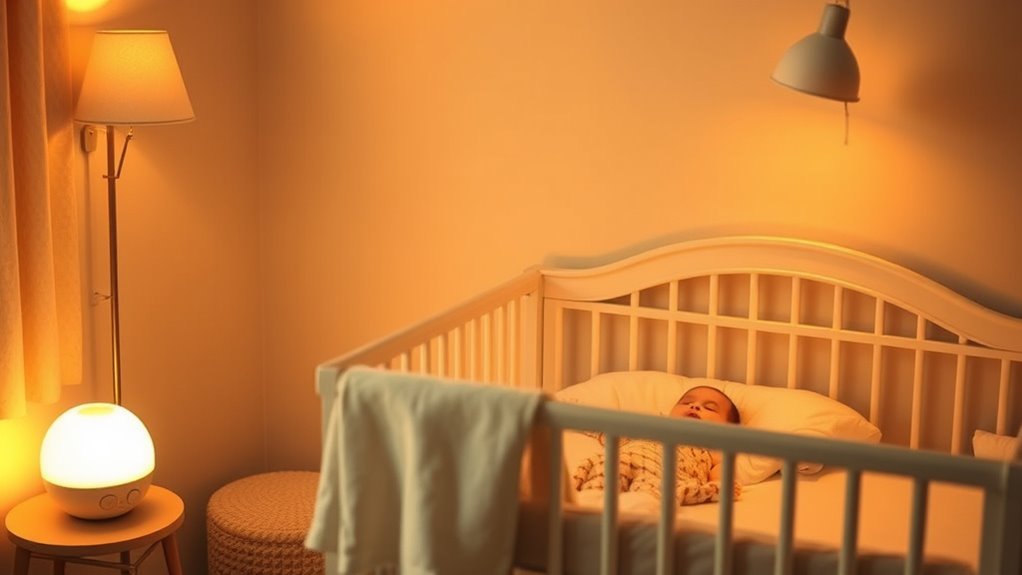
When you dim the lights and introduce soothing sounds, you create an environment that signals to your baby it’s time to sleep. Using soft lights, like warm or red-toned bulbs, helps reduce blue light exposure, fostering a calming atmosphere.
A white noise machine supplies consistent background sounds that mask disruptions, helping your baby fall asleep faster. Maintaining the room temperature between 68-70°F supports their natural sleep cycle.
This setup brings peace of mind and reinforces your baby’s sleep routine as they grow.
| Soft Lights | Soothing Sounds | Ideal Room Temp |
|---|---|---|
| Warm, red-toned | White noise machine | 68-70°F |
| Low brightness | Gentle lullabies | Comfortable |
| Minimal blue light | Running water sounds | Stable |
| Creates calm | Consistent background | Supports melatonin |
| Sleep-friendly | Aids relaxation | Sleep readiness |
Rock and Shush to Help Baby Drift Off Peacefully

Soft lighting and soothing sounds set the stage for your baby’s bedtime, but adding gentle movement and comforting noises can deepen their calm. Use the rock and shush technique to help your baby fall asleep by combining slow, rhythmic rocking with soft shushing sounds.
This mimics the warm, calming environment of the womb, easing your baby into sleep. As their eyes start to close, keep up the steady rocking and gentle shushing to keep them relaxed.
Try to avoid complete silence—it might startle your baby. Instead, create a soothing background noise that drowns out sudden sounds.
Position yourself near the baby monitor so you can respond if needed. And remember, consistently practicing this method builds a positive sleep association, making it easier for your baby to drift off peacefully every night.
Frequently Asked Questions
How to Sleep Fast in 40 Seconds as a Kid?
You can sleep fast by calming your mind, taking slow deep breaths, and relaxing your muscles. Create a quiet, cozy space and focus on gentle thoughts.
Try to keep things calm and peaceful around you. It really helps if you do the same bedtime routine every night. Consistency is key!
What’s the Fastest Way to Put a Baby to Sleep?
The fastest way to put a baby to sleep? Oh, just wave a magic wand!
Seriously, you’ll gently stroke their face with a soft tissue, keep the room cozy, and watch them drift off in no time.
What Is the 5-3-3 Rule for Babies?
The 5-3-3 rule means you keep your baby awake for 5 hours in the morning, 3 in the afternoon, and 3 before bedtime.
This helps regulate their sleep cycle and prevents them from getting overtired.
It’s a simple way to keep their nap and sleep times balanced throughout the day.
What Is the 30 Second Sleep Trick?
Like magic at your fingertips, the 30-second sleep trick has you gently stroking your baby’s face with a soft tissue, calming them quickly.
You’ll create a peaceful vibe and catch their sleepy signals just right.
Conclusion
You can use the Tissue Trick to calm your baby, soften the room’s lights and sounds to create peace, and rock and shush gently to ease them into sleep.
You can create comfort, you can build calm, and you can welcome rest—all in just 40 seconds.
With these simple steps, you’ll help your baby drift off quickly, peacefully, and happily every time.
Sleep comes easier when you know exactly what to do. By using these proven techniques, you make putting a baby to sleep simple and stress-free.
Remember, the key is consistency and a gentle approach. When you combine the Tissue Trick, a soothing environment, and gentle rocking and shushing, you set the perfect stage for your baby’s restful sleep.
These easy steps help your little one relax fast, making bedtime a smoother, happier experience for both of you.